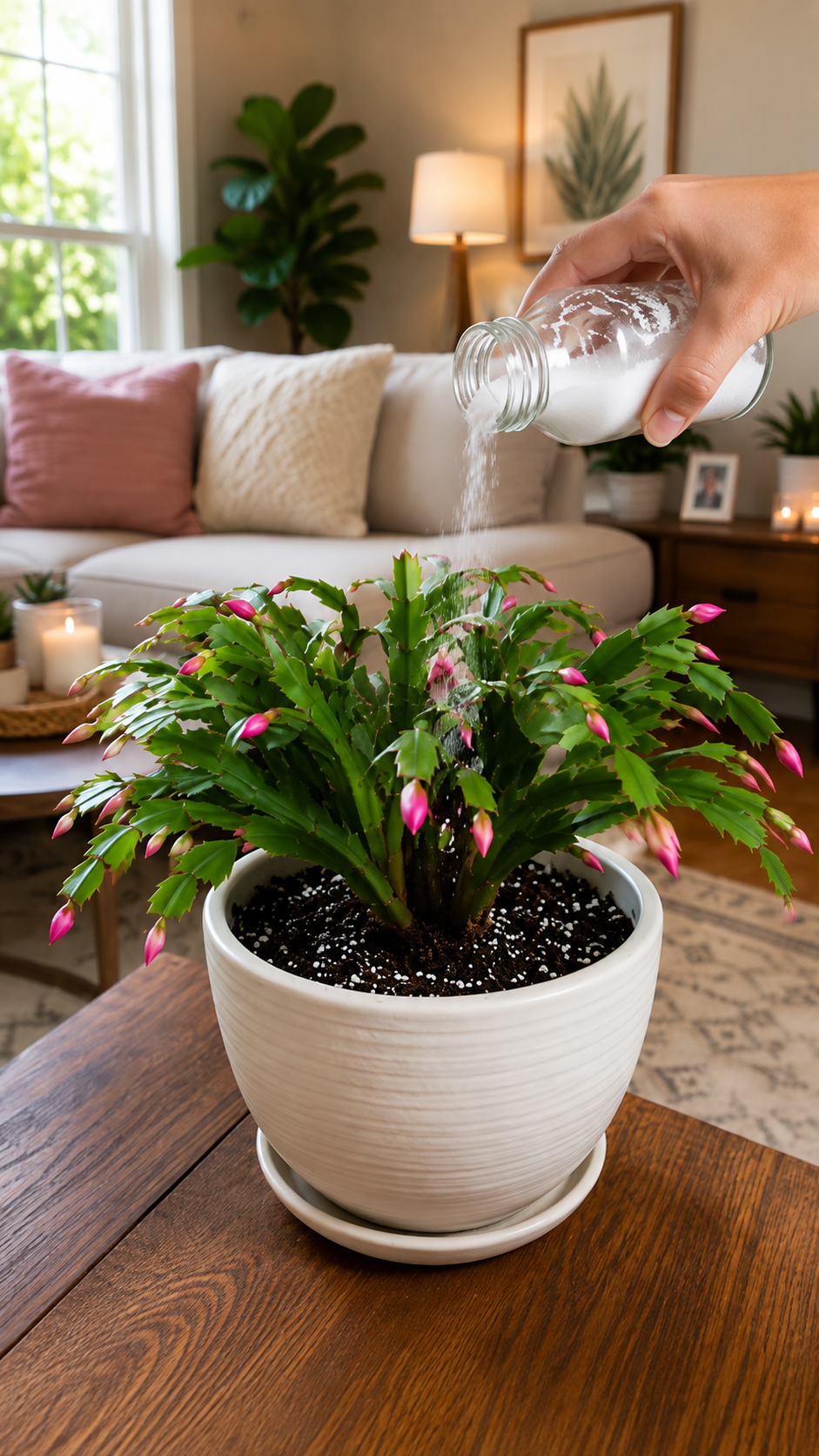
The Ultimate Guide to Epsom Salt for Snake Plants: Revitalize and Boost Growth Naturally
Welcome to the comprehensive, all-in-one guide on using Epsom salt to significantly improve the health and appearance of your Snake Plant, also known as Sansevieria. Known for their striking upright foliage and air-purifying qualities, Snake Plants are staples in homes and offices. While they are celebrated for being incredibly hardy and low-maintenance, even the toughest houseplants can reach a plateau in growth or begin to look lackluster.
That’s where a targeted mineral boost comes in.Epsom salt isn’t just a trend; it’s a powerful tool based on plant biology that can transform your green companions. This mega-guide will break down the science, explain the crucial differences between Epsom salt and regular fertilizers, provide detailed step-by-step application methods, offer expert advice on monitoring results, and answer all your frequently asked questions.Why Your Snake Plant Thrives with Epsom SaltTo understand why Epsom salt works, we need to look at what it actually is.
Contrary to popular belief, it is not salt at all—it’s a naturally occurring mineral compound of magnesium and sulfur ($MgSO_4$). Most commercial fertilizers focus heavily on the “Big Three”: Nitrogen, Phosphorus, and Potassium (N-P-K), which are essential. However, plants also require secondary micronutrients to perform critical biological functions. Here is why the magnesium and sulfur in Epsom salt are game-changers for your Snake Plant:
🌿 Enhances Chlorophyll Production and Color Intensity:Magnesium is the central atom in the chlorophyll molecule. Think of it as the core around which photosynthesis happens. Without sufficient magnesium, a plant cannot capture light energy effectively to produce food. Regular, controlled applications of Epsom salt directly support chlorophyll production, resulting in deeper, richer green hues and far more vibrant variegation patterns on your Snake Plant’s leaves.
⚡ Dramatically Accelerates Nutrient Uptake:It’s not just about what you feed your plant; it’s about what your plant can actually absorb. Magnesium plays a vital role in helping plant cell walls absorb other critical nutrients, especially nitrogen, phosphorus, and sulfur, from the soil more efficiently. This creates a “synergy effect,” making any other fertilizer you use more effective and ensuring your plant gets the maximum benefit from its environment.
🛡️ Strengthens Cellular Structure and Resilience:Sulfur is a critical component in the production of amino acids, proteins, and enzymes that facilitate essential plant processes. It works alongside magnesium to build stronger, more robust plant cells. For upright-growing plants like the Snake Plant, this translates to stiffer, more turgid leaves that stand tall and resist drooping or leaning.
💧 Prevents and Corrects Yellowing (Chlorosis):A classic symptom of magnesium deficiency in many plants is “interveinal chlorosis,” where the areas between leaf veins turn yellow while the veins themselves remain green. In Snake Plants, this can manifest as a general paleness or yellowing. Epsom salt offers a direct and easily absorbable source of magnesium to correct this condition, restoring a healthy look.⏱️ The Slow-Release Convenience of Tablets:This guide specifically highlights a convenient, modern way to apply these minerals: compressed Epsom salt tablets. Loose Epsom salt is highly water-soluble and can wash through the soil quickly. Using a tablet offers a slow-release mechanism. The tablet sits in or on the soil and dissolves gradually with each watering, providing a steady, continuous supply of nutrients over several weeks. This approach significantly reduces the risk of root burn from a sudden, concentrated dose.
🪱 Neutralizes Soil Salt Buildup:Over time, tap water and synthetic fertilizers can leave behind a buildup of harmful mineral salts in the soil, which can eventually dehydrate or “burn” the plant’s roots.
Regular, moderate use of Epsom salt can help neutralize these accumulations and improve overall soil health.Detailed Ingredient and Quantity BreakdownAchieving the best results with any horticultural hack depends on using the correct, high-quality materials and precise quantities. To treat your Snake Plant effectively and safely, prepare the following items based on this list:| Item | Recommended Quantity | Primary Culinary Function Potted Snake Plant 1 Plant | The target of your mineral supplementation efforts. Can be a robust, established plant or one showing signs of struggle. || **Epsom Salt Tablet** | 1 Tablet (or 1 tsp loose Epsom salt) | Your source of pure, bioavailable Magnesium Sulfate ($MgSO_4$). A key “hack” for simplified, effective feeding.
Expanded Clay Pellets or Topsoil** | Top Layer (approx. 1 inch) | Helps secure the tablet in place, ensures it is positioned correctly near the root zone, and aids in distributing the mineral-rich water. || **Watering Can** | Filled with Room-Temperature Filtered Water | Used to activate and slowly dissolve the tablet.
Filtered water is preferred to avoid adding more chlorine and minerals. |A Foolproof, Step-by-Step Application GuideFollow this simple, meticulous protocol to apply the Epsom salt tablet correctly and ensure it delivers maximum benefit without any risk to your plant:
Step 1: The Essential Soil Moisture Check 🪴Before you do anything else, check your plant’s soil condition. Snake Plants are drought-tolerant succulents that can easily suffer from root rot if watered too frequently.
Ensure the top 2 inches of soil are completely dry to the touch before proceeding. This is the optimal time to both feed and water.
Step 2: Strategic Positioning of the Tablet ⚪Take your single, slow-release Epsom salt tablet and position it carefully. Do not just drop it on top. You want to place it on or just slightly pushed into the top layer of soil or the decorative expanded clay pellets. The ideal location is about halfway between the main stalk base of the plant and the inner edge of the pot. CRITICAL: Avoid pressing the tablet directly against the plant’s main stem or fleshy leaves, as a concentrated release of minerals at that point could still cause a localized burn.
Step 3: Gentle Hydration and Activation 💦Use your watering can to slowly and gently pour room-temperature water around the base of the plant, focusing directly over the tablet. Your goal is not to flood the pot, but to saturate the area around the tablet so it begins to activate. This slow-watering process ensures the tablet releases its minerals gradually, letting them wash down into the deeper root zone where they are needed. Continue watering until you see a small amount of water drain out of the pot’s bottom.
Step 4: Establish Your Monitoring and Maintenance Cycle ⏱️One treatment is not enough for long-term health. The compressed tablet will provide a slow, steady supply for several waterings. For optimal results, repeat this application process once every 4 to 6 weeks during the active growing season, which typically spans from early Spring to late Summer. This schedule gives your plant a continuous boost when it has the energy to utilize it.Winter Dormancy Note: When temperatures drop and days get shorter in the autumn and winter, Snake Plants naturally enter a period of rest. During these dormant months, their nutritional needs drop significantly.
PAUSE all Epsom salt applications to avoid mineral buildup while the plant isn’t actively growing.How to Properly Monitor Results and Watch for ChangesAfter applying the Epsom salt tablet, it’s essential to pay attention to your plant over the next 2 to 4 weeks. Plant transformations don’t happen overnight, but you should start to see subtle, positive shifts.Here is what you should actively look for:
🟢 A Visible Deepening in Green Hues:This is often the first sign that the magnesium is working. Pale green areas will slowly turn into rich, deep, saturated green tones, indicating that the plant is producing more chlorophyll and performing photosynthesis more effectively.
📏 A Clear Increase in Leaf Firmness and Turgor:The leaves should begin to feel much firmer and more rigid to the touch, almost as if they are inflated with water. This improved cellular turgor helps the plant maintain its famous architectural, upright form without drooping or leaning.
🌱 Increased Resistance to Common Stressors:A well-fed Snake Plant is a resilient Snake Plant. You may notice it handles minor fluctuations in temperature or slightly longer dry periods better than before.Caution Flag: The Universal Sign of Over-MineralizationWhile rare when using slow-release tablets, it is still possible to overdo it. If you see the very tips of your Snake Plant’s leaves begin to turn brown, crispy, or paper-thin, this is a clear warning sign of mineral burn or excess salt accumulation.
PAUSE all feeding immediately. The next time the plant needs water, flush the soil thoroughly by pouring plenty of fresh water through the pot and letting it drain completely. Repeat this flush 2-3 times over a few weeks before considering any more amendments.Quick Usage Calendar and Cheat Sheet📅 Best Season to Apply: Early Spring through late Summer⏳ Application Frequency: Once every 30 to 45 days🎯 Target Outcome: Thicker leaves, stronger roots, enhanced variegated patterns, and overall more robust growth
☀️ Winter Dormancy: Pause all applicationsCommon Mistakes to Avoid:* NEVER place the tablet directly against the plant’s stem.* NEVER use tablets with added fragrances or oils.* NEVER apply Epsom salt to a plant in dry, stressed soil. Always water it slightly first.* NEVER assume that “more is better.” Stick strictly to the recommended schedule.
❓ Frequently Asked Questions (FAQ)To wrap up this guide, let’s answer the most common questions about using Epsom salt for Snake Plants:
Q1: Is it safe to use regular bath Epsom salts for houseplants?A: Generally, yes, but with one massive caveat. You must ensure it is 100% pure magnesium sulfate ($MgSO_4$). The problem with many bath salts is that they often contain added fragrances, artificial dyes, or essential oils, all of which can be highly toxic and even lethal to your plants. Pure, agricultural-grade Epsom salt or pure bath salt with zero additives is what you need.
Q2: Can I just dissolve the tablet in water instead of burying it?A: Absolutely! This is a very common method. You can dissolve 1 tablet or 1 teaspoon of loose salt into 1 gallon of water and use it in your regular watering routine once a month. This approach provides a more immediate dose of nutrients than the slow-dissolving tablet but is equally effective if managed correctly.
Q3: Is Epsom salt a complete alternative to regular plant fertilizer?A: Definitely not. Think of it this way: a standard fertilizer provides the plant’s primary “macronutrients” (Nitrogen, Phosphorus, and Potassium), which are like its main food groups. Epsom salt provides “secondary micronutrients” (magnesium and sulfur), which are more like vitamins that facilitate specific biological processes. Your Snake Plant still needs a balanced fertilizer (like a succulent-specific food) during the growing season; Epsom salt is a supplement, not a substitute.
Q4: Can Epsom salt help with root rot?A: Not directly. Epsom salt is a nutrient supplement, not a fungicide. While it can improve a healthy plant’s resilience, it will not cure an existing case of root rot. The best treatment for root rot is prevention through proper watering and, if necessary, repotting the plant into fresh, dry, well-draining soil.Q5: How do I know if my Snake Plant is actually magnesium deficient?
A: Look for interveinal chlorosis, which in Snake Plants can appear as paleness, a yellowing of the older leaves first, or a general lack of vibrant color. The most definitive test is a soil analysis, but these visual cues are often strong indicators that a boost of Epsom salt is warranted.We hope this comprehensive guide empowers you to use Epsom salt tablets to transform your Snake Plant into the vibrant, healthy showstopper it’s meant to be! Happy gardening!