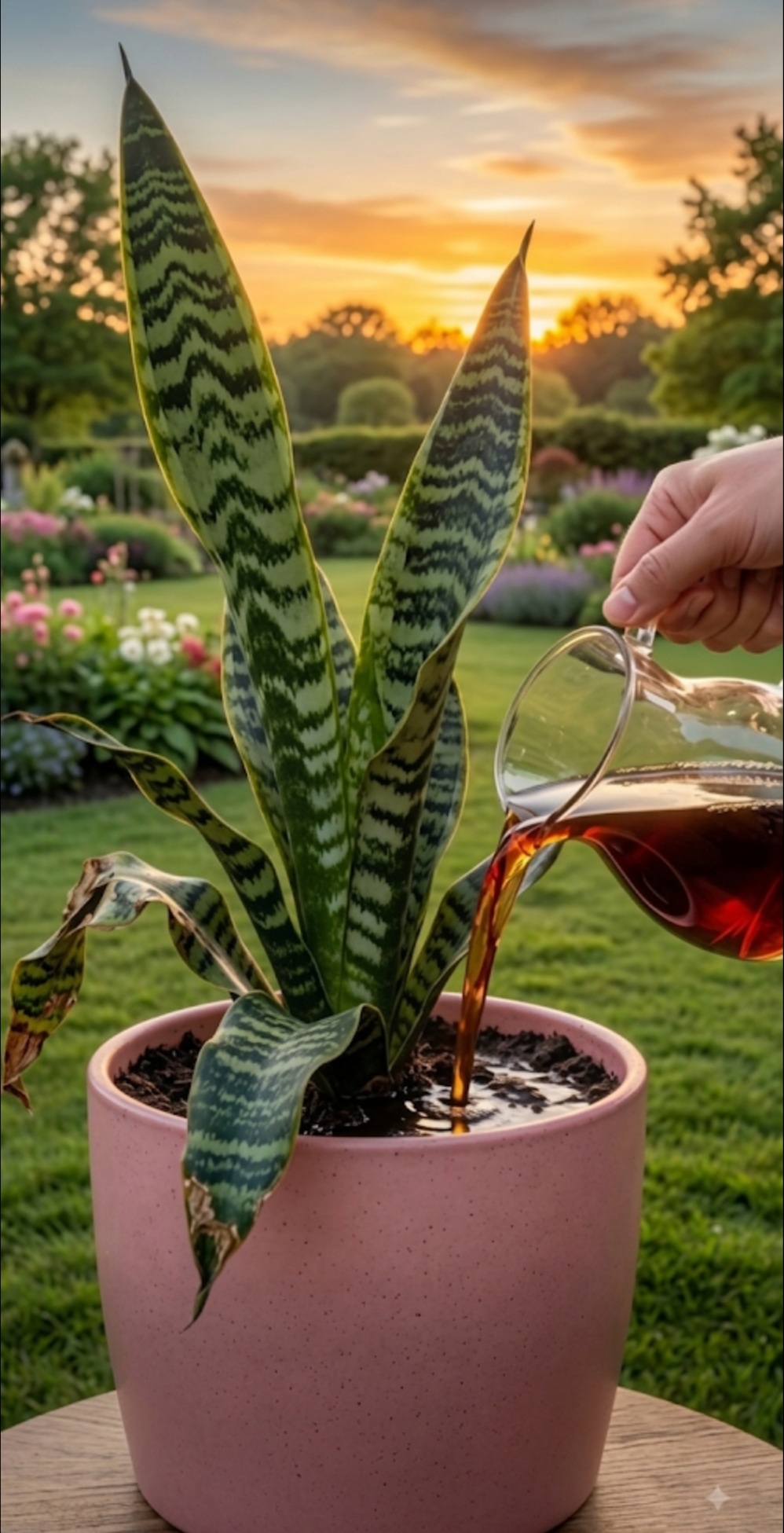
Snake plants (Sansevieria) are among the most beloved houseplants in the world thanks to their striking tall leaves, air-purifying abilities, and famously easy care routine 🌿✨! However, if you want your snake plant to produce vibrant new leaves, develop rich green patterns, and grow faster, providing a natural nutrient boost like compost tea, liquid kelp, or weak black tea can work wonders 🎉!
Feeding your potted plants natural organic liquid teas provides micro-nutrients directly to the root system, promoting lush growth without the risk of chemical burn ☕🌱. Below is a comprehensive, blog-ready guide (~950 words) packed with tips, metrics, and step-by-step instructions to keep your snake plant thriving!
📋 Care Overview & Key Gardening Metrics ⏱️📊
| Plant Care Metric | Standard Care Routine 📌 | Organic Tea / Liquid Fertilizer Tip 💡 |
|---|---|---|
| Fertilizing Frequency 🗓️ | Once every 4 to 6 weeks | Only feed during active growth (Spring & Summer) ☀️ |
| Light Requirements ☀️ | Bright, indirect sunlight | High light increases nutrient absorption rate 💡 |
| Watering Schedule 💧 | Every 2 to 3 weeks | Always let the soil dry out 100% between feeds 🌵 |
| Best Liquid Teas ☕ | Compost Tea, Worm Tea, Weak Black Tea | Dilute well to avoid acidifying the soil excessively 🫖 |
| Ideal Soil pH Range 🧪 | 5.5 to 7.5 (Slightly Acidic to Neutral) | Test soil periodically if using organic brewed feeds 🧪 |
| Difficulty Level ⭐ | Very Easy (1/5) | Snake plants are extremely hardy and low-maintenance! 👌 |
🌟 Why Natural Liquid Teas Benefit Snake Plants 💖
- Rich in Essential Micro-Nutrients: Brewed organic teas (such as compost or worm casting tea) deliver nitrogen, potassium, and trace minerals gently to the root zone 🌿.
- Stimulates Soil Microbiome: Liquid organic fertilizers feed beneficial soil microbes that break down nutrients into plant-usable forms 🪱.
- Prevents Chemical Fertilizer Burn: Unlike harsh synthetic fertilizers that leave mineral salt build-up in pink ceramic pots, natural liquid feeds are gentle and safe 🪴.
- Promotes Rapid Leaf Growth: Regular feeding during spring and summer encourages fresh green shoots and tall, erect foliage ✨.
🛒 Materials Needed for Liquid Feeding ☕🪴
- A Healthy Potted Snake Plant: Housed in a pot with functional bottom drainage 🪴.
- Glass Pouring Pitcher: For smooth, controlled liquid application without splashing leaves 🫖.
- Organic Liquid Feed Choice:
- Compost Tea: Steeped organic compost in water 🍃.
- Worm Casting Tea: Oxygenated liquid extract from worm castings 🪱.
- Diluted Unsweetened Black Tea: High in tannic acid and nitrogen (used sparingly!) ☕.
- Filtered or Rainwater: Chlorine-free water prevents tap mineral buildup in soil 🌧️.
🍳 Step-by-Step Feeding & Care Instructions 👩🌾👨🍳
Step 1: Check Soil Moisture Levels 🌵
Before pouring any liquid tea or fertilizer, ensure the potting soil is completely dry to the touch. Snake plants store water in their fleshy leaves, so feeding soggy soil can lead to root rot!
Step 2: Prepare Your Organic Brew 🫖
If using compost tea or worm tea, strain the liquid through a fine mesh so no heavy sludge clogs the soil surface. If using weak black tea, dilute it at a 1:10 ratio with clean rainwater (it should look like light amber tea).
Step 3: Pour Gently at the Base ☕✨
As shown in the image, hold your glass pitcher low and pour the liquid directly onto the soil around the base of the plant. Avoid splashing the liquid into the central leaf rosette, as trapped moisture inside the leaves can cause crown rot.
Step 4: Allow Proper Drainage 💧
Pour until liquid begins trickling out of the pot’s bottom drainage holes. Let the pot drain completely into a saucer for 15 minutes, then discard any standing runoff water.
Step 5: Place in Bright Indirect Sunlight ☀️
Set your freshly fed snake plant in a warm spot with bright, indirect light to stimulate active photosynthesis and nutrient uptake!
💡 Expert Tips for Healthy Sansevieria 🌟
- Never Feed in Winter: Snake plants go dormant during autumn and winter months. Stop all fertilizer and liquid tea feeds from November through February ❄️.
- Watch Out for Tannic Acid: If using diluted black tea, apply it no more than once every 2 to 3 months. Too much tannic acid can lower soil pH below optimal levels! ☕
- Pot Choice Matters: Always use breathable clay, terracotta, or well-draining ceramic pots with drainage holes to keep roots healthy and oxygenated 🪴.
Do you prefer using organic compost tea or traditional houseplant fertilizers for your indoor garden? 🪴☕✨