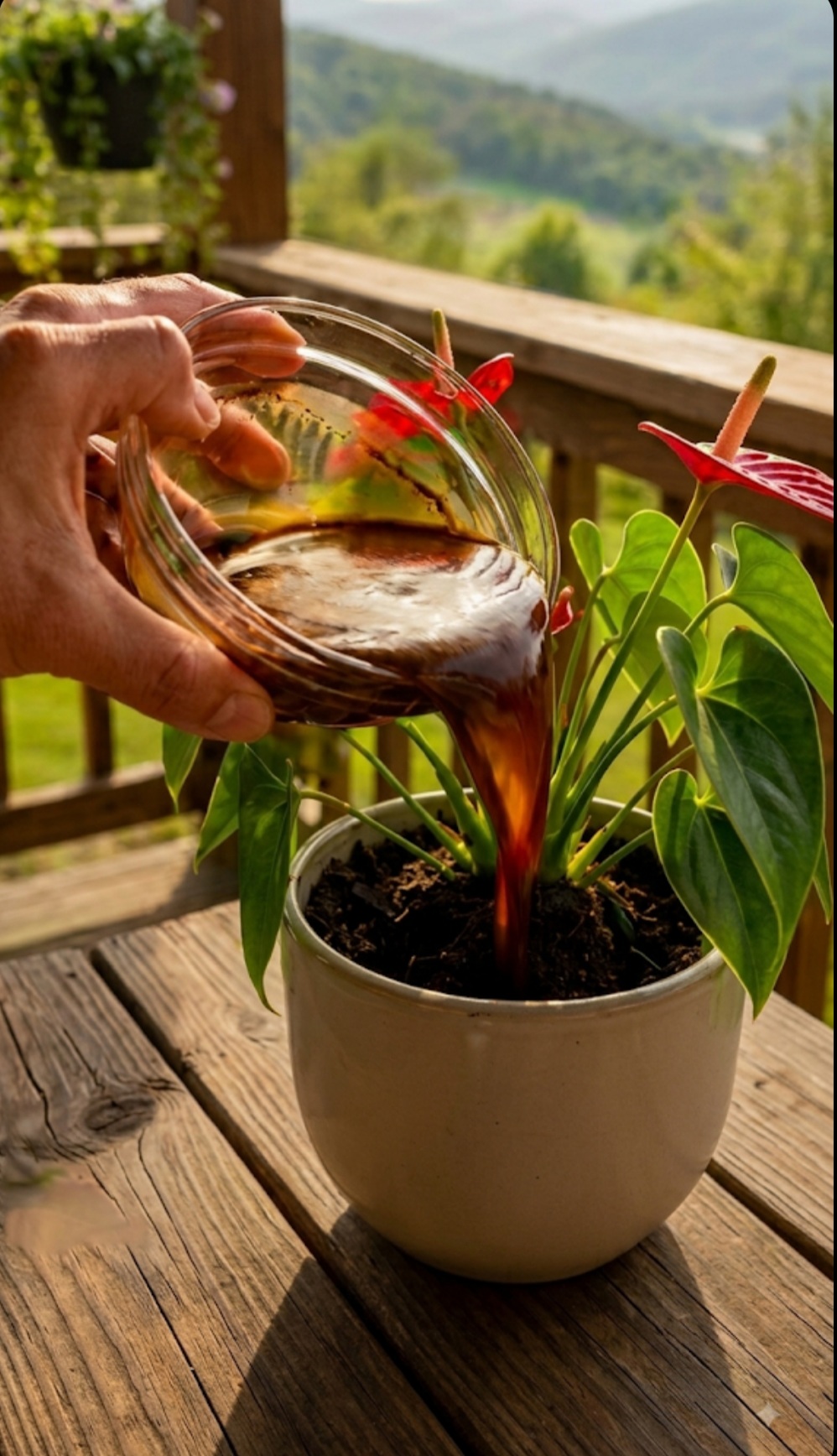
🟢Once upon a time, on a sun-drenched wooden porch overlooking a tapestry of rolling green mountains, lived a little Anthurium. This wasn’t just any Anthurium; it was the pride of its owner, Clara. With heart-shaped leaves as shiny as polished emeralds and a brilliant red spathe that bloomed as if it had stolen the very heart of the sunset, it was a centerpiece of natural art.
🟢Clara, a woman whose love for houseplants was only matched by her passion for a strong, midnight-black morning coffee, had a moment of inspiration. Watching the rich, dark liquid cascade from her French press, she thought, “This is full of energy for me. Surely, it must be full of life for my beautiful flower.” Her heart, full of good intentions, decided to share her favorite ritual. She poured the remains of her cup—cooled, but still potent—directly onto the soil of the Anthurium.
🟢Her story is one shared by thousands of plant parents across the globe. It is the story of wanting the best, of seeking sustainable, home-grown solutions to make our green friends flourish. We’ve all heard the whispers in gardening circles: “Used coffee grounds are green gold!” and “Give them a caffeine boost!” But is this common kitchen residue a magical elixir, or is it a potion that can lead to disappointment?
🟢In this professional guide, we will step into Clara’s shoes and dissect the real-world science behind pouring coffee on plants. We will examine the undeniable benefits, the hidden risks, and provides you with a masterplan on how to responsibly recycle your morning brew in your green sanctuary. This is the truth behind the midnight brew and the emerald flower.🪴✨
The Chemical Cocktail of a Cup 🔬
🟢To understand what Clara did, we must first look at what she poured. Coffee is not just colored water. It is a complex chemical cocktail. Used coffee grounds (spent grounds) retain about 2% nitrogen by volume. Nitrogen is the building block of green growth, the element that helps plants create lush leaves and vibrant stems. They also contain traces of phosphorus, potassium, magnesium, and copper—essential micro-nutrients that support robust root systems and energy transfer.
🟢Furthermore, coffee is inherently acidic. Many houseplants, including our beautiful Anthurium, as well as azaleas, blueberries, and ferns, love slightly acidic soil. The assumption is that by adding acidic coffee, we are creating their dream environment. This chemical composition is what makes the idea of “coffee for plants” so incredibly alluring to the eco-conscious gardener. It is a closed loop, turning kitchen waste into horticultural fuel.
Clara’s Mistake: The Danger of Direct Action 🚨
🟢Clara’s heart was in the right place, but her method was flawed. Direct action in a confined space—like an indoor pot—is rarely a good idea without prior processing. By pouring the coffee directly onto the soil, Clara unleashed several hidden monsters:
1. The Clumping and Compaction Trap 🛑
🟢Freshly dumped, wet coffee grounds have a terrible tendency to clump together. When they dry, they form a dense, water-resistant crust on top of the soil. This crust acts as a barrier, preventing oxygen from reaching the roots and blocking water from penetrating the soil evenly. Instead of a steady feed, the plant’s roots suffer from suffocation. In severe cases, the water pools on top, leading to uneven moisture and eventual root rot.
2. The Mold and Pest Magnet 🍄
🟢Used coffee grounds are still full of organic matter—sugars, proteins, and fats. To fungi and soil bacteria, this isn’t a fertilizer; it’s a buffet. A thick layer of wet grounds left on top of the soil quickly becomes a breeding ground for white mold. Even worse, it acts as a magnet for annoying fungus gnats, who love nothing more than damp, organic matter in which to lay their eggs. A happy, peaceful plant sanctuary can quickly become an infestation site.
3. The Caffeine Conundrum ☕
🟢We love caffeine for its boost, but the reason coffee plants produce caffeine is quite different. Caffeine is a natural pesticide and herbicide. In many cases, it suppresses the growth of neighboring plants to reduce competition. Directly applying caffeine-rich residue to seedlings or sensitive plants can inhibit root development rather than encouraging growth. Plants like the Anthurium are relatively hardy, but they are not immune to phytotoxic effects.
4. The pH Puzzle 🧩
🟢Yes, coffee is acidic. But used coffee grounds are often much less acidic than brewed coffee. During the brewing process, most of the acidic compounds are extracted into your cup. The grounds left behind can range from slightly acidic to nearly neutral. The issue is unpredictability. By adding grounds directly, Clara wasn’t giving her plant a precise dose of acid; she was randomly shifting the soil chemistry, which can stress a plant designed to thrive in stable conditions.
Comparison Table: The Safest Ways to Cycle Coffee 📊
🟢To help you avoid Clara’s mistake, we’ve created a master comparison of how to responsively manage coffee waste. This table gives you a clear path on how to turn kitchen scrap into a plant’s true friend.
| Application Method | Preparation Requirement 🛠️ | Ease of Use 🪴 | Major Risks 🚨 | Best Recommended For ✅ |
|---|---|---|---|---|
| Direct Application (Scattering on Pot) | None (Just Dump) | Very Easy | Clumping, Mold, Pests, Compaction, Nutrient Lockout | NOT RECOMMENDED |
| Banana Peel Tea Method | Boiling/Steeping Peels (High Potassium) | Moderate | Odor if Left Too Long, Mild Pest Risk | Aiding Flowering (Instead of Nitrogen) |
| Composting (Correct Way) | Mixing Grounds (Greens) with Browns | Slow (Months) | Incorrect Mix (Odor, Pests), Clumping if Not Turned | General Garden Use, Fruit/Vegetable Gardens |
| Diluted Liquid Brew (Acid Lovers) | Let Cold Coffee Cool (1:5 Water Ratio) | Easy | Accumulation Over Time, Mild Odor, Not a Complete Fertilizer | Azaleas, Ferns, Blueberries (Moderately) |
| Oven-Dried/Baked Scraps | Spread & Bake at Low Temp until Black | Moderate | Requires Effort, Fire Risk if Neglected | Mixing into New Potting |
Safe Ways to Feed Your Green Sanctuary ☕✨
🟢If you are committed to using coffee sustainably, there is a better path than Clara’s direct action. Here is how you can responsibly reuse your morning energy for your green sanctuary.
Method A: The Master Composter ♻️
🟢The best and safest way to use coffee is to compost it. In a compost pile, coffee grounds are considered “green” or nitrogen-rich material. They must be balanced with “brown” material (carbon-rich, like dried leaves or cardboard) and regularly turned to ensure proper aeration. Through the magic of composting, the clumping issue is solved, the caffeine is broken down, and the micro-nutrients are converted into a stable, bio-available form that plants truly love.
Method B: The Liquid Elixir (For Acid Lovers Only) ☕
🟢If you have acid-loving houseplants, you can give them a very gentle boost. Let your leftover morning black coffee cool completely. Then, dilute it with water—at a ratio of at least 1 part coffee to 5 parts water. Use this diluted solution once every few months as a gentle fertilizer. It adds organic acid and a hint of nitrogen without clumping or attracting pests.
Key Requirements to Make your Plant Truly Flourish ☀️🌸
🟢While sustainable feeding is wonderful, your plant needs three fundamental blocks to be truly happy and produce heart-shaped emerald flowers consistently:
- 1. Bright, Indirect Light: Most houseplants (especially the Anthurium) flourish in bright, filtered light. Low light stops flowering. Too much direct sun can burn the leaves.
- 2. Perfect Drainage & Soil consistency: Your pot must have drainage holes, and the soil must be well-draining. Plants don’t want a soggy bed; they want a moisture-retaining, airy environment.
- 3. Stable Warmth and Humidity: Create a stable environment between 18°C and 26°C (65°F–80°F), free from cold drafts. Many houseplants prefer higher humidity, which you can aid with regular misting.
Final Verdict: Compost, Don’t Dump! ☕🚫
🟢Clara’s story doesn’t have to have a sad ending. Used coffee grounds are indeed green gold, but only when they are processed through the alchemy of composting or responsibly diluted. Laying fresh, direct action residue in your pot is a recipe for compaction, mold, and disappointment. Be a professional plant parent: turn your kitchen waste into stable, nourishing soil enrichment, or stick to proper watering and well-draining soil to ensure your midnight brew leads to beautiful, thriving emerald flowers for decades! 💚🪴