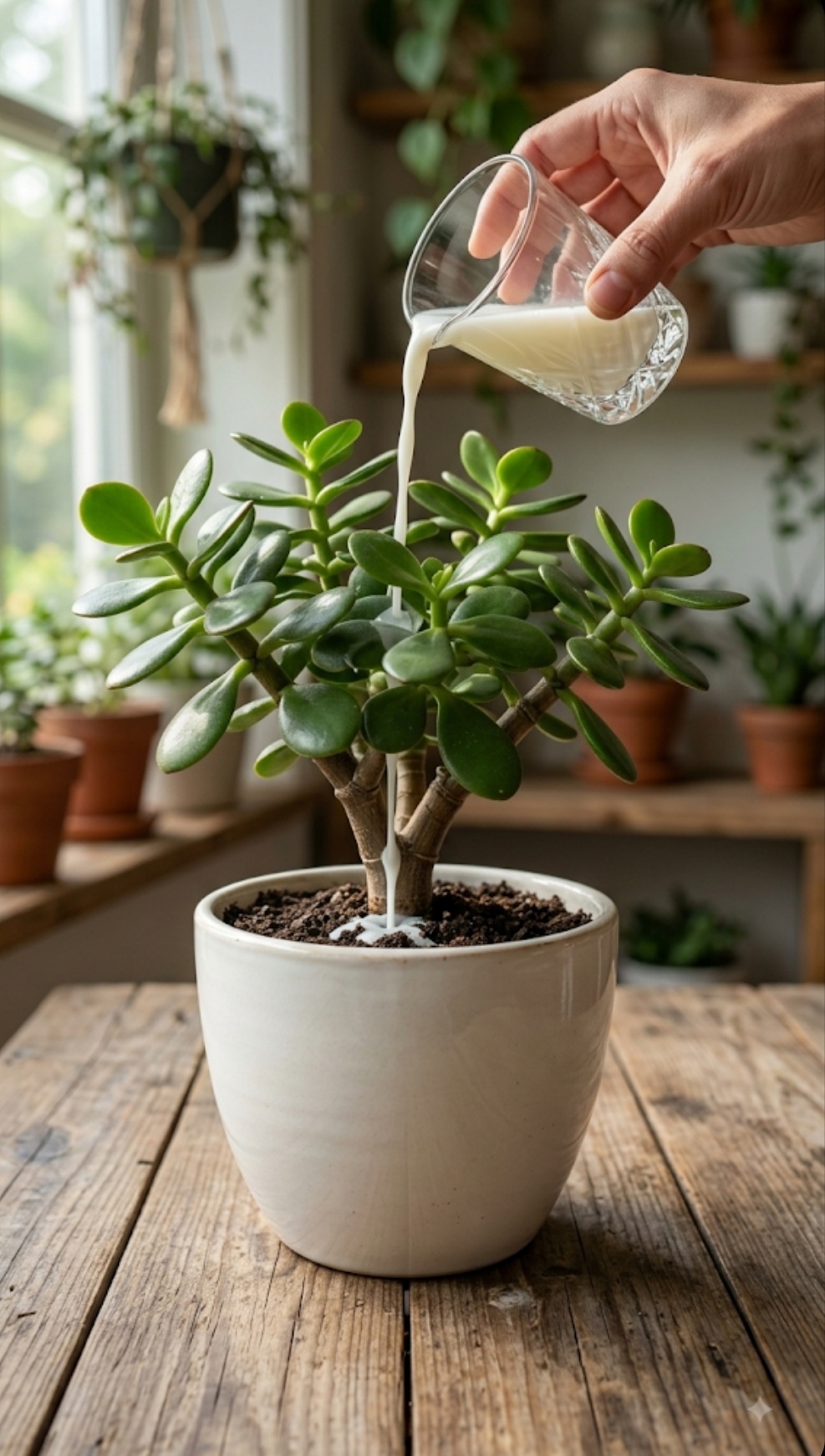
🟢It started on a quiet Sunday morning. Clara, an enthusiastic indoor plant parent, noticed her cherished Jade plant looking a little dull. While browsing social media, she stumbled upon a viral trend promising lush green leaves and blooming growth using a simple kitchen staple: milk. Intrigued by the idea of giving her succulent a rich, calcium-boosted treat, she grabbed a glass of milk and poured it straight into the pot.
🟢Within days, however, the dream turned into a mini-disaster. The soil began emitting a sour odor, tiny fungus gnats appeared around the container, and white mold bloomed across the potting mix. What went wrong? Is milk secretly a superfood for house plants, or is it a dangerous myth that ruins your green companions?
🟢In this guide, we unpack the science, risks, and facts behind pouring milk on plants—specifically succulents like the Jade plant (Crassula ovata). Read on to discover whether this viral trend holds any truth or if you should keep dairy far away from your garden! 🪴✨
The Myth Behind Milk as a Plant Fertilizer 🥛💡
🟢The concept of using dairy products in agriculture is not entirely new. For decades, home gardeners and organic farmers have experimented with household liquids to enrich soil and protect foliage. The theory sounds logical on paper: milk is packed with essential nutrients, including calcium, protein, potassium, and beneficial microbes.
🟢Since plants require calcium for cell wall structure and healthy root development, many plant lovers assume pouring milk directly into the pot provides an instant boost. Furthermore, dilute milk sprays have historically been used as organic fungicides to combat powdery mildew on garden crops like tomatoes and cucumbers.
🟢However, house plants—especially indoor succulents—have drastically different biological needs than outdoor garden crops. What works in an open garden bed can easily destroy a delicate potted ecosystem. 🌿⚠️
What Happens When You Pour Milk on a Jade Plant? 🔬🚨
🟢Jade plants are succulents native to dry regions of South Africa. They thrive in lean, dry, well-draining soil and store water in their fleshy oval leaves. Pouring whole or reduced-fat milk directly into a Jade plant’s pot creates severe chemical and biological problems:
1. Bacterial Decay and Sour Odor 🤢
🟢Milk contains complex fats, proteins (casein and whey), and natural sugars (lactose). When left in moist soil, bacteria and fungi quickly break down these compounds. This rapid decomposition causes a foul, sour milk smell that lingers throughout your home for days.
2. Root Rot and Soil Clogging 🛑
🟢Unlike water, milk leaves thick organic residue behind. As it dries, it creates a film over the soil surface, blocking oxygen flow to the roots. Without oxygen, root tissue suffocates, rots, and dies—a fatal condition known as root rot.
3. Pest Magnet (Fungus Gnats & Ants) 🪰
🟢Decaying dairy proteins and rotting soil organic matter act as an open invitation for common household pests. Fruit flies, fungus gnats, and ants will swarm the pot, laying eggs and creating an unwanted infestation inside your home.
4. Soil Mold and Salt Buildup 🍄
🟢Unprocessed dairy promotes heavy mold growth across the soil surface and plant stem. Additionally, natural salts present in milk accumulate around sensitive root tips, pulling moisture out of the plant and causing leaf yellowing.
Comparison: Fresh Water vs. Milk for Jade Plants 📊
🟢To clearly understand how milk compares to proper plant care methods, examine the breakdown below:
| Feature / Criteria | Fresh Water 💦 | Dilute Milk Spray 🥛 | Undiluted Milk Pour ❌ |
|---|---|---|---|
| Primary Function | Hydration & Nutrient Transport | Foliar Fungicide Treatment | Harmful Soil Contaminant |
| Soil Impact | Clean, Balanced Moisture | Neutral (Foliage Spray Only) | Soil Clogging & Mold Growth |
| Root Health | Promotes Oxygen & Growth | No Root Contact | Causes Suffocation & Root Rot |
| Pest Risk | Low (if not overwatered) | Very Low | High (Attracts Flies & Gnats) |
| Odor Risk | None | Minimal | High (Foul Sour Milk Smell) |
| Best For | Routine Jade Plant Watering | Preventing Powdery Mildew | Not |
How to Safely Nourish Your Jade Plant 🪴🌟
🟢If you want your Jade plant to grow thick, vibrant leaves and sturdy woody stems, skip the kitchen fridge and stick to proven horticultural practices:
- 1. Practice the “Soak and Dry” Watering Method 💧 Always wait until the top two inches of soil are completely dry before watering. Pour water thoroughly until it drains out of the bottom holes, then empty the drainage saucer.
- 2. Use Balanced Succulent Fertilizer 🧪 Feed your Jade plant with a specialized succulent fertilizer diluted to half strength once a month during spring and summer.
- 3. Ensure Bright Light ☀️ Jade plants love sunlight. Place your pot near a sunny south- or west-facing window where it can receive at least 4 to 6 hours of bright light daily.
The Only Safe Way to Use Milk in Your Garden 🌾🧴
🟢If you still want to utilize leftover milk, never pour it straight into a pot! Instead, follow this safe recipe for non-succulent outdoor foliage:
- Dilute Properly: Mix 1 part milk with 9 parts water (a 10% solution).
- Apply as a Foliage Spray: Lightly mist plant leaves early in the morning to prevent fungal spores like powdery mildew.
- Avoid the Soil: Never saturate indoor potted soil with milk mixtures.
Final Verdict: Keep Milk in the Kitchen! 🥛🚫
🟢While milk possesses nutrient qualities beneficial to outdoor crops in controlled doses, pouring it on an indoor Jade plant is a mistake. Stick to proper watering, well-draining soil, and specialized plant food to keep your Jade plant thriving for decades! 💚🪴