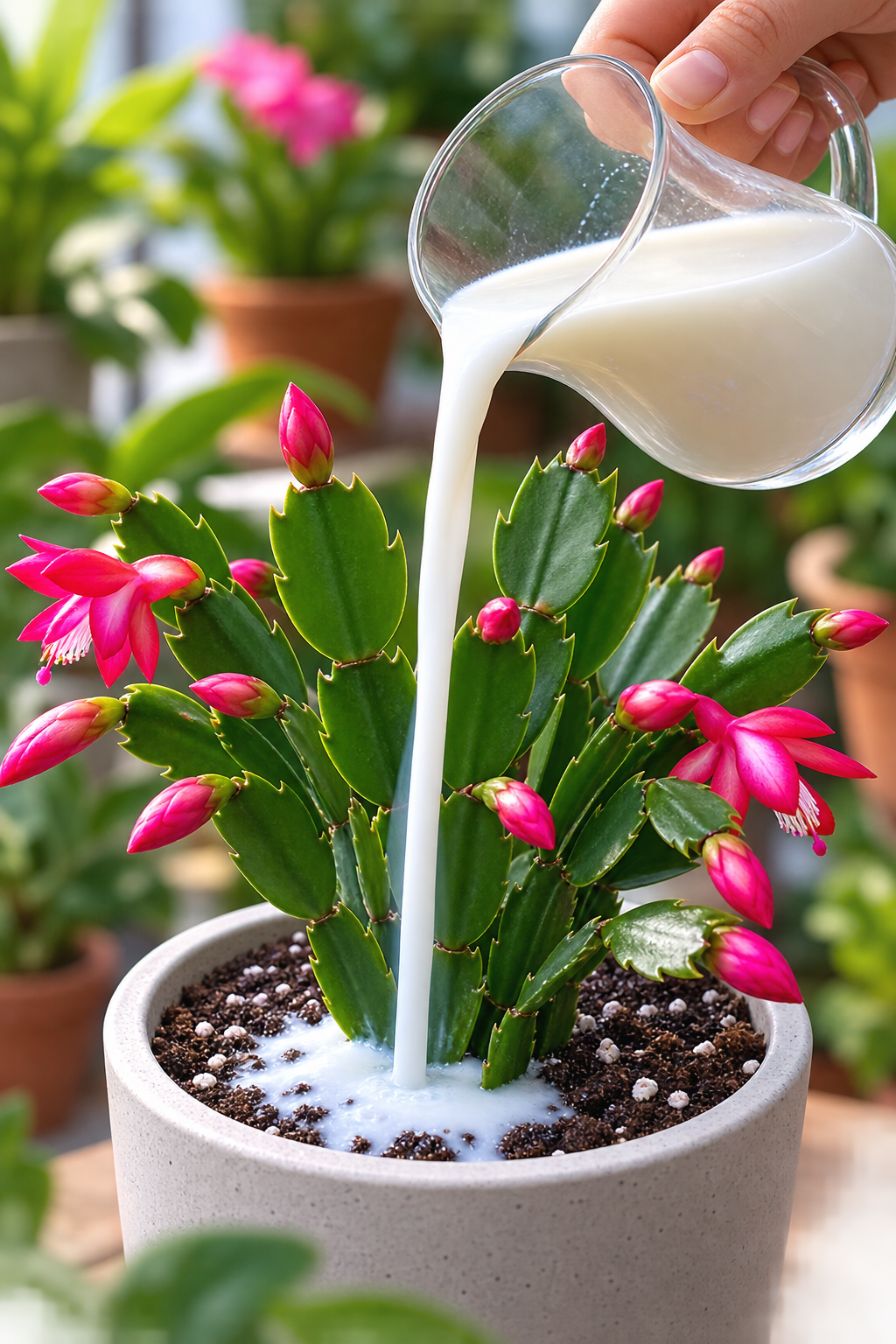
🟢The Thanksgiving Cactus (Schlumbergera truncata) and Christmas Cactus (Schlumbergera bridgesii) are among the most celebrated indoor holiday plants, renowned for their segment-jointed stems and stunning trumpet-shaped blooms. While balanced fertilizers provide standard macronutrients, tropical epiphytes require essential secondary nutrients like calcium and proteins to strengthen cell walls, prevent bud drop, and promote vigorous flowering.
🟢One proven natural gardening hack involves using diluted milk. Packed with bioavailable calcium, amino acids, beneficial proteins, and natural enzymes, diluted milk acts as a gentle organic booster for holiday cacti. In this professional website guide, we explore the botanical benefits of feeding milk to Schlumbergera, how to prepare the ideal mixture safely, and best practices to keep your plant blooming year after year! 🪴✨
The Science: Why Holiday Cacti Benefit from Diluted Milk 🔬
🟢Milk contains an array of organic compounds and minerals that improve both soil microflora and plant physiology when used correctly:
- Calcium (Ca): Calcium is an essential structural element in plant cell walls. A healthy supply of calcium prevents cell wall weakening, protects root tips, and reduces premature flower bud drop (bud blast). 🌸
- Proteins & Amino Acids: Milk proteins (casein and whey) are broken down by soil microbes into bioavailable nitrogen, feeding beneficial bacteria in the potting medium. 🧫
- Natural Antifungal Properties: Diluted milk proteins generate natural free radicals under sunlight, creating a mild antifungal environment on the soil surface that helps suppress powdery mildew and soil mold. 🛡️
- Potassium & Phosphorus: Contains trace amounts of essential minerals that support flower induction and root development during active growth stages. 🧪
Diluted Milk vs. Other Natural Calcium & Nutrient Boosters 📊
🟢Choosing the right natural soil supplement helps ensure your holiday cactus receives balanced nutrition without risking soil compaction or bad odors. The table below compares popular household soil boosters:
| Natural Supplement | Primary Key Component | Botanical Function | Ideal Application Method | Risk of Odor or Pests ⚠️ |
|---|---|---|---|---|
| Diluted Milk (1:4 Ratio) 🥛 | Calcium, Whey Proteins, Potassium | Strengthens cell walls & feeds soil microbes | Soil drench every 4–6 weeks during growth/budding | Very Low (when diluted 1:4 with water) |
| Crushed Eggshells 🥚 | Calcium Carbonate (CaCO_3) | Slow-release calcium source for soil | Finely ground & mixed into potting substrate | Low |
| Epsom Salt (Magnesium Sulfate) ⚪ | Magnesium & Sulfur | Chlorophyll production & energy transport | Water-soluble drench (1 tbsp/gallon) | Zero Risk |
| Banana Peel Water 🍌 | Potassium & Phosphorus | Stimulates root expansion & flower formation | Steeped liquid drench during autumn | Moderate (Can attract fruit flies if concentrated) |
| Undiluted Whole Milk 🥛 | Fats, Sugars, Proteins | Concentrated nutrient source | Not Recommended (Clogs soil pores) | High (Causes sour odor, mold, & fungus gnats) |
Step-by-Step Guide: How to Prepare & Apply Milk Solution Safely 👩🌾👨🌾
🟢Proper dilution is essential when applying dairy products to houseplants. Never pour concentrated or undiluted milk directly into the pot, as fats and proteins will spoil, clog soil aeration pores, and attract fungus gnats. Follow these simple steps:
Step 1: Prepare the Diluted Milk Mix 🥛
- Measure 1 part milk (skim or low-fat milk works best, or expired cow/plant-based milk) to 4 parts room-temperature water.
- For a standard pot, mix 1/4 cup of milk with 1 cup of filtered water.
- Stir thoroughly until the solution is light, watery, and translucent.
Step 2: Check Soil Moisture & Drain Capability 🪴
- Ensure the container has functional bottom drainage holes. Terracotta or ceramic pots with fast-draining potting soil are ideal for epiphytes.
- Check the topsoil: the top 1 inch of soil should feel dry to the touch before applying any liquid drench. Pro Tip: Schlumbergera roots are sensitive to stagnation; never apply fertilizers or liquid supplements to waterlogged soil!
- Slowly pour the diluted milk solution around the base of the plant, distributing it evenly across the soil surface.
- Allow the liquid to soak down into the root zone until a small amount drains out of the bottom holes.
- Let the pot drain completely for 15 minutes, then empty the saucer to prevent root rot (Phytophthora).
- Spring & Summer (Active Growth Period): The plant produces fresh, bright green stem segments. Apply the diluted milk solution once every 4 to 6 weeks alongside bright, indirect sunlight to build strong stems. 🌿
- Early Autumn (Pre-Bloom & Bud Induction): In September and October, feed once with diluted milk to supply calcium before the darkness/cooling period triggers bud formation. 🌸
- Late Autumn & Winter (Full Bloom Phase): Once flower buds develop and open into full blooms, pause all fertilizer and milk applications. Keep soil evenly moist with plain room-temperature water. ❄️
- Late Winter (Post-Bloom Rest): After flowering finishes, allow the plant to rest for 4 weeks with minimal watering before resuming spring care. 💤
- Using Undiluted Full-Fat Milk: Whole milk contains high fat content that coats soil particles, creates a barrier against oxygen absorption, causes a sour smell, and attracts indoor pests like fungus gnats. Always dilute thoroughly! 🚫
- Over-Application Frequency: Applying milk too frequently causes protein buildup in the substrate. Use milk as a supplemental drench no more than once a month during active growth. ⚖️
- Leaving Standing Liquid in Saucer: Allowing the pot to sit in drained milk water causes root suffocation and fungal root rot. Always empty drainage trays promptly! 🛑
- Exposing Wet Leaves to Direct Scorching Sun: Avoid splashing milk solution onto leaf segments if the plant receives intense sunlight, as milk residue can burn leaf tissue under hot rays. Keep in bright, indirect light! ☀️
Frequently Asked Questions (FAQ) ❓
Can I use powdered milk or plant-based milk (almond, soy, oat)?
🟢Yes! Unsweetened powdered milk (dissolved in water) or unsweetened plant-based milk (like almond or soy) can be used. Ensure plant milks contain no added sugars, flavors, or oils that could attract pests or foster bacteria.
Why are my Thanksgiving cactus flower buds falling off before opening?
🟢Premature bud drop (bud blast) is typically caused by sudden temperature shifts, cold air drafts, soil drying out completely during budding, low humidity, or a lack of calcium during early bud formation.
What is the ideal potting soil mix for Thanksgiving Cactus?
🟢A light, porous mixture consisting of 60% indoor potting soil, 20% perlite or pumice, and 20% orchid bark chips provides excellent aeration and fast drainage suited for tropical rainforest epiphytes.