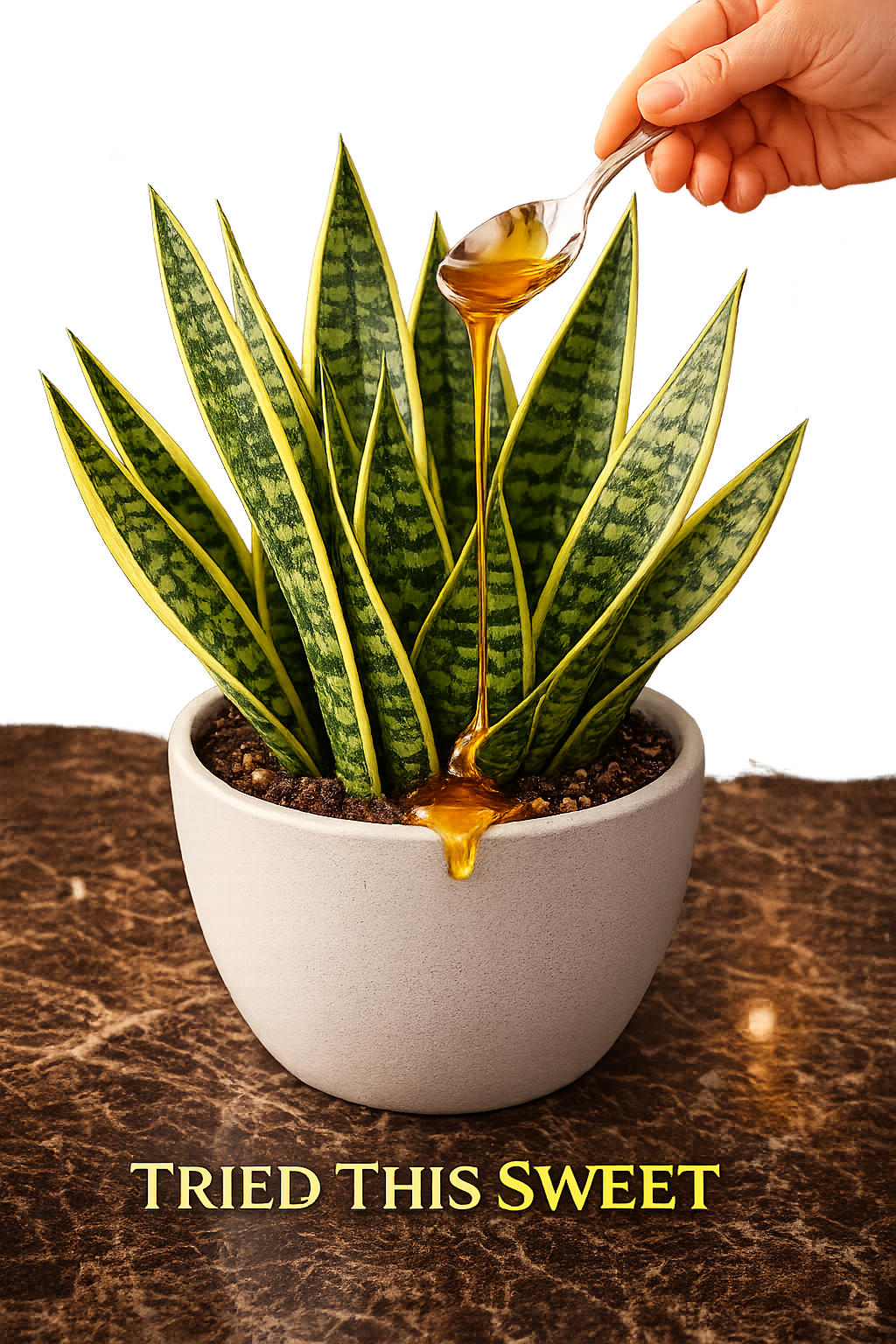
[Snake Plant Care 🪴] [Honey Fertilizer 🍯] [Natural Rooting 🌿] [Houseplant Secrets 🌾]
🌟The Snake Plant (Sansevieria trifasciata), also known as Mother-in-Law’s Tongue, is widely cherished as one of the most durable, air-purifying indoor plants you can grow. With its architectural, sword-like leaves decorated with bold green and yellow variegation, it brings effortless modern elegance into any living space. However, because snake plants grow at a naturally steady pace, many plant parents look for safe, natural boosters to trigger faster root development, fresh new shoots (pups), and resilient foliage.
🌟Enter the secret honey trick! Raw honey is not just a delicious kitchen staple; it is a legendary natural rooting agent and microbial bio-stimulant used by experienced indoor gardeners. In this comprehensive, SEO-optimized guide, we will explore why raw honey works wonders for snake plants, step-by-step application methods, proper soil care, and essential tips to keep your potted plants thriving all year long.
Why Honey Is a Powerful Natural Remedy for Snake Plants 🍯🌿
[Natural Rooting 🌾] [Antifungal Shield 🛡️] [Soil Microbial Boost ⚡]
🌟Raw, unpasteurized honey possesses unique chemical properties that make it a gentle yet highly effective plant treatment:
- Natural Rooting Hormone 🌾: Honey contains naturally occurring enzymes and trace minerals that stimulate soft plant tissues to establish strong, fibrous root structures.
- Potent Antifungal & Antibacterial Properties 🛡️: Rich in hydrogen peroxide-producing enzymes, honey creates a protective shield against soil-borne pathogens, stopping root rot before it starts.
- Feeds Beneficial Soil Microbes 🧪: The simple natural sugars in raw honey provide immediate energy for beneficial soil microbes, enhancing organic matter breakdown in the pot.
- Packed with Trace Nutrients ⚡: Contains essential micro-nutrients including potassium, calcium, iron, and magnesium that support healthy chlorophyll development.
The Science: How Honey Solution Works in Potting Soil 🔬
[Soil Science 🔬] [Dilution Matters 💧]
🌟While honey offers immense benefits, pouring pure, undiluted honey directly onto dry potting soil can attract ants, fruit flies, or fungus gnats.
The secret lies in proper dilution:
- Warm Water Dissolution: Always dissolve raw honey into warm distilled or filtered water before applying it to your plant.
- Optimal Proportion: A gentle ratio of 1 tablespoon of raw honey per 1 quart (4 cups) of water provides the perfect concentration of micro-nutrients without causing sticky residue.
- Targeted Application: Applying the liquid around the root zone ensures rapid absorption by the root hairs.
Step-by-Step Guide: How to Apply the Honey Solution 👩🌾
[Step-by-Step 📖] [Easy Method ⏱️] [Soil Feeding 🪴]
🌟Follow these fail-proof steps to safely feed your snake plant using a natural honey liquid solution:
Step 1: Prepare the Honey Solution 🍯
- Measure 1 tablespoon of organic raw honey.
- Add it to 1 cup of warm distilled water and stir until fully dissolved.
- Dilute with 3 additional cups of room-temperature water (making 1 quart total).
Step 2: Check Soil Moisture 🪴
- Test your snake plant’s potting soil with your finger or a moisture meter.
- Ensure the top 2 to 3 inches of soil are completely dry before watering.
Step 3: Pour Slowly Around the Base 🚿
- Gently pour the warm honey solution around the inner perimeter of the pot directly onto the soil.
- Avoid pouring sticky liquid inside the central leaf rosette to prevent moisture trapping.
- Allow excess solution to drain completely out of the bottom drainage holes. Always discard any leftover standing liquid from the drainage tray!
Step 4: Application Frequency 🗓️
- Apply this sweet nutrient boost once every 4 to 6 weeks during active growth in spring and summer.
- Pause applications completely during late autumn and winter when snake plants enter dormancy.
Using Honey for Snake Plant Propagation 🌱
[Easy Propagation 🌱] [Rooting Trick 🍯]
Raw honey shines brightest during propagation! If you are multiplying your snake plant from leaf cuttings:
- Cut a healthy snake plant leaf into 4-inch V-shaped segments using a sterile blade.
- Allow the leaf cuttings to callus over in a dry place for 24 hours.
- Dip the cut bottom edge directly into raw honey.
- Insert the honey-coated cutting into a well-draining succulent potting mix or place it in clear water. The honey protects the raw cut from rotting while accelerating root formation!
Complete Environmental Care Requirements 📊
[Care Checklist ☀️] [Healthy Growth 🪴]
To complement your honey treatment and maintain optimal plant health, balance these key environmental factors:
| Care Aspect | Ideal Condition | Common Mistake |
|---|---|---|
| Light [Bright Indirect ☀️] | Bright, indirect sunlight; tolerates low light. | Harsh direct midday sun that scorches leaves. |
| Watering [Drought Tolerant 💧] | Water only when soil is 100% dry (every 2–4 weeks). | Overwatering causing mushy, soft leaves. |
| Soil Mix [Well-Draining 🪵] | Fast-draining cactus/succulent mix with perlite. | Dense, moisture-retaining garden soil. |
| Pot Type [Terra Cotta 🧱] | Breathable unglazed terracotta with drainage holes. | Decorative pots without drainage holes. |
| Temperature [Warm 🌡️] | 65°F – 85°F (18°C – 29°C); keep away from cold drafts. | Exposure to temperatures below 50°F (10°C). |
Troubleshooting Common Snake Plant Issues ❓
[Troubleshooting 🔍] [Plant Health 🩺]
- Wrinkled or Curled Leaves: Dehydration or severe underwatering. Give your plant a thorough soak with clean water.
- Yellow, Mushy Base: Overwatering or root rot. Cut back on watering immediately and treat soil with diluted hydrogen peroxide or fresh well-draining soil.
- Brown, Dry Leaf Tips: Extremely low indoor humidity or excessive mineral buildup from hard tap water. Switch to filtered water.
Frequently Asked Questions (FAQs) ❓
Q: Will pouring honey attract ants or pests to my houseplants?
A: Not when properly diluted in water! Dousing the root zone with a diluted solution (1 tbsp per quart) allows the soil to absorb the dissolved sugars cleanly without leaving sticky residue on top.
Q: Can I use processed grocery store honey?
A: Raw, unpasteurized honey is strongly recommended. Commercial pasteurized honey is heated to high temperatures, which destroys the beneficial enzymes and antibacterial properties.
Final Thoughts 🌟
[Happy Gardening 🪴] [Share The Guide 📲]
Utilizing simple, organic kitchen ingredients like raw honey is an economical and environmentally friendly way to stimulate root vitality, prevent fungal decay, and unlock vigorous growth in your snake plant.
Try this simple natural feeding method today, share your plant care progress, and watch your indoor garden flourish! Happy growing! 🌿🍯✨