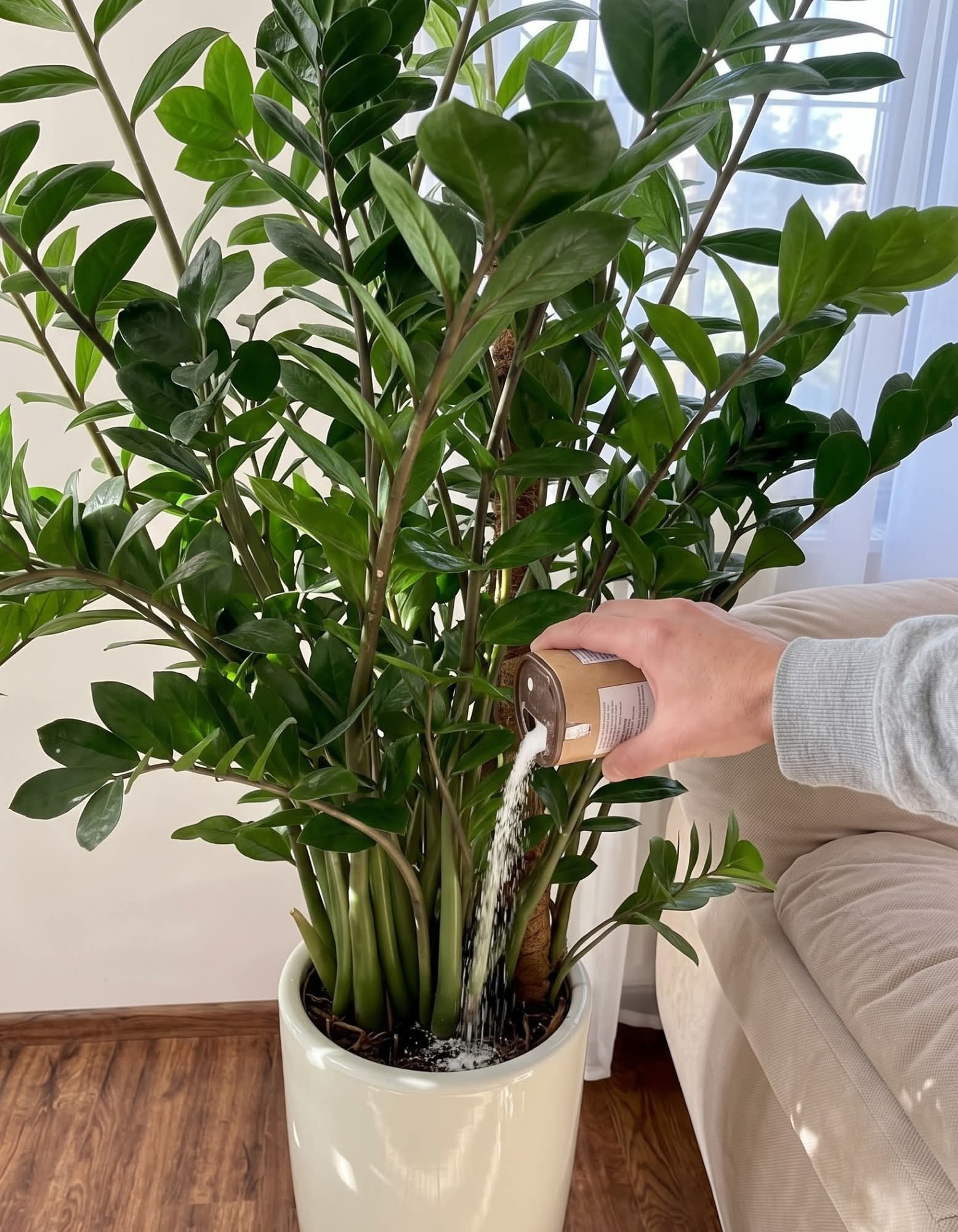
The Baking Soda & Slow-Release
If you want to keep a towering indoor ZZ Plant (Zamioculcas zamiifolia)—like the lush, multi-stemmed specimen with thick green stalks and glossy leaflets standing beside a bright window in a sleek cream ceramic planter above—completely free from soil mold, fungal gnats, and root rot while fueling vigorous new shoots, using a measured pinch of baking soda paired with slow-release white fertilizer granules is a classic indoor plant care secret. This targeted dual routine balances soil surface conditions, protects sensitive underground rhizomes, and delivers steady mineral nutrition for bold, upright growth.
Understanding the ZZ Plant: Why Soil Balance & Gentle Nutrition Matter
Native to the dry grasslands and rocky forests of East Africa, the ZZ Plant stores water and nutrients in thick, potato-like underground rhizomes. Because it grows slowly and needs infrequent watering, indoor potting mixes in deep decorative containers can sometimes develop stagnant surface mold, sour soil odors, or fungus gnats if moisture lingers near the base of the dense stems.
While baking soda (sodium bicarbonate) is not a fertilizer on its own, a light, controlled dusting on the soil surface—or a properly diluted foliar/soil rinse—temporarily raises surface pH to discourage fungal spores and soil mold, while slow-release white granules supply the real NPK nutrition needed to push up thick new stalks.
Why Baking Soda + Slow-Release Granules Transform ZZ Plants
Combining a light baking soda soil treatment with controlled-release mineral granules creates a clean, protective environment that supports both root health and glossy foliage:
- Natural Antifungal & Soil-Freshening Shield (Baking Soda): Lightly dusting a small amount of baking soda onto the topsoil—or watering with a weak baking soda solution—helps neutralize sour, overly acidic potting mix and suppresses surface mold and fungal pathogens around the crowded stem bases. (Important note: Less is always more with baking soda, as excess sodium can build up in container soil over time.)
- Slow-Release White Granules: Top-dressing the potting mix with balanced white slow-release granules ensures your ZZ Plant receives a steady, micro-dosed stream of nitrogen, phosphorus, and potassium every time you water. Phosphorus strengthens the thick underground rhizomes, while nitrogen and potassium keep the tall, arching stems rigid and the waxy leaves deep emerald green.
- Rhizome-Safe Synergy: Together, this clean soil defense and slow-release mineral routine prevents rot and salt burn, keeping the entire plant vigorous and glossy.
Step-by-Step Guide to Safely Using Baking Soda on ZZ Plants
Because ZZ Plants grow in containers with limited drainage flushing, using the exact right amount of baking soda is essential so sodium never accumulates in the root zone:
- Measure a Light Pinch (Never Dump Heavy Piles): Use just 1/4 to 1/2 teaspoon of pure baking soda for a medium-to-large pot. Lightly sprinkle it over the dry topsoil around the outer perimeter of the stems—avoiding heavy mounds directly against the green stalks. (Alternatively, dissolve 1/2 teaspoon of baking soda in 1 quart of water and lightly mist the soil surface and glossy leaves to prevent powdery mildew and wipe away dust.)
- Top-Dress with Slow-Release White Granules: At the start of spring, scatter 1 teaspoon of balanced slow-release white fertilizer granules evenly over the potting mix surface so your ZZ Plant gets steady structural fuel for 3 to 4 months.
- Water Deeply & Flush Occasionally: When the potting mix has dried out completely, water thoroughly until excess water drains out of the bottom of the inner nursery pot. Every few months, flush the pot with plain lukewarm water to wash away any residual sodium or mineral salts.
- Provide Bright, Indirect Light: Position your ZZ Plant near a bright window with filtered daylight. While ZZ Plants survive in low light, bright indirect light triggers thick, sturdy new stems to shoot up from the rhizomes.
Troubleshooting Common ZZ Plant Issues
- Yellowing Lower Leaves & Mushy Stems: This is almost always caused by overwatering rather than nutrient deficiency. Let the soil dry out 100% from top to bottom before watering again, and empty any standing water from the bottom of the decorative white planter.
- White Crust on Topsoil: If white mineral or baking soda residue builds up on the soil surface, scrape off the top half-inch of soil, replace it with fresh, fast-draining potting mix, and stick to plain water for a few cycles.
- No New Shoots Emerging: A ZZ Plant that sits unchanged for months usually needs brighter indirect light, warmer indoor temperatures, and a spring application of slow-release white granules to wake up dormant rhizomes.