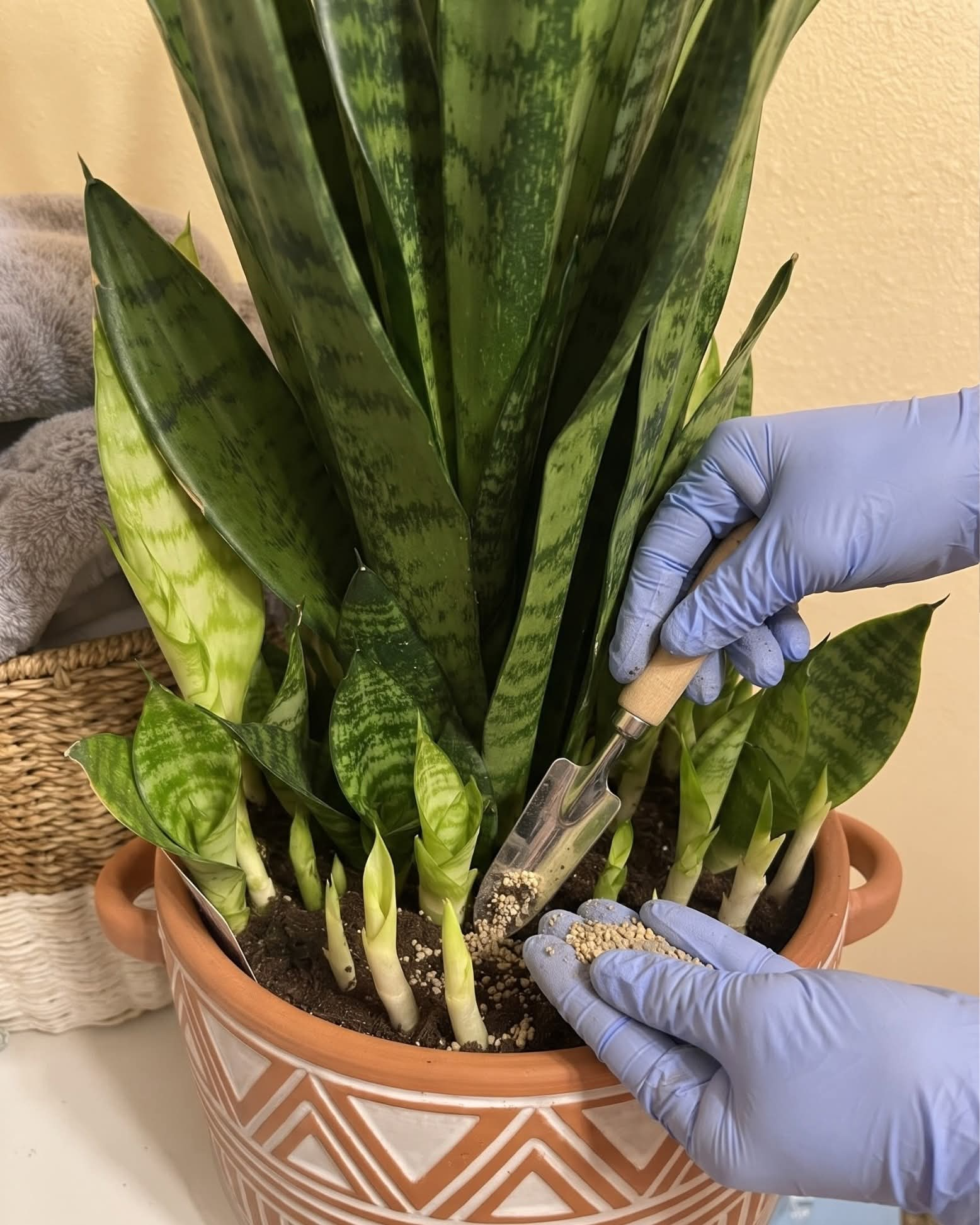
If you want to transform a mature indoor Snake Plant (Sansevieria / Dracaena trifasciata)—like the towering, architectural specimen bursting with dozens of fresh, tightly furled pups around the base in the patterned terracotta planter above—into a fast-multiplying powerhouse, targeted top-dressing with slow-release white fertilizer granules is the secret. Applying controlled-release mineral granules right along the soil line delivers the exact, steady nutrition needed to supercharge underground rhizomes, push up thick clusters of new shoots, and keep tall, sword-like blades rigid and deeply patterned.
Understanding Snake Plant Rhizomes: Why Slow-Release Granules Work Best
Native to the arid, rocky regions of West Africa, Snake Plants store water and energy in thick, horizontal underground stems called rhizomes. Unlike leafy tropical houseplants that drink heavily every few days, Snake Plants grow steadily over months and only need watering once every few weeks.
Because you water them infrequently, traditional liquid fertilizers can either wash right through fast-draining soil too quickly or burn dormant roots if applied to dry potting mix. Slow-release white granules solve this problem completely—releasing micro-doses of balanced nutrients only when watered, feeding the rhizomes gently and consistently without salt shock.
Why These White Granules Trigger Explosive Pup Production
Using a small hand trowel to work slow-release granules directly into the topsoil around the base of the mother plant creates the ideal environment for continuous offsetting:
- Sustained Rhizome Fuel: Every time you water, the polymer- or resin-coated white granules release a controlled trickle of nitrogen, phosphorus, and potassium. Phosphorus stimulates strong underground root and rhizome expansion, signaling the plant to send up rings of healthy new pups around the perimeter of the pot.
- Thick, Upright Foliage: Steady nitrogen and potassium strengthen cellular walls inside the tall, variegated blades, preventing floppy, bending leaves and sharpening the contrast between deep forest-green bands and pale lime-green new growth.
- Zero Root Burn: Unlike harsh chemical spikes or concentrated liquid feeds that can scorch thick succulent roots and cause brown, crispy leaf tips, slow-release granules feed cleanly over 3 to 4 months with a single application.
Step-by-Step Guide to Applying Slow-Release White Granules
To get dozens of vigorous new Snake Plant pups without risking over-fertilization, follow this simple routine:
- Time Your Application: Apply slow-release granules once in early spring as new growth awakens, and optionally once more in mid-summer. Avoid fertilizing in late autumn and winter when the plant rests.
- Measure the Right Dose: For a medium-to-large potted Snake Plant like the one shown above, measure 1 to 1.5 teaspoons of balanced slow-release white granules (such as a 14-14-14 or 10-10-10 formula).
- Top-Dress Around the Perimeter: Wearing gardening gloves, use a narrow hand trowel to gently scatter and lightly scratch the granules into the top half-inch of dry potting mix—focusing on the open soil spaces between the mother plant and emerging pups rather than dumping granules directly into the center of leaf rosettes.
- Water In Gently: After working the granules into the topsoil, water the plant thoroughly until excess moisture drains out the bottom of the terracotta pot. This activates the slow-release coating so nutrients begin nourishing the rhizomes immediately.
- Provide Bright, Indirect Light: While Snake Plants tolerate low light, placing your pot in bright, indirect sunlight—or a spot with gentle morning sun—is essential for turning slow-release nutrition into rapid, compact pup production.
Troubleshooting Common Snake Plant Growth Issues
- No New Pups Appearing: A Snake Plant that stays a single clump usually needs brighter indirect light, a snug pot (they prefer being slightly root-bound before pushing out pups), and a spring top-dressing of slow-release granules.
- Pale, Stretched, or Thin Pups: When new shoots emerge very pale or tall and skinny, move the plant closer to a bright window so the young leaves can thicken and develop rich green striping.
- Soft, Mushy Base or Yellowing Leaves: This is a sign of overwatering rather than nutrient deficiency. Always let the soil dry out completely from top to bottom before watering again, and ensure your terracotta planter has an unobstructed drainage hole.