with Banana Peel Compost Tea
Alocasia plants are admired for their beautiful, tropical foliage and unique leaf shapes. Their young plants need gentle care, the right growing environment, and consistent attention to develop strong roots and healthy new leaves.
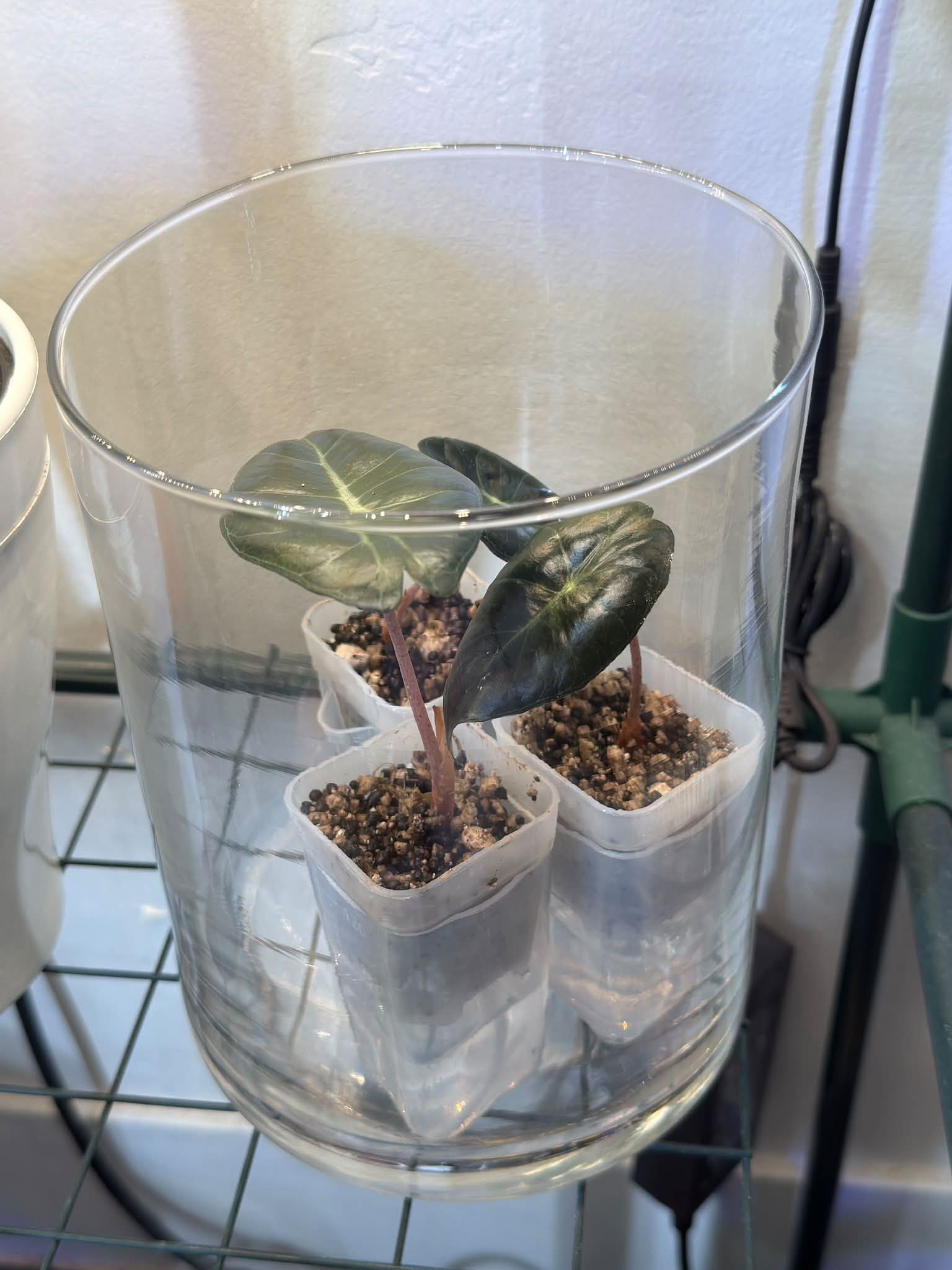
In this gardening setup, several young Alocasia plants are growing in small containers filled with a chunky growing medium. A clear glass container surrounds the pots, creating a humid environment that can help support young plants while they establish themselves.
Why Use Banana Peel Compost Tea?
Banana peels contain small amounts of nutrients, including potassium, along with other organic compounds. When properly composted, they can contribute to a nutrient-rich compost mixture.
Some gardeners use compost tea made from mature compost as a gentle soil supplement. However, banana peel water alone is not a complete fertilizer, and there is limited evidence that homemade banana peel tea provides plants with all the nutrients they need.
For healthier results, use fully matured compost rather than soaking fresh banana peels and applying the mixture directly to houseplants.
How to Apply the Water and Compost Tea
- Prepare a mild compost tea using finished, mature compost and clean water.
- Strain the mixture carefully to remove solid particles.
- Make sure the growing medium is not already saturated.
- Apply a small amount around the growing medium rather than pouring it over the leaves.
- Allow excess water to drain freely from the pots.
- Avoid frequent applications, especially when the plants are young.
Do not leave the roots sitting in standing water. Too much moisture can encourage root rot and other problems.
Creating the Right Environment for Alocasia
Alocasia plants generally prefer bright, indirect light, warm temperatures, and moderate to high humidity. The clear glass enclosure in the picture may help maintain humidity, but it should not become excessively hot or remain completely sealed.
Keep the following tips in mind:
- Light: Provide bright, filtered light and avoid harsh direct sunlight.
- Humidity: Maintain comfortable humidity while allowing some fresh-air circulation.
- Watering: Water when the upper part of the growing medium begins to dry.
- Growing medium: Use a loose, airy mixture that allows roots to breathe.
- Temperature: Keep plants away from cold drafts and sudden temperature changes.
Important Signs to Watch For
Healthy Alocasia roots need both moisture and oxygen. If the growing medium stays wet for too long, leaves may turn yellow, stems may become soft, and roots can begin to deteriorate.
Watch your plants regularly and remove any dead or damaged plant material. If you notice mold, unpleasant odors, or excessive condensation inside the glass container, improve ventilation.
Final Thoughts
Young Alocasia plants can thrive with the right balance of humidity, light, watering, and proper nutrition. Mature compost tea may be used occasionally as a supplementary soil treatment, but it should never replace a balanced fertilizer formulated for houseplants.
With patience and consistent care, these beautiful tropical plants can gradually develop stronger roots and attractive new foliage.