🌿
Small houseplants have a special charm. Even a young plant with only a few leaves can become a beautiful addition to your indoor garden. But to keep it growing well, it needs more than occasional watering. Healthy roots, suitable light, good drainage, and balanced nutrition all play an important role.
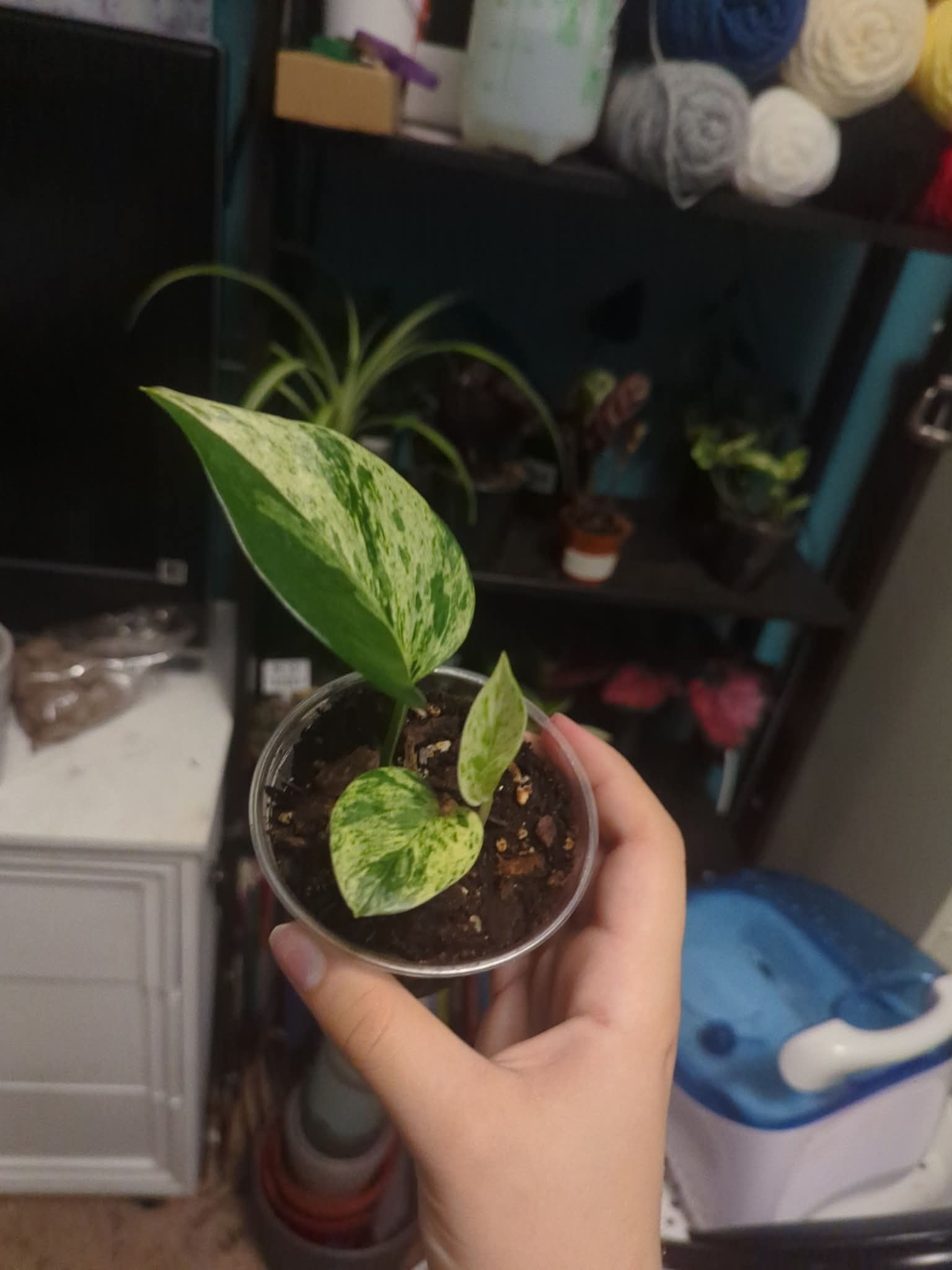
The plant shown here appears to be a young variegated pothos, with attractive green-and-cream leaves. Its delicate appearance makes it especially important to use gentle care practices and avoid adding unnecessary products to the soil.
Some indoor gardeners experiment with mineral-based soil amendments, including white crystals that dissolve in water. One commonly discussed option is magnesium sulfate, but it is important to understand when this mineral is actually useful.
🌱 Understanding What Your Plant Needs
Before adding anything to the soil, take a moment to examine the plant.
Look for:
- Firm leaves with natural green and cream patterns.
- Healthy stems without soft or dark areas.
- Roots that are not sitting in constantly wet soil.
- New growth emerging from the growing points.
- Soil that drains properly after watering.
A plant with pale leaves, slow growth, or yellowing does not automatically need extra minerals. These symptoms can also result from poor lighting, watering problems, root damage, or unsuitable soil conditions.
💧 Understanding Mineral Supplements
Magnesium is an essential plant nutrient. It helps plants produce chlorophyll, the pigment responsible for absorbing light during photosynthesis. Sulfur is also important for normal plant growth.
However, adding magnesium sulfate to every houseplant is not necessary. It supplies magnesium and sulfur, but it does not provide the complete range of nutrients that plants need.
It is most appropriate when a magnesium deficiency has been identified or when a soil test indicates that additional magnesium is needed.
Using it without a demonstrated need can contribute to an unnecessary buildup of soluble salts in the growing medium.
🪴 How to Use Mineral Supplements Responsibly
If a genuine magnesium deficiency has been identified, follow these precautions:
- Confirm the problem before applying a supplement. Yellowing between leaf veins on older leaves can sometimes indicate magnesium deficiency, but other problems can look similar.
- Check the growing medium and watering routine first.
- Use a product specifically labeled for plant use.
- Follow the manufacturer’s application rate rather than guessing a measurement.
- Avoid combining several mineral supplements or fertilizers at the same time.
- Never apply concentrated crystals directly around delicate roots.
- Stop using the supplement if the plant shows signs of stress.
For most healthy indoor pothos plants, a complete, balanced houseplant fertilizer used according to its label is a more appropriate source of regular nutrition.
☀️ The Best Conditions for Variegated Pothos
1. Provide Bright, Indirect Light
Variegated pothos generally needs good indirect light to maintain its attractive leaf patterns. Place it near a bright window, but protect it from intense direct sunlight that can scorch the leaves.
2. Choose a Pot With Drainage
A container with drainage holes helps prevent excess water from collecting around the roots. If you use a decorative cup without drainage, consider transferring the plant to a suitable nursery pot.
3. Use an Airy Potting Mix
Choose a loose, well-draining indoor plant mix. Adding perlite or fine orchid bark can help improve airflow and drainage.
4. Water According to Soil Moisture
Check the upper portion of the growing medium before watering. When it begins to dry, water thoroughly and allow the excess to drain away. Avoid keeping the roots constantly wet.
5. Feed During Active Growth
During spring and summer, a balanced liquid houseplant fertilizer can support healthy development. Follow the label instructions and reduce feeding during periods of slower growth.
🌿 Common Mistakes That Can Slow Growth
- Adding mineral supplements without knowing whether the plant needs them.
- Overwatering a small plant in a container without drainage.
- Using garden soil that becomes compacted indoors.
- Placing the plant in harsh direct sunlight.
- Applying fertilizer too frequently.
- Expecting a homemade treatment to replace proper nutrition.
- Ignoring early signs of root stress.
Remember that small plants have relatively limited root systems. They can be more sensitive to concentrated fertilizers and mineral buildup than established plants.
🌱 A Simple Routine for Long-Term Growth
The best approach is to keep things consistent. Give your pothos suitable indirect light, water when the soil needs it, maintain good drainage, and provide balanced nutrition only when appropriate.
If the leaves begin yellowing or growth slows, investigate the growing conditions before reaching for another supplement. Healthy roots and a stable environment are the foundation of a strong plant.
With patience and careful attention, a small variegated pothos can gradually develop into a fuller, more beautiful indoor plant. Every new leaf is a reminder that good plant care is built through consistency, not excessive treatments.
Save this guide and share it with someone who loves growing beautiful houseplants! 💚