A Guide to Healthier Green Leaves 🌿
A beautiful indoor plant can transform an ordinary room into a peaceful, welcoming space. But when the leaves begin developing brown tips, yellow patches, or dry edges, it may be a sign that something in the plant’s environment needs attention.
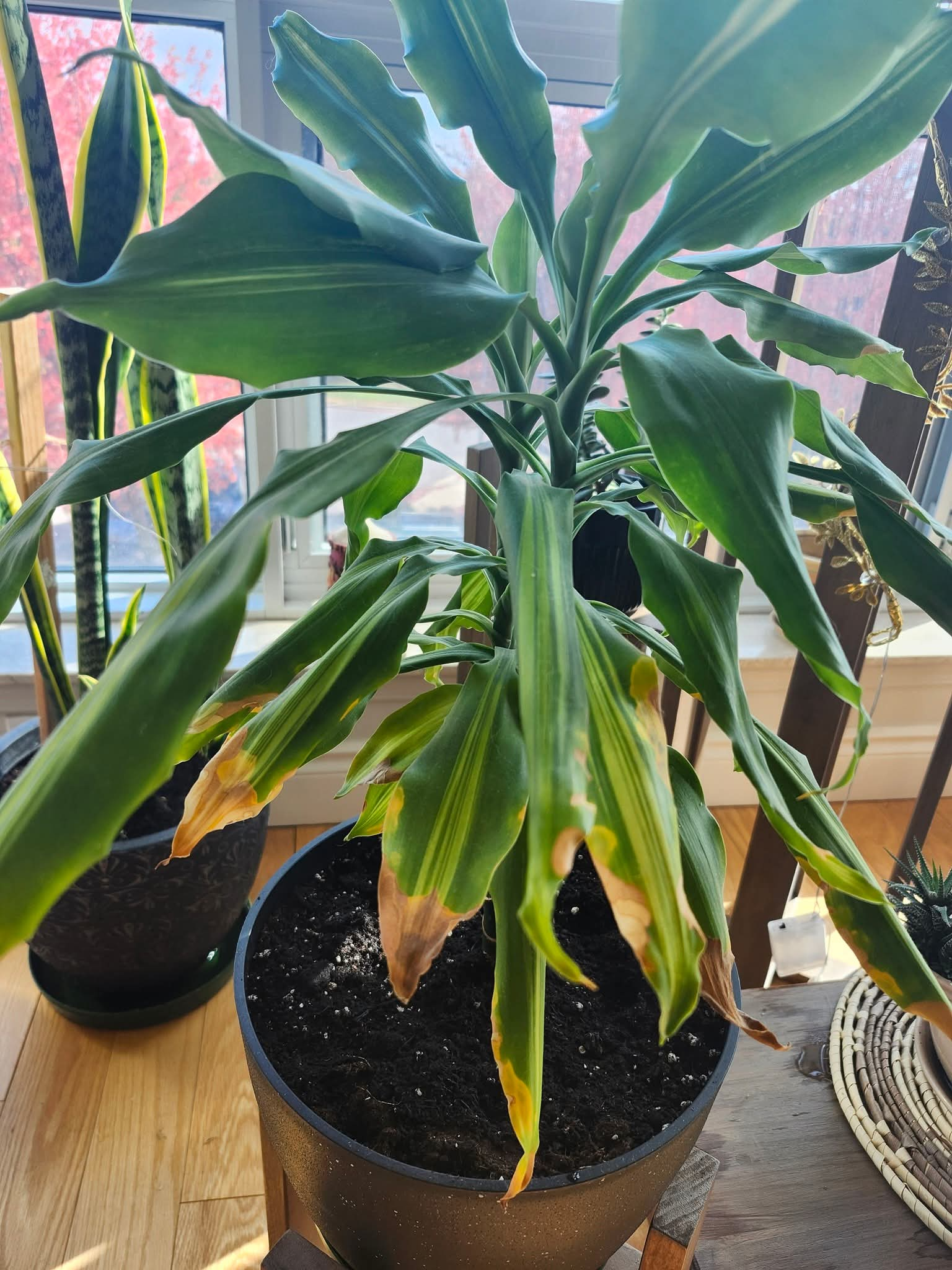
The plant in this picture appears to be a Dracaena, a popular houseplant known for its long, elegant leaves and tropical appearance. Although Dracaenas are generally easy to care for, they can become stressed when watering, lighting, or soil conditions are not quite right.
Some gardeners experiment with homemade liquid mixtures and organic feeding methods. However, before trying any new treatment, it is important to understand what the plant actually needs.
🌱 Why Are the Leaf Tips Turning Brown?
Brown tips and yellowing edges are common problems in indoor Dracaenas. They can develop for several reasons:
- Inconsistent watering: Allowing the soil to become extremely dry or keeping it constantly wet can stress the roots.
- Poor drainage: Water trapped around the roots may contribute to root damage.
- Mineral and salt buildup: Some Dracaenas are sensitive to minerals and fluoride in tap water.
- Low humidity: Very dry indoor air can contribute to crispy leaf edges.
- Excessive fertilizer: Too much fertilizer can cause salt accumulation and damage the roots.
- Lighting problems: Harsh direct sunlight may scorch the leaves, while very low light can weaken growth.
Before adding fertilizer or a homemade treatment, check the soil moisture and inspect the drainage of the pot.
💧 Choosing the Right Liquid for Plant Care
A liquid treatment should be selected according to the plant’s needs. Not every mixture found online is suitable for every houseplant.
Some homemade gardening recipes include dairy-based liquids, but pouring ordinary milk directly into potting soil is not recommended. Milk can spoil, develop unpleasant odors, encourage unwanted microbial growth, and attract pests. It is not a reliable substitute for a balanced plant fertilizer.
For safer feeding, choose a reputable liquid organic fertilizer formulated for houseplants. Follow the manufacturer’s dilution instructions and avoid applying it more frequently than recommended.
🪴 How to Feed a Dracaena Properly
A careful feeding routine can support healthy growth when the plant is actively growing.
- Check that the pot has drainage holes.
- Make sure the soil is not already waterlogged.
- Select a balanced fertilizer suitable for indoor foliage plants.
- Dilute it exactly as directed on the label.
- Apply it evenly to the soil, avoiding the leaves and the plant’s central growth point.
- Allow excess water to drain away.
- Avoid feeding a plant that is severely stressed or showing signs of root rot until the underlying problem has been addressed.
Remember that more fertilizer does not mean faster or healthier growth. Dracaenas generally need less feeding than many fast-growing tropical plants.
☀️ The Best Environment for Healthy Dracaena Leaves
1. Bright, Indirect Light
Place the plant near a bright window where it receives filtered daylight. Protect it from strong direct afternoon sun, which can burn the leaves.
2. Water Only When Needed
Check the upper portion of the soil before watering. Allow it to dry somewhat between waterings, and never leave the pot sitting in a tray full of water.
3. Use Well-Draining Soil
A suitable indoor potting mix that allows excess water to escape helps protect the roots. Make sure the container has proper drainage.
4. Pay Attention to Water Quality
If brown tips continue appearing, consider using filtered water or another low-mineral water source. Dracaenas can be sensitive to certain minerals found in tap water.
5. Keep the Leaves Clean
Gently wipe dusty leaves with a soft, damp cloth. Clean foliage looks brighter and allows the plant to make better use of available light.
🌿 What to Do About Existing Brown Tips
Once a leaf tip has turned brown, it will not become green again. You can carefully trim the dry portion with clean scissors, following the natural shape of the leaf.
Do not remove every leaf with a small brown edge. Green areas still contribute to the plant’s growth, so preserve as much healthy tissue as possible.
If several leaves are turning yellow or becoming soft, inspect the roots and soil rather than assuming the plant needs more fertilizer.
⚠️ Important Mistakes to Avoid
- Never pour undiluted homemade mixtures into the soil.
- Avoid using ordinary milk as a routine fertilizer.
- Do not combine several fertilizers or homemade treatments.
- Never fertilize constantly in an attempt to repair brown leaves.
- Avoid keeping the roots permanently wet.
- Do not place the plant in intense direct sunlight.
- Always check the plant’s condition before changing its care routine.
🌿 A Healthier Plant Starts With Consistency
A Dracaena does not need complicated treatments to look beautiful. It needs the right amount of light, careful watering, good drainage, suitable nutrition, and time to recover from stress.
If you notice brown tips, begin by checking the water quality, soil moisture, and drainage. Correcting the underlying cause is much more effective than repeatedly adding new mixtures.
With patient, consistent care, your Dracaena can produce fresh growth and maintain its elegant tropical appearance for years.
Save this guide and share it with someone who loves keeping beautiful indoor plants! 💚