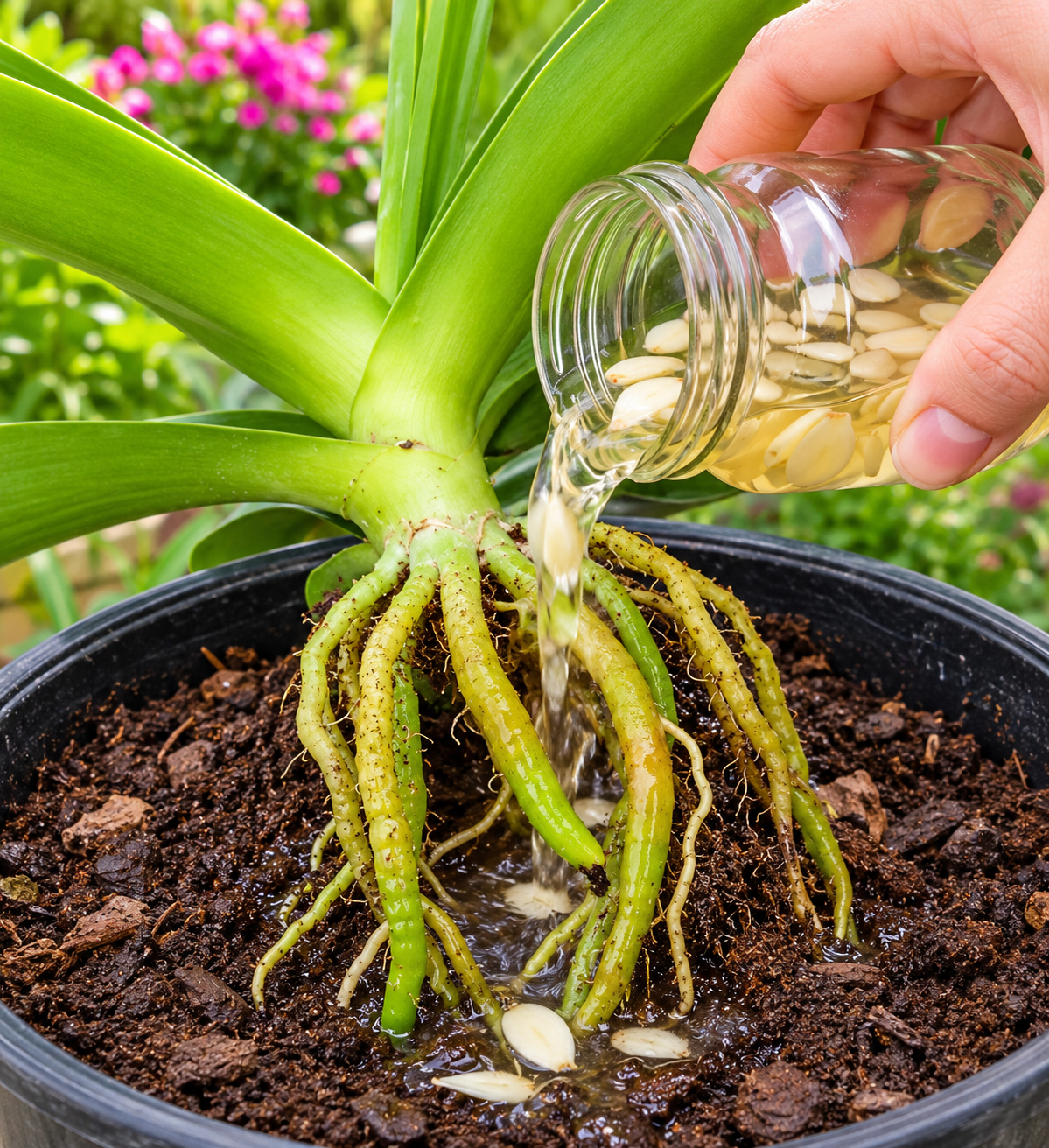
🌿 How to Support Strong Roots and Healthy Plant Growth Naturally
Healthy roots are the foundation of every beautiful plant. They absorb water and nutrients, support new growth, and help leaves remain firm, green, and full of life. When roots become weak or damaged, even a plant with beautiful leaves can begin to struggle.
Many plant lovers enjoy exploring homemade plant-care methods, especially when they use simple ingredients already available at home. One popular gardening idea involves preparing a mild homemade infusion and using it as part of a plant-care routine. However, natural does not automatically mean safe, and every plant responds differently.
Here is how to care for your plant’s roots, maintain healthy growth, and approach homemade treatments responsibly.
🌱 1. Start by Understanding the Roots
Before applying any homemade solution, take a close look at the root system.
Healthy roots are generally firm and should not feel mushy or smell unpleasant. Depending on the plant species, their natural color may range from green or silver to cream or light brown.
Watch for these warning signs:
- Soft, dark, or mushy roots.
- An unpleasant smell coming from the potting mix.
- Roots that dry out excessively.
- Leaves becoming limp or yellow.
- Growth slowing down unexpectedly.
If you notice signs of root rot, remove the plant from its pot when appropriate, inspect the damaged areas, and use clean tools to remove severely rotten roots. Allow the plant to recover in a suitable, airy growing medium.
💧 2. Use Water Carefully
Water is essential, but too much water can be more harmful than too little.
Different plants have different watering needs. Some prefer consistently lightly moist soil, while others need their growing medium to dry between waterings.
For plants grown in pots:
- Check the moisture level before watering.
- Use room-temperature water when possible.
- Water the growing medium evenly.
- Allow excess water to drain away.
- Never leave the roots sitting in stagnant water.
For orchids, pay special attention to airflow around the roots. Their growing medium should provide both moisture and oxygen.
🌿 3. Homemade Infusions: What You Should Know
Some gardeners prepare homemade infusions using kitchen ingredients and share them as traditional plant-care tips. These preparations are sometimes discussed as natural additions to a gardening routine.
One frequently shared method involves garlic. Although garlic contains naturally occurring sulfur compounds, there is limited reliable evidence that homemade garlic water improves root growth or acts as a complete fertilizer.
It should never replace proper watering, suitable growing media, or a balanced fertilizer.
If you decide to experiment with a homemade preparation, keep these precautions in mind:
- Avoid strong or concentrated mixtures.
- Never apply an unknown preparation directly to delicate roots.
- Test on a small area or a single plant first.
- Stop immediately if you notice leaf damage, root discoloration, or unusual odors.
- Do not combine several homemade treatments.
- Avoid repeated applications without observing how the plant responds.
Remember: A homemade gardening tip is not automatically a scientifically proven treatment.
🪴 4. Choose the Right Growing Medium
A suitable growing medium helps roots receive the right balance of moisture and oxygen.
For many orchids, a standard garden-soil mixture is unsuitable because it can hold too much water around their roots.
Depending on the orchid type, a suitable medium may contain:
- Orchid-grade bark.
- Perlite.
- Horticultural charcoal.
- Other materials specifically designed for orchid growing.
For ordinary houseplants, choose a potting mix suited to the plant species rather than using one mixture for everything.
Always use a container with appropriate drainage and enough room for healthy root development.
☀️ 5. Give Your Plant Suitable Light
Light provides the energy plants need for photosynthesis and healthy growth.
Place your plant where it receives the type of light appropriate for its species.
For many indoor orchids, bright indirect light is a good starting point. Avoid harsh midday sunlight that can scorch leaves, and do not keep the plant in a dark corner for extended periods.
Look for signs that the lighting needs adjustment:
- Pale or bleached leaves may indicate excessive light.
- Very dark leaves and weak growth may suggest insufficient light.
- Healthy new growth is a useful sign that conditions are becoming more suitable.
🌡️ 6. Maintain Comfortable Temperature and Airflow
Sudden temperature changes can stress plants.
Keep indoor plants away from cold drafts, heating vents, and direct blasts of air conditioning. Provide gentle air movement, especially around plants with exposed or aerial roots.
Good airflow helps the growing environment dry appropriately and reduces conditions that encourage fungal and bacterial problems.
🌸 7. Feed Your Plant Responsibly
Water alone cannot provide every nutrient a growing plant needs.
During active growth, use a fertilizer formulated for the particular plant type. Follow the manufacturer’s dilution and application instructions.
For orchids, choose an orchid fertilizer and avoid applying concentrated products directly to exposed roots.
More fertilizer does not mean faster growth. Excess nutrients can accumulate and damage sensitive roots.
🔍 8. Watch for Changes After Any Treatment
After changing your plant-care routine, observe the plant instead of immediately repeating the treatment.
Check:
- Whether new roots are developing.
- Whether existing roots remain firm.
- Whether leaves maintain their natural color.
- Whether the growing medium is drying at an appropriate rate.
- Whether any unusual spots, odors, or soft areas appear.
Healthy improvement usually takes time. Avoid expecting an immediate transformation from a single watering or homemade preparation.
🌿 9. Common Mistakes to Avoid
Even experienced plant owners can make mistakes when trying new care methods.
Overwatering: Constantly wet growing media can deprive roots of oxygen.
Using concentrated mixtures: Strong homemade preparations may irritate or damage delicate plant tissue.
Ignoring drainage: A decorative pot without drainage can trap excess water.
Applying treatments too frequently: Repeated applications can create problems instead of solving them.
Ignoring the plant species: A method suitable for one plant may be unsuitable for another.
Expecting instant results: Root development and new leaf growth take time.
❤️ A Simple Root-Care Checklist
- Inspect: Check roots and leaves regularly.
- Water: Follow the plant’s actual moisture needs.
- Drainage: Never allow water to collect around the roots.
- Growing medium: Choose an airy mixture suitable for the species.
- Lighting: Provide the correct amount of light.
- Nutrition: Use an appropriate fertilizer at the recommended strength.
- Homemade treatments: Research safety before trying them.
- Patience: Give the plant time to respond to improved conditions.
🌱 Final Thoughts
Beautiful leaves begin with healthy roots. The most effective approach to plant care is not adding more and more products, but creating the right growing conditions and understanding what your plant actually needs.
Homemade gardening ideas can be interesting to explore, but they should always be approached carefully. Protect delicate roots, avoid concentrated mixtures, and prioritize proper drainage, suitable light, and balanced nutrition.
With consistent attention and the right environment, your plant has a much better chance of producing healthy roots and beautiful new growth.
💚 Save this guide and share it with someone who loves caring for plants!