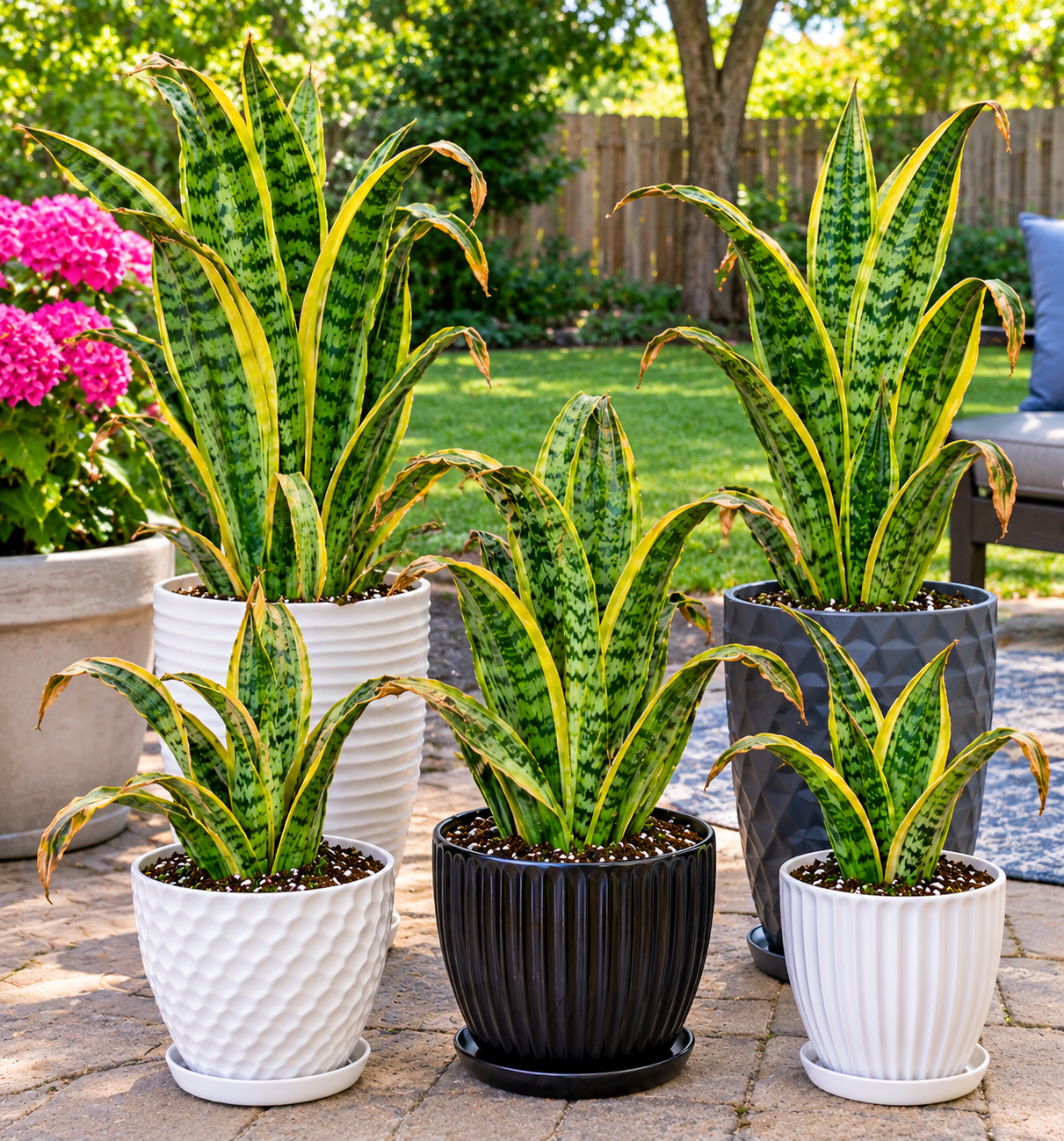
🌿 How to Keep Your Snake Plant Healthy, Strong, and Beautiful
Snake plants are among the most popular indoor plants, loved for their striking upright leaves, attractive patterns, and ability to adapt to different home environments. They are often described as low-maintenance plants, but that does not mean they can thrive without proper care.
If your Snake Plant has yellowing leaves, weak growth, brown tips, or a tired appearance, it may be time to review its growing conditions and daily care routine.
A healthy Snake Plant does not need complicated treatments. The key is understanding what its roots and leaves need and avoiding products that could cause unnecessary stress.
🌱 1. Understand Your Snake Plant’s Needs
Snake Plants (Dracaena trifasciata, formerly Sansevieria) store water in their thick leaves. This makes them more tolerant of dry conditions than many other houseplants.
However, their biggest enemy is often excessive watering. When the roots remain wet for too long, they can become damaged and begin to rot.
Before trying any homemade plant treatment, inspect the leaves, soil, and roots. A struggling plant may need better drainage or a change in watering habits rather than an additional product.
💧 2. Follow a Careful Watering Routine
Snake Plants prefer their potting mix to dry out between waterings.
Use your finger or a moisture meter to check the soil before adding water. If the mix is still damp, wait. When the soil has dried sufficiently, water thoroughly and allow all excess water to drain away.
Keep these tips in mind:
- Always use a pot with drainage holes.
- Never leave the plant sitting in standing water.
- Reduce watering during cooler months.
- Avoid watering on a fixed schedule without checking the soil.
- Make sure the potting mix does not remain wet for extended periods.
☀️ 3. Provide the Right Amount of Light
One reason Snake Plants are so popular is their ability to tolerate a range of lighting conditions.
They can grow in lower-light spaces, but bright, indirect light generally supports stronger growth and more attractive foliage.
Place your plant near a bright window, while protecting it from intense direct sunlight that may scorch the leaves.
If your Snake Plant has variegated yellow edges, adequate light helps maintain its attractive appearance.
🪴 4. Choose a Well-Draining Soil Mix
Good drainage is essential for healthy roots.
Use a cactus and succulent potting mix or another airy mixture that allows excess water to escape quickly. A suitable mix may include:
- Potting soil.
- Perlite or pumice.
- Coarse horticultural material for improved drainage.
Avoid dense soil that holds too much moisture. Also, choose a container that is appropriately sized for the root system.
⚠️ 5. Be Careful With Homemade Plant Treatments
Many gardening videos recommend household powders and mixtures as quick solutions for yellowing leaves, pests, or slow growth. However, not every household product is suitable for plants.
For example, baking soda is sometimes promoted as a homemade plant-care solution. Although it has certain household and gardening uses, it should not be treated as a general fertilizer or poured into Snake Plant soil as a routine treatment.
Baking soda contains sodium bicarbonate. Repeated or excessive application can increase sodium levels in the growing medium, affect soil chemistry, and potentially stress sensitive roots.
Before applying any homemade mixture:
- Identify the actual problem affecting the plant.
- Check whether the treatment is suitable for Snake Plants.
- Avoid applying concentrated household mixtures to the roots.
- Never combine several treatments without understanding their effects.
- Test any appropriate foliar product according to reliable instructions.
A simple rule: Do not assume that a product is safe for plants just because it is commonly used around the house.
🔍 6. Recognize Common Snake Plant Problems
Learning to recognize early warning signs can help you protect your plant.
Yellow leaves: Often associated with overwatering, poor drainage, or root problems.
Soft or mushy leaves: May indicate excessive moisture or root rot.
Brown leaf tips: Can result from inconsistent watering, damaged roots, or environmental stress.
Slow growth: May be related to low light, seasonal dormancy, or limited growing conditions.
Wrinkled leaves: Can indicate that the plant needs water, although damaged roots may also prevent proper water absorption.
Always investigate the cause before applying fertilizer or a homemade remedy.
🌿 7. Keep the Leaves Clean
Dust can accumulate on Snake Plant leaves and make their natural patterns look dull.
Gently wipe the leaves with a soft, slightly damp cloth. Support each leaf while cleaning to avoid bending or damaging it.
Avoid using household cleaning products, oils, or unnecessary sprays to make the leaves shiny.
Clean foliage also makes it easier to notice pests, discoloration, and other changes.
🌡️ 8. Maintain Comfortable Indoor Conditions
Snake Plants generally prefer warm indoor temperatures and do not tolerate frost well.
Keep them away from cold drafts, freezing windows, and sudden temperature changes.
They can adapt to normal household humidity, so special humidity equipment is usually unnecessary.
🌸 9. Support Healthy New Growth
Strong new leaves develop when the plant receives consistent care.
During the active growing season, you can use a balanced fertilizer formulated for houseplants or succulents, diluted and applied according to its label.
Do not overfeed. Excess fertilizer can accumulate in the soil and damage roots.
Repot only when necessary, such as when the plant becomes crowded or the potting mix has deteriorated. Spring and early summer are generally suitable times for repotting.
❤️ Your Snake Plant Care Checklist
- Watering: Allow the soil to dry between waterings.
- Lighting: Provide bright, indirect light when possible.
- Soil: Use an airy, well-draining potting mix.
- Pot: Choose a container with drainage holes.
- Feeding: Use suitable plant fertilizer according to its instructions.
- Cleaning: Wipe dusty leaves gently.
- Inspection: Check regularly for pests, soft leaves, and root problems.
- Homemade treatments: Research their safety before applying anything.
🌿 Final Thoughts
A beautiful Snake Plant is the result of consistent care, not a collection of complicated tricks. Proper watering, good drainage, suitable lighting, and healthy roots make a much greater difference than adding random household products.
If you see a gardening trick online, take a moment to understand what it does, whether it is appropriate for your plant, and how it should be used safely.
Give your Snake Plant the right environment, be patient with its growth, and let healthy roots do their work.
💚 Save this guide and share it with someone who loves growing Snake Plants!