A Natural Golden Liquid for Happy, Healthy Plants: Discover a Gentle Approach to Plant Care
Discover the Beauty of Homemade Plant Nutrition
There is something wonderful about finding simple ways to care for our beloved houseplants using everyday materials. Gardening does not always require expensive products or complicated treatments. Sometimes, the most interesting gardening experiments begin with ingredients that are already available in our kitchens.
Today, we are exploring a homemade golden-colored liquid prepared using banana peels and honey. This natural-looking mixture has attracted the attention of gardening enthusiasts who enjoy experimenting with homemade plant-care preparations.
Pouring a mild liquid treatment around the soil of an ornamental plant may seem like a simple action, but understanding what goes into the mixture, how it interacts with the growing medium, and whether it is suitable for indoor plants is extremely important.
Can this homemade preparation provide nutrients? Can it encourage beautiful new leaves? What role do banana peels and honey play? And how can we avoid damaging delicate roots?
Let’s discover the science, potential benefits, and important precautions behind this gardening experiment.
Why Are Banana Peels Used in Gardening?
Banana peels contain organic matter and several mineral elements, including potassium, with smaller quantities of other nutrients.
Potassium is an essential plant nutrient involved in many important physiological processes. It helps regulate water movement within plant tissues, supports enzyme activity, and contributes to normal plant metabolism.
This is one reason banana peels are frequently discussed in natural gardening.
When banana peels decompose, their organic material breaks down and releases some of the nutrients they contain. However, fresh banana peels do not provide an immediately available, balanced fertilizer.
The amount of nutrients released depends on several factors, including decomposition time, preparation method, temperature, and microbial activity.
A homemade banana peel liquid should therefore be considered an experimental supplementary preparation rather than a complete fertilizer.
Plants still need a balanced supply of nitrogen, phosphorus, potassium, calcium, magnesium, sulfur, and micronutrients to maintain healthy development.
What Makes This Golden Liquid Interesting?
The golden or amber appearance of a homemade liquid prepared from banana peels and honey can make it look like a special natural plant tonic.
Its color may come from soluble compounds released during preparation.
However, color alone cannot tell us how nutritious a liquid is or whether it contains beneficial substances in useful concentrations.
The real value of any homemade plant treatment depends on its ingredients, preparation conditions, concentration, and suitability for the plant receiving it.
This is why it is important to distinguish between a gardening experiment and a scientifically established fertilizer.
Understanding the Role of Potassium in Plant Growth
Potassium is one of the three primary macronutrients required by plants, alongside nitrogen and phosphorus.
Although it does not directly form the main structural components of leaves in the same way as some other nutrients, it performs many essential functions.
Water Regulation
Potassium helps regulate the opening and closing of stomata, the tiny pores found on leaves. This process plays an important role in water management and gas exchange.
Enzyme Activation
Many plant enzymes depend on potassium to function properly. These enzymes participate in essential metabolic processes.
Plant Strength
Adequate potassium contributes to normal plant development and helps plants respond to environmental stress.
Photosynthesis and Metabolism
Potassium supports processes involved in photosynthesis and the movement of sugars throughout the plant.
Although banana peels contain potassium, homemade banana peel water cannot be assumed to supply enough potassium to correct a deficiency.
A properly formulated fertilizer is more predictable when a plant needs additional nutrition.
What Is the Role of Honey in This Homemade Preparation?
Honey is a natural substance containing sugars and other organic compounds.
It is often mentioned in homemade gardening recipes, but its use as a soil fertilizer is not well established.
Honey does not provide a balanced supply of essential plant nutrients, and adding it directly to indoor plant soil is generally not recommended.
Its sugars can encourage the growth of microorganisms, including unwanted fungi and bacteria, particularly when the growing medium remains moist.
Honey may also attract ants and other insects.
For these reasons, it is important to use caution with honey-based mixtures. Adding honey does not automatically make a homemade plant treatment more nutritious or beneficial.
A safer approach is to use mature compost and a properly formulated plant fertilizer rather than adding concentrated sugary ingredients to indoor pots.
Can Banana Peel Liquid Encourage New Leaves?
One of the most exciting moments for any plant lover is seeing a fresh green leaf emerging from the center of a houseplant.
New leaves represent active growth and are often a sign that the plant has suitable growing conditions.
However, potassium alone does not guarantee new leaves.
Healthy foliage depends on a combination of factors:
- Sufficient light for photosynthesis.
- Healthy roots that can absorb water and nutrients.
- Appropriate watering.
- Good soil structure and drainage.
- Balanced nutrition.
- Suitable temperatures.
- Adequate humidity for the plant species.
Nitrogen is particularly important for leaf development because it is required for amino acids, proteins, and chlorophyll.
Potassium supports the processes that help the plant use water and nutrients effectively.
A balanced nutritional supply is therefore much more useful than relying on a single homemade ingredient.
Getting to Know the Beautiful Plant in the Picture
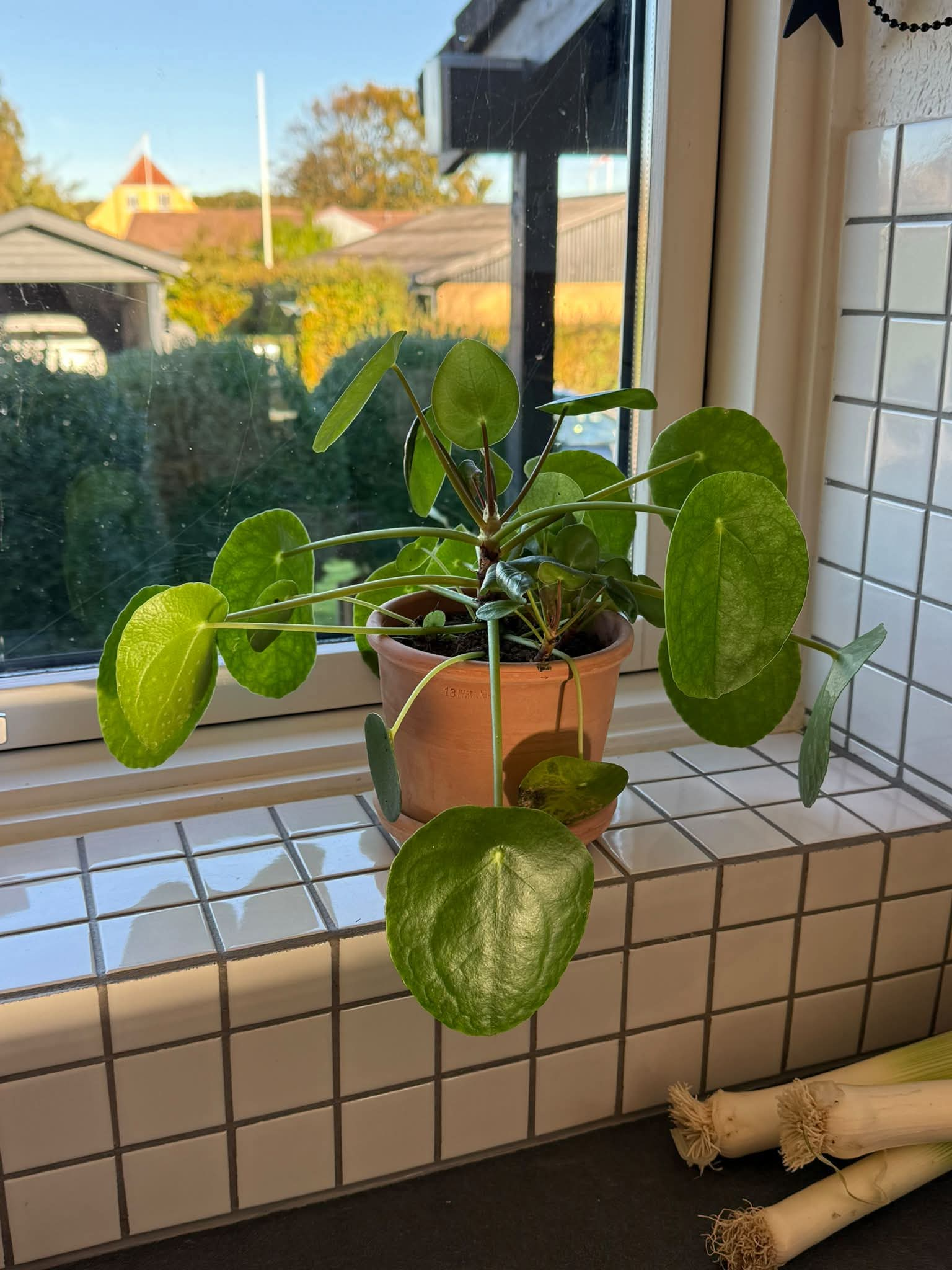
The plant shown in this gardening project appears to be a Pilea peperomioides, commonly known as the Chinese money plant or pancake plant.
It is admired for its distinctive round, coin-shaped leaves and attractive upright growth habit.
Its unusual foliage makes it a popular choice for indoor gardening and decorative plant collections.
Pilea peperomioides generally prefers bright, indirect light and a well-draining growing medium.
Its roots do not appreciate being kept constantly wet, so proper watering is particularly important.
If you want your Pilea to develop larger, healthier leaves and maintain an attractive appearance, focus on creating the right growing environment rather than depending on homemade liquid treatments.
How to Encourage Beautiful New Growth on Your Pilea
1. Provide Bright, Indirect Light
Light is essential for healthy foliage. Place your plant near a bright window where it receives plenty of indirect sunlight.
Rotate the pot occasionally so different sides receive light and the plant can develop more evenly.
2. Water When Needed
Allow the upper part of the growing medium to dry slightly before watering again.
Avoid keeping the roots constantly wet, as this can encourage root rot.
3. Use Well-Draining Soil
A suitable indoor potting mix with good drainage helps maintain the balance between moisture and air around the roots.
Make sure the pot has drainage holes.
4. Feed During Active Growth
During periods of active growth, use a balanced liquid houseplant fertilizer at the concentration recommended on the packaging.
Avoid excessive fertilization, as too much fertilizer can damage roots and cause leaf problems.
5. Remove Damaged Leaves
Remove completely dead or severely damaged leaves with clean scissors.
Healthy green leaves should be preserved because they contribute to photosynthesis.
6. Monitor New Shoots
Pilea plants can produce small offsets, sometimes called pups, around the base of the mother plant.
These can eventually develop into independent plants when they are sufficiently established.
How to Use Homemade Banana Peel Preparations Responsibly
If you enjoy experimenting with homemade gardening preparations, it is important to understand how to minimize potential risks.
Fresh banana peels should not simply be left to ferment in an uncontrolled mixture with honey and then poured into indoor plant pots.
Uncontrolled fermentation can produce unpredictable microbial growth, unpleasant odors, and potentially harmful contamination.
Sugar-rich liquids may also encourage fungus gnats, mold, and other unwanted organisms.
For safer plant nutrition, consider these alternatives:
- Add banana peels to a properly managed composting system.
- Allow the organic material to decompose fully before using the finished compost.
- Use a balanced fertilizer formulated for indoor plants.
- Follow the recommended dosage for the plant species.
- Avoid adding honey or concentrated sugary liquids directly to the soil.
If a homemade preparation has already been used, monitor the soil for unpleasant odors, mold, and excessive moisture.
Healthy roots and a well-balanced growing medium should always come first.
Why More Natural Ingredients Do Not Always Mean Better Plant Growth
It is easy to believe that natural ingredients are automatically safe for every plant.
However, even natural substances can create problems when used incorrectly.
Too much organic material in a small indoor pot can affect drainage and aeration.
Excessive sugars can encourage microbial activity that competes with healthy root conditions.
Uncontrolled fermentation can introduce unwanted microorganisms.
Excess nutrients can also interfere with the plant’s ability to absorb other essential elements.
The best gardening approach is not to add as many ingredients as possible. It is to provide exactly what the plant needs in an appropriate form and quantity.
What Should You Expect After Improving Your Plant Care Routine?
When a Pilea receives appropriate light, water, and balanced nutrition, you may gradually notice several positive changes.
These can include:
- Fresh leaves emerging from the growing point.
- Healthy green foliage.
- Stronger stems.
- Continued development of the root system.
- New offsets appearing around the base.
- A fuller and more attractive overall appearance.
Remember that plants respond at different speeds.
The season, temperature, plant maturity, and growing conditions all influence how quickly new leaves develop.
Do not expect an immediate transformation after applying a homemade liquid.
Consistency and patience are much more important than frequent treatments.
Final Thoughts: Grow Beautiful Plants with Knowledge and Care
The beauty of gardening lies in discovering new ways to understand and care for our plants.
Banana peels are useful organic materials that can contribute to composting, while honey is a natural sugary substance that is not recommended as a routine soil fertilizer.
Although homemade gardening mixtures are interesting experiments, they should never replace balanced plant nutrition and proper growing conditions.
For a beautiful Pilea peperomioides, the most important priorities are bright indirect light, healthy roots, well-draining soil, careful watering, and suitable fertilizer.
Every fresh leaf is a little reminder of the importance of patience and consistent care.
Let’s continue learning, sharing gardening knowledge, and discovering responsible ways to make our homes greener and more beautiful.
A healthy plant is not created by one magic ingredient. It grows through the combination of good soil, proper light, balanced nutrition, and loving attention.
Frequently Asked Questions
Can banana peel water be used for indoor plants?
It is sometimes used as a homemade gardening preparation, but its nutritional composition is unpredictable. Properly composted banana peels and balanced fertilizers are more reliable options.
Does banana peel liquid contain potassium?
Banana peels contain potassium, but the amount released into homemade liquid depends on the preparation method. It should not be considered a guaranteed potassium fertilizer.
Is honey good for plant roots?
Honey is not an established root fertilizer. Its sugars can encourage unwanted microbial growth and attract insects, so adding it directly to indoor potting soil is not recommended.
Can this mixture make Pilea leaves bigger?
There is no reliable evidence that banana peel and honey liquid directly produces larger leaves. Adequate light, healthy roots, and balanced nutrition are much more important.
How often should I fertilize my Pilea?
Use a balanced houseplant fertilizer according to its label, adjusting the feeding schedule to the plant’s growing season and condition. Avoid fertilizing excessively.
What is the best way to use banana peels in gardening?
Adding them to a properly managed composting system is generally a better option than pouring homemade, sugar-rich mixtures directly into indoor plant pots.
Share Your Love for Gardening!
Do you enjoy experimenting with natural gardening ideas and discovering new ways to care for your houseplants?
Have you ever used banana peels in your compost or tried homemade plant-care preparations?
We would love to hear your experiences and gardening tips!
❤️ Like this article if you enjoy learning about plant care.
🌱 Follow our website for more indoor gardening tips, natural composting ideas, and beautiful plant inspiration.
📢 Share this article with friends, family, and fellow plant lovers.
💬 Leave a comment and tell us what helps your plants produce beautiful new leaves.
Thank you for being part of our gardening community. Every comment, share, and follow helps us spread knowledge and inspire more people to enjoy the beauty of plants.
Let’s grow together, one beautiful leaf at a time!