☕🌿 Peace Lily Care: How to Use Compost Tea and Coffee Grounds for Healthier Green Leaves and Beautiful Blooms
Is your Peace Lily looking a little tired, with yellowing leaves, drooping stems, or fewer beautiful white flowers? Before giving up on this gorgeous houseplant, take a closer look at its watering routine, soil condition, lighting, and nutrition.
Peace Lilies (Spathiphyllum) are among the most popular indoor plants because of their elegant white flowers, glossy green foliage, and ability to bring a fresh, natural feeling into any home. However, keeping a Peace Lily healthy requires consistent care and the right growing conditions.
One gardening topic that many houseplant lovers are curious about is compost tea with coffee grounds. Used coffee grounds and mature compost can be part of a responsible gardening routine, but they need to be prepared and applied correctly. They are not miracle fertilizers, and they will not instantly transform a struggling plant.
Let’s explore how compost tea works, how coffee grounds fit into plant care, and what you can do to help your Peace Lily grow stronger and healthier.
🌱 1. Why Is Your Peace Lily Developing Yellow Leaves?
Yellow leaves are one of the most common problems Peace Lily owners experience. Before adding any homemade fertilizer, identify what might be causing the problem.
Common causes include:
- Overwatering: Constantly wet soil can deprive roots of oxygen and encourage root rot.
- Underwatering: Very dry soil can cause drooping leaves, dry edges, and stress.
- Poor drainage: Water collecting at the bottom of the pot can damage the roots.
- Insufficient light: Peace Lilies tolerate lower light, but very dark locations can limit healthy growth and flowering.
- Nutrient deficiencies: A plant growing in depleted potting mix may benefit from appropriate fertilization.
- Natural aging: Older leaves sometimes turn yellow as the plant produces new growth.
Before trying compost tea or coffee grounds, check the soil moisture and make sure the pot has drainage holes. Healthy roots are the foundation of a healthy plant.
☕ 2. What Are Coffee Grounds and Why Do Gardeners Use Them?
Used coffee grounds contain organic matter and small amounts of nutrients, including nitrogen. As they decompose, they contribute organic material to compost.
Many gardeners add used coffee grounds to their compost piles because they can help create a nutrient-rich finished compost when balanced with other materials.
However, coffee grounds are not a complete fertilizer. They do not provide every nutrient a Peace Lily needs in the correct proportions.
Important: Do not pour concentrated coffee directly into your Peace Lily’s pot, and avoid adding thick layers of wet coffee grounds to the soil. These practices can contribute to mold, unpleasant odors, poor airflow, and unwanted moisture retention.
The better approach is to compost used coffee grounds properly before using the finished compost.
🍃 3. What Is Compost Tea?
Compost tea is a liquid made by steeping mature compost in water. It is sometimes used by gardeners as a soil drench.
Its composition depends on the quality of the compost, preparation method, water, and brewing conditions. It is not a guaranteed source of balanced plant nutrition, and homemade compost tea is not automatically safe or beneficial for every houseplant.
For indoor plants such as Peace Lilies, a quality, finished compost or a reputable balanced houseplant fertilizer is generally easier to use consistently.
🪴 4. How to Prepare a Simple Compost Tea
If you want to experiment with compost tea, start with clean, mature, finished compost.
What you need:
- 1 tablespoon of mature, finished compost
- 1 liter of clean water
- A clean container
- A fine strainer
Preparation:
- Add the mature compost to the water.
- Stir gently until the compost is mixed throughout the water.
- Let it steep briefly in a clean container.
- Strain out the solid material.
- Use the liquid promptly rather than storing it for several days.
Do not add sugar, milk, raw coffee, or other kitchen ingredients. Avoid brewing homemade compost tea for long periods or under warm, uncontrolled conditions, as harmful microorganisms can multiply.
For indoor Peace Lilies, there is no strong evidence that homemade compost tea provides better results than ordinary, well-managed plant care.
🌿 5. Can You Combine Coffee Grounds with Compost Tea?
Coffee grounds can be added to a compost pile, but they should be composted with a balanced mixture of other organic materials.
For example, combine used coffee grounds with dry leaves, shredded cardboard, and other suitable compost materials. Allow the mixture to decompose fully before using the finished compost.
Do not simply mix fresh coffee grounds into water and assume that the result is a safe, nutrient-rich fertilizer.
For a Peace Lily growing indoors, avoid placing fresh coffee grounds directly on the potting mix.
💧 6. The Best Watering Routine for a Healthy Peace Lily
Watering correctly is often more important than homemade fertilizer.
Follow these simple steps:
- Check the top inch of soil before watering.
- Water thoroughly when the top layer feels dry.
- Allow excess water to drain freely.
- Empty any water collected in the saucer.
- Never leave the plant sitting in standing water.
Peace Lilies appreciate evenly moist soil, but their roots need oxygen. Consistently soggy soil is one of the biggest risks to their health.
☀️ 7. Give Your Peace Lily the Right Light
Peace Lilies grow best in bright, indirect light.
A location near a window with filtered daylight is often ideal. Avoid placing the plant in intense direct afternoon sunlight, which can scorch its leaves.
If your plant is far from a window and produces plenty of leaves but very few flowers, consider moving it gradually to a brighter location with indirect light.
🌸 8. How to Encourage More Beautiful Peace Lily Flowers
Peace Lily flowers are actually specialized white leaf-like structures called spathes, surrounding a central flower spike.
To support flowering:
- Provide bright, indirect light.
- Maintain a consistent watering routine.
- Use a suitable, balanced houseplant fertilizer during active growth.
- Avoid excessive fertilizer.
- Remove dead leaves and spent flowers using clean scissors.
- Repot when the plant becomes crowded or the potting mix breaks down.
Remember that flowering depends on the plant’s maturity, variety, light, and growing conditions. No homemade liquid can guarantee immediate blooms.
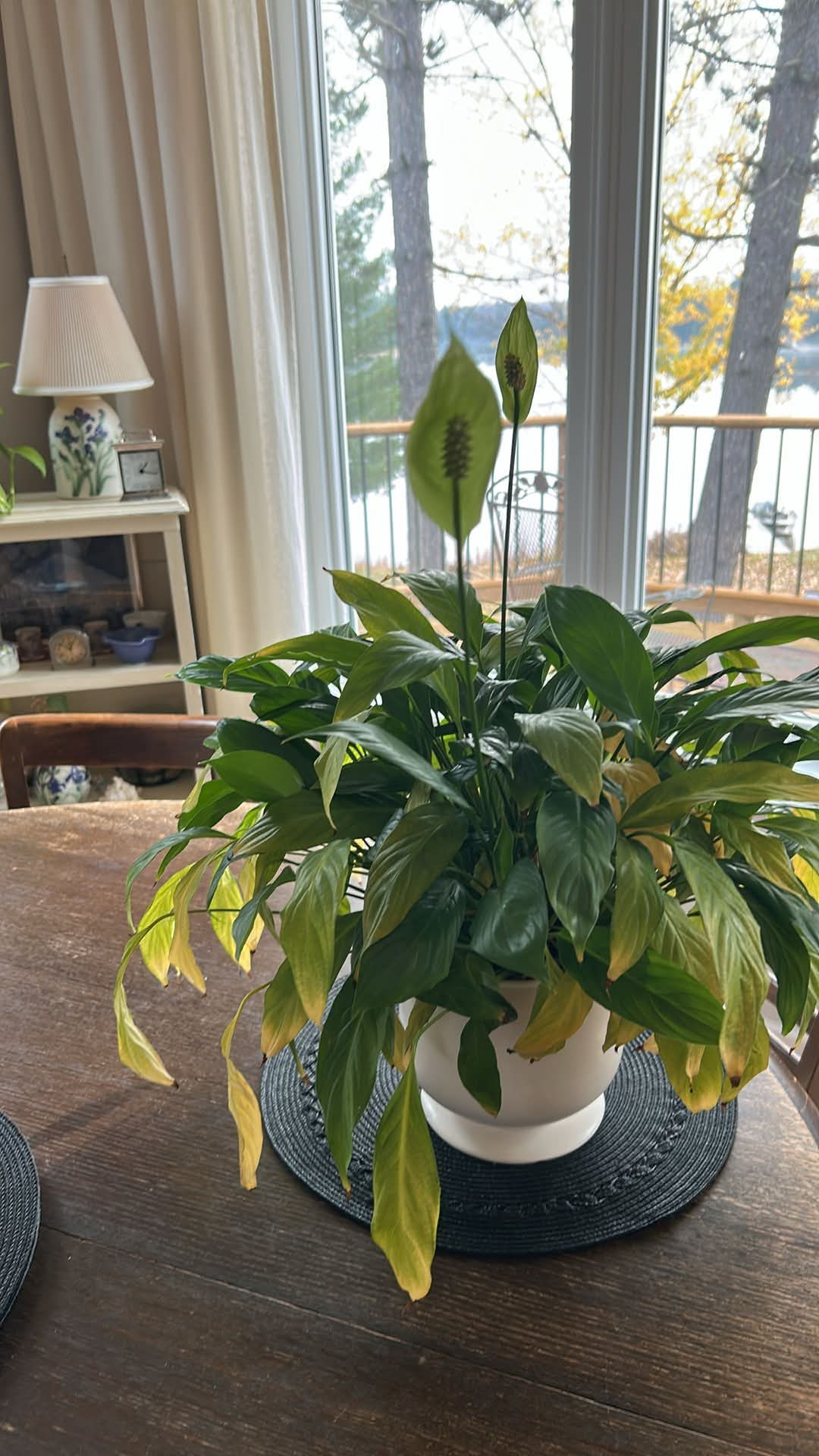
🍂 9. What Should You Do About the Yellow Leaves in Your Plant?
Looking at your Peace Lily, several leaves around the lower and outer parts of the plant appear yellow while much of the central foliage remains green.
This can happen naturally as older leaves age, but it can also indicate watering stress or root problems.
Try this simple recovery checklist:
- Check whether the soil is wet or dry several inches below the surface.
- Make sure the pot has drainage holes.
- Remove completely yellow leaves with clean scissors.
- Inspect the roots if the soil stays wet for a long time or smells unpleasant.
- Check that the plant receives bright, indirect light.
- Hold off on homemade fertilizers until the plant’s watering and root conditions are stable.
If roots are brown, mushy, or have an unpleasant smell, root rot may be developing. Remove damaged roots with clean tools and repot into fresh, well-draining indoor potting mix.
❤️ 10. A Simple Routine for Long-Term Peace Lily Care
Healthy houseplants are built through consistency, not quick fixes.
Weekly:
- Check soil moisture.
- Inspect leaves for yellowing or pests.
- Remove fallen plant debris.
- Rotate the pot if the plant grows unevenly toward the window.
Monthly:
- Check drainage and soil condition.
- Clean dust from the leaves with a soft, damp cloth.
- Look for new leaves and signs of healthy growth.
During active growth:
- Feed with a balanced houseplant fertilizer according to its label.
- Use a reduced application if the product recommends dilution.
- Avoid fertilizing a stressed or waterlogged plant.
🌿 Final Thoughts: Healthy Peace Lilies Need the Right Care!
Compost tea and coffee grounds are popular topics in natural gardening, but they should never replace the basics of good houseplant care.
For a beautiful Peace Lily with glossy green leaves and elegant white blooms, focus on proper watering, bright indirect light, healthy roots, good drainage, and balanced nutrition.
You don’t need complicated tricks to become a better plant parent. A little observation, patience, and consistent care can make a meaningful difference over time.
🌸 LOVE HOUSEPLANTS AND GARDENING?
Follow our page for more Peace Lily care tips, indoor plant advice, natural gardening ideas, composting guides, watering tips, and beginner-friendly plant care inspiration.
❤️ Like this post if you love Peace Lilies.
📌 Save it so you can follow these plant-care tips later.
🔄 Share it with a friend who loves indoor plants.
💬 Tell us in the comments: Have you ever tried compost tea or used coffee grounds in your garden?
Let’s grow healthier plants together