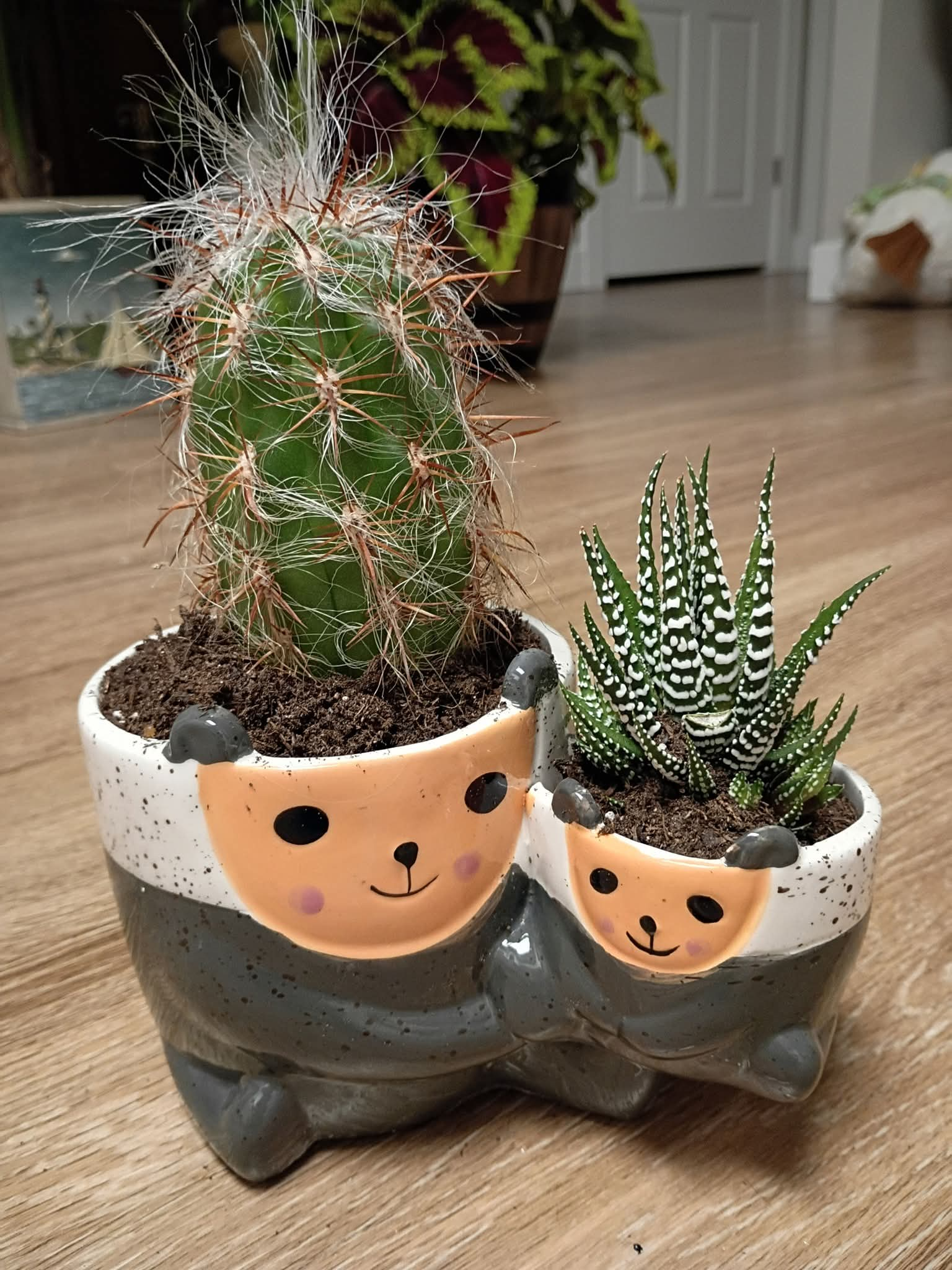
Succulents and cacti are among the most fascinating plants to grow at home. Their unusual shapes, beautiful textures, and ability to store water make them wonderful additions to indoor gardens. From tall, spiny cacti covered in delicate white hairs to compact Zebra Haworthia plants decorated with striking white stripes, every variety has its own special beauty.
But there is one gardening product that often attracts attention: small green fertilizer granules.
What are these little green granules? Why do gardeners sprinkle them around the base of their plants? Could they help cacti and succulents produce new growth, stronger roots, and healthier green leaves?
Let’s explore what green fertilizer granules usually are, how they work, and how to use them safely.
1. What Are Green Granules?
Green granules are often sold as granular plant fertilizers. Depending on the product, they may contain a combination of essential nutrients that plants need for healthy development.
Some granular fertilizers are designed to dissolve relatively quickly when exposed to moisture, while others are formulated to release nutrients gradually over several weeks or months.
The exact composition cannot be identified by color alone. Green granules may contain different fertilizer formulations, coatings, and nutrient concentrations depending on the manufacturer.
To know exactly what a particular product contains, look for its packaging and the three main fertilizer numbers, commonly written as N-P-K.
These numbers represent:
- N – Nitrogen: Supports leaf and stem development and contributes to chlorophyll production.
- P – Phosphorus: Supports energy transfer, root development, and other essential plant processes.
- K – Potassium: Helps regulate water balance and supports several important plant functions.
For example, a fertilizer labeled 10-10-10 contains 10% nitrogen, 10% phosphate (expressed as P₂O₅), and 10% potash (expressed as K₂O).
Other products may contain different proportions, as well as additional nutrients such as magnesium, calcium, iron, and sulfur.
This is why checking the label is much more important than judging a fertilizer by its color.
2. Are Green Granules Slow-Release Fertilizer?
Some green fertilizer granules are slow-release or controlled-release fertilizers.
These products are designed to supply nutrients gradually rather than releasing their entire nutrient content immediately.
Many controlled-release fertilizers have a special coating that regulates how quickly nutrients become available. Moisture and temperature can influence the release process.
This can be convenient for potted plants because it reduces the need for frequent fertilizer applications.
However, not every granular fertilizer is slow-release. Some dissolve much faster and may provide nutrients over a shorter period.
Always check the product label for terms such as:
- Slow-release fertilizer.
- Controlled-release fertilizer.
- Granular NPK fertilizer.
- Coated fertilizer.
- Complete plant food.
The label should also explain the recommended application rate and how often the product should be used.
3. What Do Green Granules Do for Cacti?
The cactus in the picture has a tall, rounded green body covered with long, delicate white hairs and brownish spines.
Cacti have special adaptations that allow them to survive in environments where water may be limited. They store water in their tissues and generally require less frequent watering than many ordinary houseplants.
However, cacti still need essential nutrients to grow.
A suitable fertilizer can support:
Healthy new growth: Nitrogen contributes to the development of new plant tissue.
Root development: Phosphorus plays an important role in energy transfer and normal root functions.
Water regulation: Potassium contributes to the regulation of water movement and several metabolic processes.
Overall plant health: A balanced supply of essential nutrients helps support normal development.
However, more fertilizer does not mean better growth. Excessive nutrients can damage roots, cause unwanted soft growth, and create salt accumulation in the potting medium.
Cacti generally benefit from light feeding during their active growing season rather than frequent or heavy fertilization.
4. Can Green Granules Help Zebra Haworthia?
The smaller plant in the photograph is a Zebra Haworthia, commonly called Zebra Plant. Its dark green, pointed leaves are decorated with distinctive white raised bands.
This succulent is especially popular because of its compact shape and attractive striped appearance.
Like other plants, Zebra Haworthia needs essential nutrients, but it does not require heavy feeding.
A suitable succulent fertilizer may support healthy development when applied correctly.
Its most important growing requirements include:
- Bright, indirect light.
- A well-draining succulent potting mix.
- A container with drainage holes.
- Careful watering.
- Moderate fertilizer during active growth.
- Protection from excessive direct sunlight.
Because Zebra Haworthia is a relatively slow-growing succulent, it is important not to expect dramatic growth immediately after adding fertilizer.
A healthy plant may gradually produce new leaves and small offsets around its base.
5. Why Do Fertilizer Granules Have Different Colors?
Many people assume that green granules have special properties because of their color.
In reality, fertilizer color is often related to the manufacturer’s formulation, coating, or product identification system.
Granules can be green, blue, yellow, pink, white, or brown.
Color alone does not tell you:
- Which nutrients the fertilizer contains.
- Whether it is slow-release.
- How strong the fertilizer is.
- Whether it is suitable for cacti.
- How much should be applied.
- How long it will remain active.
Two products with identical colors can have completely different compositions.
The safest approach is to identify the product using its label rather than relying on its appearance.
6. How to Apply Granular Fertilizer to Small Succulent Pots
Small pots contain a limited amount of growing medium, which means it is especially easy to apply too much fertilizer.
Before using green granules, check that the product is suitable for cacti and succulents.
Follow these general precautions:
- Read the fertilizer label carefully.
- Check the recommended quantity for container plants.
- Use only the amount specified for the size of the pot.
- Keep granules away from direct contact with the plant’s stems and roots.
- Distribute them according to the product instructions.
- Water only as directed by the fertilizer manufacturer.
- Avoid applying additional fertilizer before the recommended interval.
Never assume that a small handful is safe simply because the granules look harmless.
For small succulent containers, the recommended quantity may be very small.
7. The Importance of Proper Soil for Cacti and Succulents
Even the best fertilizer cannot compensate for unsuitable growing conditions.
Cacti and Zebra Haworthia need growing media that allow excess water to drain away.
A dense, constantly wet potting mix can deprive roots of oxygen and increase the risk of root rot.
A suitable succulent mix often contains a combination of organic material and mineral components such as pumice, perlite, or coarse particles.
The goal is to create a growing medium that holds enough moisture for the roots while allowing excess water to escape.
Good drainage is especially important when using granular fertilizers because dissolved nutrients can accumulate in poorly drained containers.
8. How Often Should You Fertilize These Plants?
The correct feeding schedule depends on the fertilizer formulation, plant species, growing season, and environmental conditions.
Cacti and succulents generally need less fertilizer than many fast-growing tropical houseplants.
During active growth, a suitable fertilizer may be applied according to the manufacturer’s instructions.
During dormancy or periods of very slow growth, fertilization is often unnecessary.
For slow-release products, remember that nutrients may continue becoming available over an extended period. Adding more granules too soon can result in excessive fertilizer levels.
A consistent, moderate approach is safer than frequent applications.
9. Common Mistakes When Using Green Granules
Even experienced gardeners can make mistakes when feeding small plants.
Here are some important problems to avoid:
Using too many granules: Excess fertilizer can damage roots and cause nutrient imbalances.
Choosing the wrong product: Not every granular fertilizer is suitable for cacti and succulents.
Ignoring the NPK numbers: The nutrient ratio determines what the product supplies.
Fertilizing dormant plants: Plants that are not actively growing generally need less nutrition.
Applying granules without reading the instructions: Different products have different concentrations and release periods.
Using fertilizer to solve every problem: Yellow leaves, weak growth, and damaged roots may be caused by light, watering, pests, or drainage rather than nutrient deficiency.
Expecting instant results: Fertilizer supports normal plant development, but it does not create immediate growth.
10. A Beautiful Gardening Scene with Green Granules
Imagine two beautiful succulents displayed together in a charming ceramic planter shaped like a pair of little animals.
On one side, a tall cactus stands proudly, covered with delicate white hairs and long spines. On the other side, a compact Zebra Haworthia displays its pointed green leaves and distinctive white stripes.
A hand gently sprinkles a few green fertilizer granules onto the surface of the dark growing medium around the plants.
The small green particles create an attractive contrast against the soil and the decorative ceramic pot.
A close-up camera captures the granules falling naturally, landing around the base of each plant without touching the leaves or stems.
For a professional gardening video, keep the original pot, both plants, wooden floor, lighting, and background exactly the same throughout the scene.
The focus should remain on the fertilizer application and the beautiful details of these two succulents.
11. The Best Care Routine for These Two Plants
Although both plants are succulents, their growth habits and care requirements are not identical.
For the tall cactus:
- Provide suitable bright light.
- Use a well-draining cactus mix.
- Allow the growing medium to dry between waterings.
- Feed lightly during active growth.
- Handle carefully because of its spines.
For Zebra Haworthia:
- Provide bright, indirect light.
- Avoid prolonged harsh sunlight.
- Use a well-draining succulent mix.
- Water when the growing medium has dried sufficiently.
- Avoid excessive fertilizer.
- Watch for small offsets developing around the base.
Both plants benefit from careful watering, good drainage, and moderate nutrition.
Final Thoughts: What Should You Know About Green Granules?
Green granules are often granular fertilizers, and some are formulated to release essential nutrients gradually. They can be useful for supporting plant growth when the product is suitable and applied correctly.
However, their exact identity cannot be determined by color alone. Always check the packaging, NPK numbers, release type, and application instructions.
For your cactus and Zebra Haworthia, remember that fertilizer is only one part of successful plant care. Bright suitable light, well-draining soil, careful watering, and healthy roots are just as important.
A beautiful cactus and a healthy Zebra Haworthia do not need excessive fertilizer. They need the right care, the right nutrients, and plenty of patience! 🌵💚
Share this gardening guide with other succulent lovers and follow for more cactus care, succulent tips, fertilizer information, and indoor gardening inspiration!