Can Homemade Compost Tea with Coffee and Banana Peels Help Your Snake Plant Grow? 🌿☕🍌
The Snake Plant, also known as Sansevieria or Mother-in-Law’s Tongue, is one of the most popular and recognizable indoor plants. Its tall, upright leaves, beautiful green patterns, and remarkable ability to adapt to indoor environments make it a favorite among houseplant lovers.
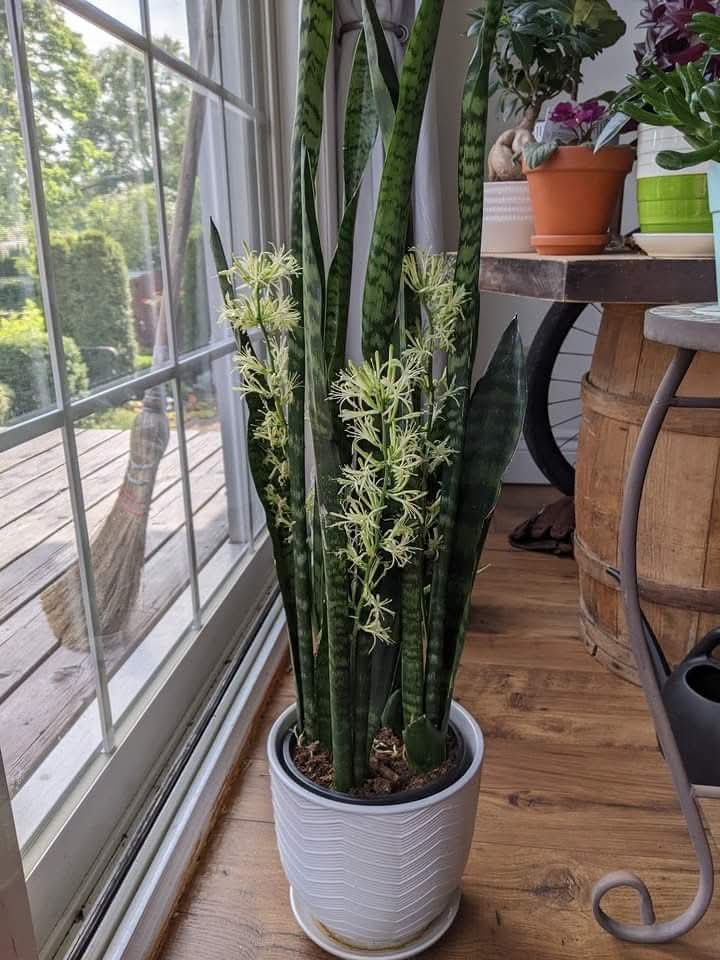
But there is something even more fascinating about a mature Snake Plant: its flowers! Although Snake Plants are not known for flowering frequently indoors, a healthy, mature plant can sometimes produce clusters of delicate, fragrant, cream-colored or greenish-white flowers. Seeing these beautiful blossoms rising between the tall leaves is a special experience for any plant enthusiast.
Many gardeners enjoy experimenting with natural gardening ideas, especially homemade mixtures made from everyday kitchen materials. One popular idea involves preparing a golden, honey-colored liquid using compost, coffee, and banana peels. This mixture is often described as homemade compost tea.
Could this homemade liquid support your Snake Plant? What do coffee and banana peels contribute? And how can you care for a flowering Snake Plant without damaging its roots?
Let’s explore this interesting gardening idea and discover what your plant really needs to remain healthy and beautiful.
1. What Is Homemade Compost Tea?
Compost tea is generally a liquid preparation made by steeping mature compost in water. During the process, some soluble nutrients and microorganisms may move from the compost into the water.
The resulting liquid can have a light brown, amber, or golden appearance, depending on the compost and preparation method. Its color may resemble honey, which makes it particularly attractive in gardening videos.
Some homemade preparations also include coffee or banana peels because these materials contain organic compounds and plant nutrients.
However, it is important to understand that not every homemade mixture is a properly prepared compost tea. The ingredients, preparation conditions, cleanliness, and concentration all influence the final product.
A liquid that looks rich and golden does not necessarily contain the correct nutrients for a houseplant.
2. Why Do Gardeners Add Coffee?
Coffee is a familiar ingredient in many homemade gardening recipes. Used coffee grounds contain organic matter and small amounts of nutrients, including nitrogen.
Nitrogen is an essential plant nutrient that supports the development of leaves and stems. It plays an important role in the production of chlorophyll, which helps plants capture light energy during photosynthesis.
However, coffee grounds are not a complete fertilizer. Their nutrient content varies, and they do not provide all the nutrients a houseplant needs in balanced amounts.
There is also an important difference between used coffee grounds and brewed coffee. Used grounds contain organic material that breaks down over time, while brewed coffee is a liquid with a different composition.
Adding large amounts of coffee grounds directly to a houseplant pot can create problems. The grounds may form a dense layer, interfere with airflow, retain excess moisture, and encourage mold growth.
For indoor plants such as Snake Plants, it is generally better to use a suitable, well-draining potting mix rather than relying on coffee as a fertilizer.
3. What Do Banana Peels Contribute?
Banana peels are another popular ingredient in homemade gardening recipes.
They contain potassium, along with smaller amounts of other minerals. Potassium is an essential nutrient involved in several important plant functions, including water regulation, enzyme activity, and overall plant metabolism.
Because of this, banana peels are often used in composting.
When banana peels decompose as part of a properly managed composting process, some of their nutrients can eventually become available to plants.
However, soaking banana peels in water does not guarantee that the resulting liquid will contain a balanced or predictable amount of potassium. The concentration depends on several factors, including the quantity of peel, preparation time, temperature, and microbial activity.
Banana peel water should therefore not be considered a scientifically reliable replacement for a complete houseplant fertilizer.
4. Why Is Compost Tea So Interesting for Indoor Gardening?
One reason compost tea attracts attention is its connection to recycling organic materials.
Instead of throwing away certain kitchen scraps, gardeners can incorporate them into a managed composting system. Finished compost can then be used to improve suitable growing media and support soil health.
Compost contains decomposed organic matter and may contain beneficial microorganisms. Its quality depends heavily on how it was produced and whether it has fully matured.
For indoor plants, however, cleanliness and consistency are particularly important.
A homemade liquid prepared from kitchen scraps can spoil or develop unpleasant odors if handled incorrectly. It may also introduce unwanted microorganisms or attract small insects.
Never assume that a homemade mixture is safe simply because it is natural.
5. Is This Golden Liquid Suitable for a Snake Plant?
Snake Plants are relatively low-maintenance plants, but they still need suitable growing conditions.
They are especially sensitive to excessive moisture around their roots. A mixture that encourages frequent watering or leaves the growing medium wet for extended periods may cause more harm than good.
Before using any homemade compost tea, consider the condition of your plant.
Does it have firm, upright leaves? Is the potting mix draining properly? Does the plant receive suitable light? Are the roots healthy?
If the plant is already growing well, it may not need an additional homemade mixture.
A balanced fertilizer specifically formulated for houseplants or succulents is generally a more predictable option when additional nutrients are required.
Avoid pouring concentrated, fermented, or unpleasant-smelling mixtures into your Snake Plant’s pot.
6. The Secret to Healthy Snake Plant Leaves
The tall, architectural leaves are the main attraction of this beautiful plant. Their green patterns and upright growth create an elegant appearance in any room.
To maintain attractive foliage, follow these simple care principles.
Bright, indirect light: Snake Plants tolerate a range of indoor lighting conditions, but bright, indirect light generally supports stronger growth. They can also adapt to lower-light areas, although growth may become slower.
Careful watering: Allow the potting mix to dry out completely or nearly completely before watering again. Avoid keeping the roots constantly wet.
Good drainage: Choose a pot with drainage holes and a well-draining growing medium. Excess water should be able to escape easily.
Suitable temperature: Keep the plant in a comfortable indoor environment and protect it from cold temperatures.
Clean leaves: Gently remove dust using a soft, damp cloth. This helps the leaves maintain their natural appearance.
Avoid overfeeding: Snake Plants do not require frequent fertilization. During active growth, a suitable fertilizer can be used sparingly according to its label instructions.
7. Why Is Your Snake Plant Producing Flowers?
One of the most exciting features of the plant in this gardening scene is its delicate flowering display.
Snake Plant flowers usually grow on tall, slender stalks that emerge from the plant. Their small, star-shaped blossoms may appear in clusters, often with a pleasant fragrance.
Flowering is not guaranteed, and it does not happen on a predictable schedule. It is more commonly seen in mature plants under suitable growing conditions.
Several factors influence flowering:
- Plant maturity and overall health.
- Appropriate light exposure.
- Seasonal growing conditions.
- Proper watering and drainage.
- Avoiding excessive fertilizer.
- A stable indoor environment.
Some mature Snake Plants flower when their roots have filled much of their growing space, but deliberately stressing a plant is not a recommended way to encourage flowering.
A healthy plant should always be the priority.
8. Can Coffee and Banana Peels Replace Regular Fertilizer?
The short answer is no.
Coffee and banana peels contain organic materials and certain nutrients, but they do not provide a reliably balanced supply of everything a Snake Plant needs.
Plants require several essential nutrients, including nitrogen, phosphorus, potassium, magnesium, calcium, and sulfur, as well as small quantities of other elements.
The proportions matter.
A homemade mixture may contain some nutrients while lacking others. Its concentration can also vary considerably from one preparation to another.
For this reason, a balanced fertilizer formulated for indoor plants or succulents is a more dependable choice when fertilization is necessary.
Homemade compost can also be useful when it is fully matured, clean, and incorporated appropriately into a suitable growing medium.
9. A Beautiful Golden Liquid Pouring Scene
Imagine a mature Snake Plant standing beside a large, bright window in a beautiful home.
Its tall, dark-green leaves rise gracefully from a decorative white ceramic pot. Several delicate flowering stalks emerge between the leaves, covered with clusters of tiny cream-colored blossoms.
A hand slowly pours a golden, honey-colored liquid over the soil near the base of the plant.
The liquid flows gently across the surface of the growing medium, creating a beautiful close-up gardening moment. The warm golden color contrasts with the rich green leaves and elegant white pot.
The camera captures the details of the liquid, the soil, the flowering stalks, and the plant’s natural texture.
For a professional gardening reel, maintaining the same original setting throughout the entire scene creates a realistic and satisfying visual experience. The plant, pot, window, wooden floor, furniture, and natural lighting should remain consistent.
The video can focus on the pouring action and the beauty of the flowering Snake Plant without suggesting that the liquid causes instant flowering or miraculous growth.
10. Common Mistakes to Avoid When Using Homemade Plant Mixtures
Natural gardening ingredients can be interesting, but using them without understanding their effects can create problems.
Here are some mistakes worth avoiding:
Using too much coffee: Excessive coffee grounds can affect the structure of the growing medium and encourage mold.
Adding fresh banana peels directly to the pot: They decompose slowly and may attract insects or create unpleasant odors.
Using fermented liquids without understanding them: Homemade mixtures can develop unwanted microorganisms and may be unsuitable for indoor plants.
Watering too frequently: Snake Plants store water in their leaves and are vulnerable to root rot when the soil remains wet.
Adding too many ingredients together: Mixing several kitchen materials does not automatically create a better fertilizer.
Expecting instant results: Healthy growth and flowering take time. No homemade liquid can reliably make a Snake Plant grow dramatically in a few seconds.
11. The Best Routine for a Beautiful Flowering Snake Plant
If you want your Snake Plant to remain healthy and attractive, consistency is more important than complicated recipes.
Start with a suitable pot and a well-draining succulent or cactus growing mix. Place the plant in a location with good natural light, preferably bright indirect sunlight.
Water thoroughly when the growing medium has dried, allowing excess water to drain away. Never leave the pot sitting in standing water.
During the active growing season, provide occasional balanced fertilizer at the recommended strength. Avoid excessive feeding, especially when the plant is not actively growing.
Check the leaves regularly for signs of damage, pests, or unusual discoloration. If the plant begins to develop soft leaves or an unpleasant smell around the roots, investigate possible overwatering or root problems.
These simple habits can help your Snake Plant maintain its beautiful appearance for many years.
Final Thoughts: Natural Gardening Starts with Understanding Your Plants
Homemade compost tea made with compost, coffee, and banana peels is an interesting gardening topic because it combines organic materials that many people already have at home.
Coffee grounds can contribute organic matter, banana peels contain potassium, and mature compost can improve growing media. However, combining these ingredients does not automatically produce a complete or reliable fertilizer.
For a beautiful flowering Snake Plant, the most important things remain proper light, careful watering, excellent drainage, and balanced nutrition.
Enjoy experimenting with gardening ideas, but always pay attention to what your plant actually needs.
A mature Snake Plant with tall green leaves and delicate white flowers is already a wonderful sight. Give it the right care, be patient, and enjoy every new leaf and every beautiful bloom.
Do you love seeing your Snake Plant covered in delicate white flowers? 🌿🤍 Share this gardening article with other plant lovers and follow for more indoor gardening inspiration, natural composting ideas, and practical houseplant care tips!