Can Epsom Salt Help Your Peace Lily Grow Bigger, Greener, and More Beautiful? 🌿🤍
The Peace Lily is one of the most elegant and popular indoor plants in the world. With its beautiful white flowers, deep green leaves, and graceful appearance, it can turn an ordinary room into a peaceful green space. Whether displayed beside a bright window, placed on a living-room shelf, or used as a centerpiece in your home, this tropical houseplant always attracts attention.
But what happens when you sprinkle a few white granules around the base of a Peace Lily? Could these little crystals make a difference to the plant’s health? One gardening ingredient that often attracts curiosity is Epsom salt. Many plant enthusiasts discuss using it in their gardening routines because it contains magnesium and sulfur, two nutrients that plants need in small amounts.
In this gardening article, we will explore what Epsom salt actually does, how it relates to Peace Lily care, and what you should know before adding it to your houseplant soil.
1. What Is Epsom Salt?
Epsom salt is a naturally occurring mineral compound known as magnesium sulfate. Unlike ordinary table salt, it does not contain sodium chloride. It provides two essential plant nutrients: magnesium and sulfur.
Magnesium plays an important role in photosynthesis because it is part of the chlorophyll molecule, which gives healthy leaves their green color. Sulfur also contributes to important plant processes, including the production of certain amino acids and proteins.
Because of these functions, magnesium and sulfur are important for healthy plant development. However, this does not mean that every houseplant needs additional Epsom salt.
A Peace Lily growing in suitable potting soil and receiving balanced nutrition may already have enough magnesium and sulfur. Adding extra minerals without identifying a deficiency does not automatically make the plant grow faster or produce more flowers.
2. Why Do Gardeners Use Epsom Salt?
Some gardeners use Epsom salt when they suspect that their plants are experiencing a magnesium deficiency.
Magnesium deficiency can sometimes cause older leaves to develop yellow areas between the veins while the veins remain greener. However, similar symptoms can be caused by other problems, including unsuitable watering, damaged roots, poor drainage, nutrient imbalances, or inappropriate lighting.
This is why it is important not to diagnose a plant problem based on leaf color alone.
For a Peace Lily, healthy green foliage depends on several conditions working together. Proper watering, suitable light, healthy roots, good-quality potting soil, and balanced nutrition are all important.
Epsom salt may be useful when a genuine magnesium deficiency has been identified, but it is not a universal plant fertilizer.
3. What Happens When White Granules Are Sprinkled Around a Peace Lily?
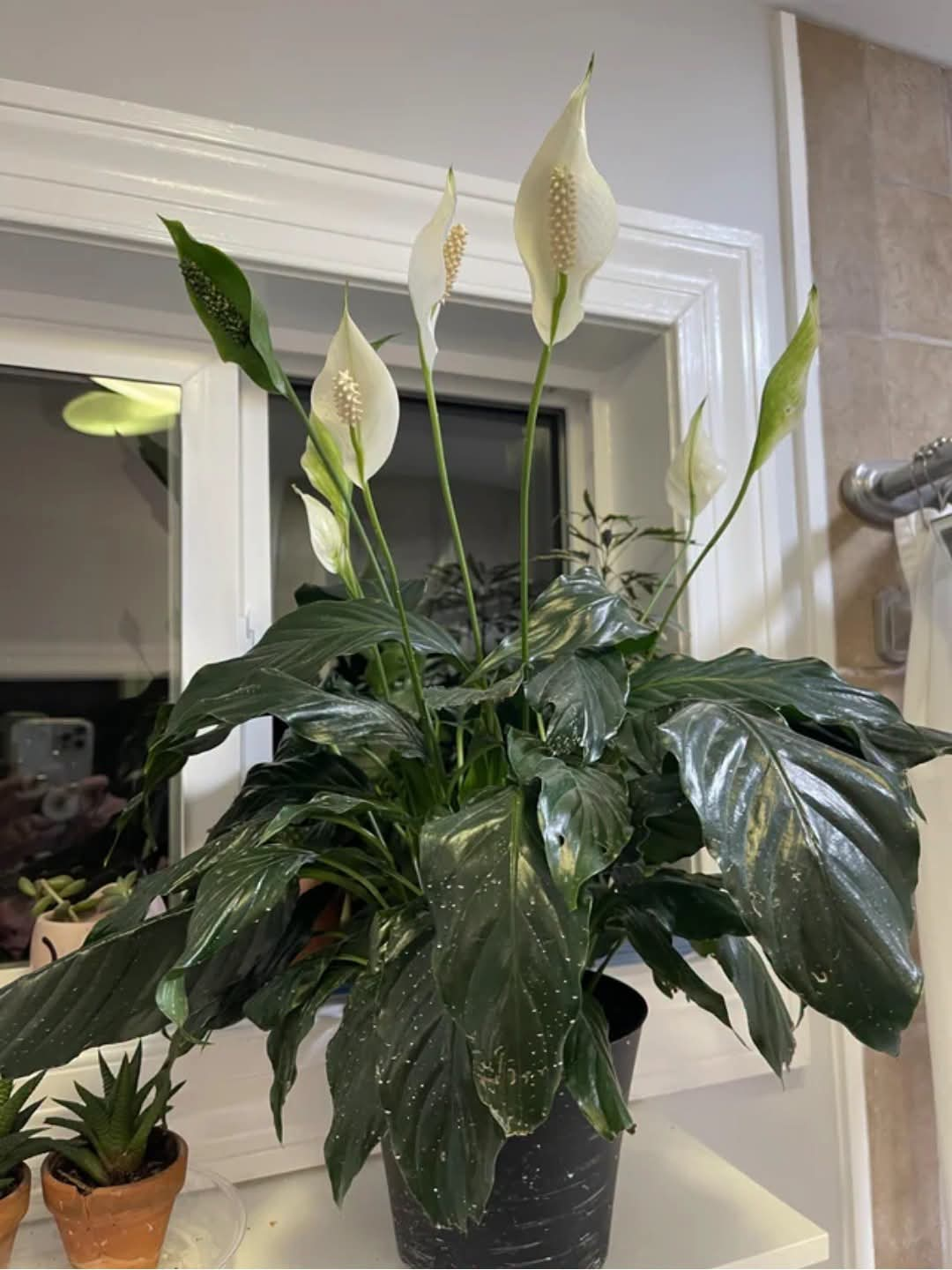
Imagine a beautiful Peace Lily standing in a decorative black pot beside a bright indoor window. Its long, glossy green leaves spread gracefully in different directions, while several elegant white flowers rise above the foliage.
A close-up gardening video shows a hand gently sprinkling small white Epsom salt crystals onto the surface of the soil.
The contrast between the white crystals, dark potting soil, and rich green leaves creates a visually satisfying gardening scene.
But there is an important detail to remember: sprinkling dry Epsom salt directly onto the soil does not guarantee that the plant will become larger, greener, or more beautiful. The crystals must dissolve before their nutrients can become available, and the plant only benefits from additional magnesium when it actually needs it.
Applying unnecessary quantities can increase the concentration of dissolved salts around the roots and interfere with the plant’s ability to absorb water and other nutrients.
For this reason, Epsom salt should not be added simply because a plant looks attractive in a gardening video.
4. How to Keep Peace Lily Leaves Healthy and Green
The Peace Lily is admired for its broad, glossy foliage. Keeping those leaves healthy requires a consistent care routine.
Provide bright, indirect light.
Peace Lilies generally prefer bright locations without strong direct sunlight. A position near a window with filtered light can provide suitable growing conditions. Too much direct sunlight may cause leaf damage, while very low light can reduce flowering.
Water carefully.
Peace Lilies enjoy consistently lightly moist soil, but they do not like sitting in waterlogged conditions. Check the growing medium regularly and water when the upper portion begins to dry.
Choose a suitable potting mix.
A good-quality indoor plant mix that retains some moisture while allowing excess water to drain away is important. Healthy roots need both moisture and oxygen.
Maintain comfortable humidity.
As tropical plants, Peace Lilies generally appreciate moderate to higher humidity. Very dry indoor air can contribute to brown leaf tips and edges.
Clean the leaves gently.
Dust can accumulate on the large leaves and reduce their natural shine. Wipe them carefully with a soft, damp cloth to remove dust without damaging the foliage.
5. Does Epsom Salt Make Peace Lilies Produce More White Flowers?
This is one of the most common questions among Peace Lily owners.
The beautiful white structures commonly called flowers are actually modified leaves known as spathes. The tiny flowers themselves grow on the central spike, called the spadix.
Peace Lilies need suitable growing conditions to produce attractive blooms. Light, plant maturity, healthy roots, temperature, and balanced nutrition all influence flowering.
Although magnesium is essential for plant health, adding Epsom salt will not automatically encourage a Peace Lily to produce more flowers.
If your plant has healthy green leaves but produces very few blooms, first examine its light conditions and general care routine. Make sure it receives enough bright, indirect light and is not suffering from excessive watering or root problems.
Patience is also important. A healthy Peace Lily may need time to develop new growth and produce additional flowers.
6. The Right Way to Think About Epsom Salt for Houseplants
Before using Epsom salt on an indoor plant, consider whether the plant actually needs additional magnesium.
Here are a few important points:
- Epsom salt supplies magnesium and sulfur, not a complete range of essential plant nutrients.
- It does not replace a balanced houseplant fertilizer.
- It does not directly stimulate instant leaf growth.
- It does not guarantee additional flowers.
- Excessive use can contribute to salt accumulation and nutrient imbalances.
- A suspected magnesium deficiency should be investigated before applying additional minerals.
If a magnesium deficiency is confirmed, use a suitable product according to reliable horticultural guidance and the product instructions. Avoid guessing the amount or repeatedly adding dry crystals to the pot.
For everyday Peace Lily care, a balanced fertilizer formulated for indoor flowering plants is generally a more appropriate nutritional option when used according to its label.
7. Common Mistakes That Can Damage a Peace Lily
Even experienced plant lovers sometimes make mistakes when caring for their houseplants. Understanding these problems can help keep your Peace Lily looking beautiful.
Overwatering: Constantly wet soil can deprive the roots of oxygen and encourage root rot.
Poor drainage: Decorative pots without drainage arrangements can allow excess water to collect around the roots.
Too much fertilizer: Excess nutrients can damage roots and cause leaf discoloration.
Direct sunlight: Strong sunlight can scorch delicate foliage.
Using too many homemade mixtures: Combining different household ingredients without understanding their effects can create unwanted soil conditions.
Ignoring damaged roots: A plant with unhealthy roots may struggle even when its leaves receive enough light and water.
A simple and consistent routine is often more effective than experimenting with several different gardening ingredients.
8. A Beautiful Peace Lily Deserves the Right Care
There is something special about seeing a Peace Lily covered in fresh green foliage and elegant white flowers. Its natural beauty makes it a favorite among indoor gardeners, and with the right environment, it can remain an attractive part of your home for many years.
Epsom salt is an interesting gardening mineral because it provides magnesium and sulfur, but it should be used thoughtfully. More nutrients do not always mean better growth. The best results come from understanding what your plant needs rather than adding ingredients without a clear reason.
Give your Peace Lily suitable light, careful watering, well-draining soil, appropriate humidity, and balanced nutrition. Watch its leaves, observe its growth, and adjust its care when necessary.
Remember that healthy plants do not grow overnight. New leaves take time to develop, and beautiful white flowers appear according to the plant’s natural growth cycle.
A thriving Peace Lily is the result of patience, attention, and consistent care. 🌿🤍
Final Gardening Tip
Before sprinkling any white granules onto your Peace Lily, make sure you know exactly what they are and whether your plant needs them. If the product is Epsom salt, remember that it is a source of magnesium and sulfur, not a magical growth booster.
Share this article with another houseplant lover who wants to keep their Peace Lily healthy, green, and full of beautiful white blooms!
Follow for more Peace Lily care tips, indoor gardening ideas, houseplant advice, and beautiful flowering plant inspiration.