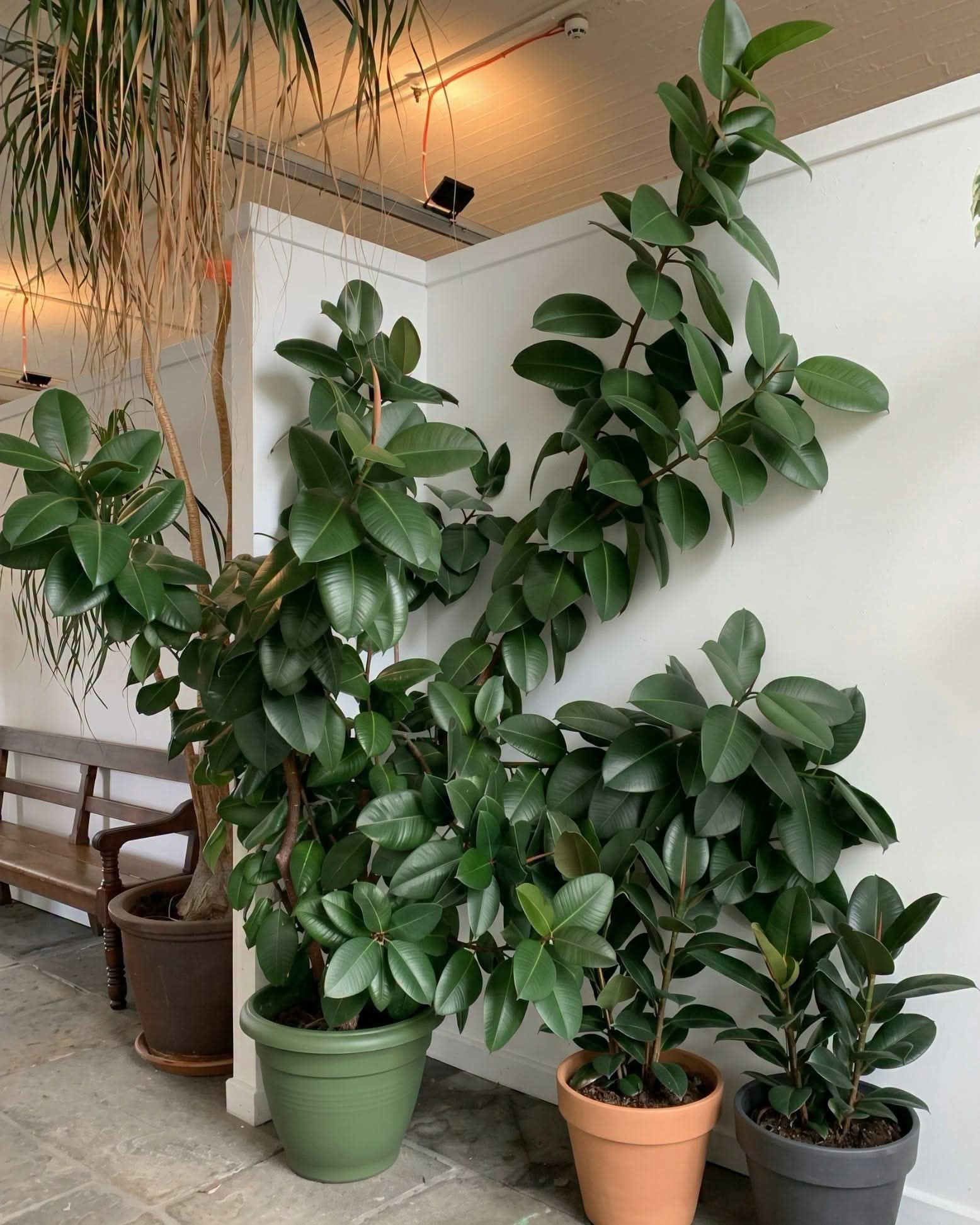
🌿 Coffee and Compost Tea for Healthier Rubber Plants
Have you ever looked at a beautiful rubber plant with thick, glossy green leaves and wondered how to keep it looking that healthy? 🌱 These impressive indoor plants can become stunning focal points in a home, office, or conservatory. With their broad leaves, sturdy stems, and rich green color, rubber plants bring a natural, tropical feeling into any space.
One gardening idea that often attracts attention is the use of a dark brown liquid made from compost tea and coffee. In this demonstration, the brown mixture is carefully poured around the base of several lush rubber plants, creating an interesting plant-care moment. But what exactly does this mixture do, and can it genuinely help plants grow?
The answer requires understanding the difference between a useful organic gardening practice and an unproven shortcut. Compost tea and coffee are often discussed in gardening communities, but their effects depend on how they are prepared, the ingredients used, the plant’s needs, and the condition of the growing medium.
Let’s explore the potential benefits, the precautions worth knowing, and the most reliable ways to care for rubber plants so they can maintain their beautiful foliage.
🌱 1. Meet the Rubber Plant
Rubber plants, commonly associated with Ficus elastica, are popular tropical plants known for their thick, leathery leaves. Their foliage may appear deep green, burgundy, or variegated, depending on the variety.
These plants can grow into impressive indoor specimens when given enough space, suitable light, and consistent care. Their broad leaves reflect light beautifully and give the plant a strong, architectural appearance.
Rubber plants generally prefer bright, indirect light and a well-draining growing medium. They benefit from thorough watering followed by a period in which excess water drains away and the soil begins to dry slightly.
Although rubber plants are relatively adaptable, they can suffer when their roots remain constantly wet or when they receive too little light for extended periods.
A good plant-care routine starts by understanding these needs before introducing any homemade mixture.
☕ 2. What Is Coffee and Compost Tea?
The brown liquid in this demonstration represents a mixture inspired by two commonly discussed gardening materials: coffee and compost tea.
Compost tea is generally prepared by steeping mature compost in water to produce a liquid containing some water-soluble compounds from the compost. Its composition varies significantly according to the compost source, preparation method, water quality, and brewing conditions.
Coffee contains soluble organic compounds, and used coffee grounds contain some nutrients. However, coffee grounds are not a complete fertilizer, and brewed coffee is not a reliable replacement for a balanced plant fertilizer.
Combining coffee with compost tea does not automatically create a superior plant treatment. The mixture’s nutrient content and suitability are difficult to predict without knowing exactly how it was prepared.
For houseplants, consistency matters. An unknown homemade mixture may introduce excess organic material, alter soil conditions, or contribute to unpleasant odors if it is stored or prepared poorly.
If you choose to explore organic gardening materials, use clean ingredients, avoid concentrated mixtures, and monitor the plant closely. A properly formulated indoor-plant fertilizer offers a more predictable way to provide essential nutrients when feeding is needed.
🌿 3. Can Compost Tea Help Rubber Plants?
Compost tea is often promoted as a natural way to support soil health, but the results depend on the quality of the compost and how the liquid is prepared.
Some compost-derived liquids contain soluble nutrients and organic compounds. However, their nutrient levels can vary widely, and not every homemade preparation provides a measurable benefit to a potted plant.
The quality of the original compost is particularly important. Mature, well-managed compost is preferable to unfinished material that may contain undesirable compounds or harmful microorganisms.
Poorly prepared or improperly stored mixtures can also develop unpleasant odors or microbial problems. A liquid that looks dark and rich is not necessarily nutritious or safe for every plant.
For a rubber plant growing in a container, the most important factors remain appropriate light, watering, drainage, and balanced nutrition.
Compost tea should not be treated as a guaranteed way to produce larger leaves, faster growth, or an instant transformation.
☕ 4. What Does Coffee Actually Contribute?
Coffee is often associated with gardening because coffee grounds contain organic matter and some nutrients. Nevertheless, using coffee around plants requires care.
Fresh coffee grounds can have different properties from used grounds, and brewed coffee has a different composition from either of them. The acidity and concentration can vary depending on the coffee and preparation method.
Adding leftover coffee repeatedly to a houseplant’s pot is not a dependable way to manage soil pH or meet the plant’s nutritional needs. Concentrated or frequent applications may create unfavorable conditions, especially in a small container.
Used coffee grounds can also accumulate on the soil surface, where a thick layer may interfere with water movement and airflow.
If your rubber plant needs feeding, use a balanced fertilizer formulated for indoor foliage plants and follow its label. This provides a more controlled approach than relying on coffee as the main nutrient source.
The goal is not to add as many ingredients as possible. It is to provide the plant with what it needs in the correct amounts.
💧 5. How to Apply Water-Based Plant Treatments Carefully
The way a liquid is applied can matter as much as its ingredients.
For a potted rubber plant, avoid repeatedly soaking the soil with an unfamiliar mixture. Too much liquid can keep the root zone wet for too long, particularly in a large decorative pot without adequate drainage.
Before watering, check the soil moisture. If the upper portion has started to dry, water thoroughly with an appropriate liquid and allow excess water to drain freely.
Never allow a plant to stand in a saucer filled with stagnant water. Roots need oxygen, and prolonged waterlogging can contribute to root damage.
If you experiment with any homemade gardening preparation, use caution and avoid making it a frequent routine unless you have reliable evidence that it is appropriate for the plant.
A brown liquid should not be assumed to be beneficial simply because it looks natural or resembles a commercial fertilizer.
🪴 6. Why Drainage Matters More Than Homemade Recipes
One of the most common problems with indoor rubber plants is excessive moisture around the roots.
When the soil remains saturated, air spaces become filled with water and the roots may struggle to obtain enough oxygen. Damaged roots can lose their ability to absorb water properly, causing symptoms that may resemble drought stress.
A suitable potting mix should retain enough moisture for the plant while allowing excess water to escape. The container should have drainage holes, and decorative outer pots should not trap water around the root system.
Watering frequency depends on the pot size, temperature, light level, humidity, and growing medium. A large plant in bright conditions may dry out more quickly than a small plant in a cool corner.
Check the soil instead of watering automatically on a fixed schedule.
If the leaves are yellowing or falling, investigate the moisture level and root condition before adding coffee or compost tea. Correcting the cause is more useful than layering new treatments onto an existing problem.
☀️ 7. Give Rubber Plants the Right Light
Rubber plants generally thrive in bright, indirect light. A position near a bright window can support healthy foliage, provided the plant is not exposed suddenly to intense direct sunlight.
When a rubber plant receives too little light, growth may slow and new leaves may become smaller. The soil may also take longer to dry because the plant uses water more slowly.
Very intense sunlight, especially when the plant has not gradually adapted to it, can scorch the foliage.
If you move your rubber plant to a brighter position, do so gradually and observe its response. Stable conditions are often better than frequent changes from one location to another.
Good light supports photosynthesis, which provides the energy the plant needs to produce new leaves and maintain its existing foliage.
No coffee-and-compost mixture can replace the energy the plant obtains from light.
🍃 8. How to Maintain Glossy Green Leaves
The broad leaves of a rubber plant are one of its most attractive features. Keeping them clean helps the plant look fresh and makes it easier to notice potential problems.
Dust the leaves gently with a soft, damp cloth. Support each leaf while cleaning to avoid tearing or damaging it.
Avoid applying coffee, compost tea, oils, or untested mixtures directly to the foliage. These substances may leave residues and are not necessary for maintaining a natural shine.
Inspect the undersides of the leaves and the stems periodically for signs of pests. Spider mites, scale insects, and mealybugs can affect indoor plants, particularly when conditions favor their development.
If you notice sticky residue, unusual speckling, fine webbing, or small insects, identify the problem before selecting a treatment.
Healthy-looking leaves are the result of several factors working together: adequate light, appropriate moisture, suitable nutrition, and effective pest management.
🌱 9. When Does a Rubber Plant Need Fertilizer?
Rubber plants need essential nutrients to maintain healthy growth. If the plant is actively producing new leaves and its growing medium no longer provides enough nutrition, a balanced indoor-plant fertilizer may be helpful.
Follow the manufacturer’s directions, including the recommended concentration and frequency. Avoid applying more fertilizer than instructed, because excess fertilizer salts can damage roots and contribute to brown leaf edges.
A plant growing slowly in low light generally uses fewer nutrients than one actively growing in favorable conditions.
Yellow leaves do not automatically mean the plant needs more fertilizer. Overwatering, poor drainage, inadequate light, pests, and natural aging can also cause yellowing.
Before feeding, check the plant’s overall condition. If the roots are unhealthy or the soil remains saturated, correct those problems first.
Compost tea may contain some soluble nutrients, but its composition is unpredictable. Coffee is also not a complete nutrient source. Neither should be relied upon as a precise substitute for balanced plant nutrition.
🌿 10. Can Coffee and Compost Tea Make a Plant Transform Overnight?
The dramatic transformations shown in short gardening videos are designed to capture attention, but real plant growth takes time.
A rubber plant cannot reliably develop a completely new canopy of mature leaves immediately after one watering. New leaves emerge, expand, and mature over time as the plant produces and uses energy.
If a video shows an immediate change in leaf size, color, or density, that should be understood as an edited visual effect or an accelerated time-lapse rather than proof that a liquid caused instant growth.
A healthy rubber plant can become fuller and more attractive with suitable conditions, but the process is gradual.
The best approach is to observe genuine changes over days and weeks. Look for healthy new leaves, stable foliage, and normal growth rather than expecting an immediate result from a homemade treatment.
🧪 11. Important Safety Tips for Homemade Compost Tea
If you prepare compost tea, begin with mature compost from a reliable source and use clean equipment. Avoid compost that smells rotten or contains material whose safety is uncertain.
Do not assume that brewing or steeping automatically eliminates harmful microorganisms. The microbiological quality of homemade compost tea can vary, and some preparations may contain undesirable organisms.
For indoor plants, this matters because the liquid is used in a confined living space and may remain in the potting medium.
Prepare only what you need, avoid keeping mixtures for long periods, and dispose of anything that develops an unpleasant odor or unusual appearance.
Do not mix coffee, compost tea, fertilizers, and other household substances indiscriminately. Combining ingredients does not guarantee that their effects will be compatible.
If you prefer a simple, predictable routine, clean water and a properly labeled houseplant fertilizer are usually easier to manage.
🌳 12. A Simple Care Routine for Healthy Rubber Plants
Check soil moisture: Allow the upper portion of the potting mix to dry somewhat between waterings, adjusting for the season and growing conditions.
Provide bright, indirect light: Choose a suitable position and avoid abrupt exposure to intense sunlight.
Use a well-draining mix: Make sure the pot has drainage holes and that excess water can escape.
Feed carefully: Apply a balanced indoor-plant fertilizer according to the label when the plant is actively growing and needs additional nutrients.
Clean the foliage: Remove dust gently and inspect leaves for pests.
Observe new growth: Healthy new leaves and stable foliage provide useful signs that the growing conditions are suitable.
Avoid unnecessary experiments: Do not add homemade mixtures simply because they are popular online. Identify the plant’s needs first.
This routine is straightforward, practical, and more reliable than expecting a single ingredient to solve every plant-care problem.
💚 Final Thoughts: The Real Secret Behind Beautiful Rubber Plants
The rubber plants in this scene demonstrate why these tropical houseplants are so popular. Their thick, glossy leaves and impressive size can create a lush atmosphere in almost any indoor space.
Coffee and compost tea are interesting topics for gardeners, but a dark brown liquid is not automatically a proven plant-growth treatment. Compost-derived liquids vary in composition, while coffee does not provide complete nutrition. Neither guarantees larger leaves, faster growth, or an instant transformation.
For a healthier rubber plant, start with the fundamentals: suitable light, appropriate watering, well-draining soil, balanced nutrition, and regular inspection. These conditions give the roots and foliage the support they need to grow well over time.
🌿 Love indoor gardening? Save this guide, share it with another plant lover, and keep exploring practical ways to care for rubber plants and other beautiful houseplants.
Remember: the best results come from understanding your plant’s needs and maintaining a consistent routine—not from relying on a miracle mixture.