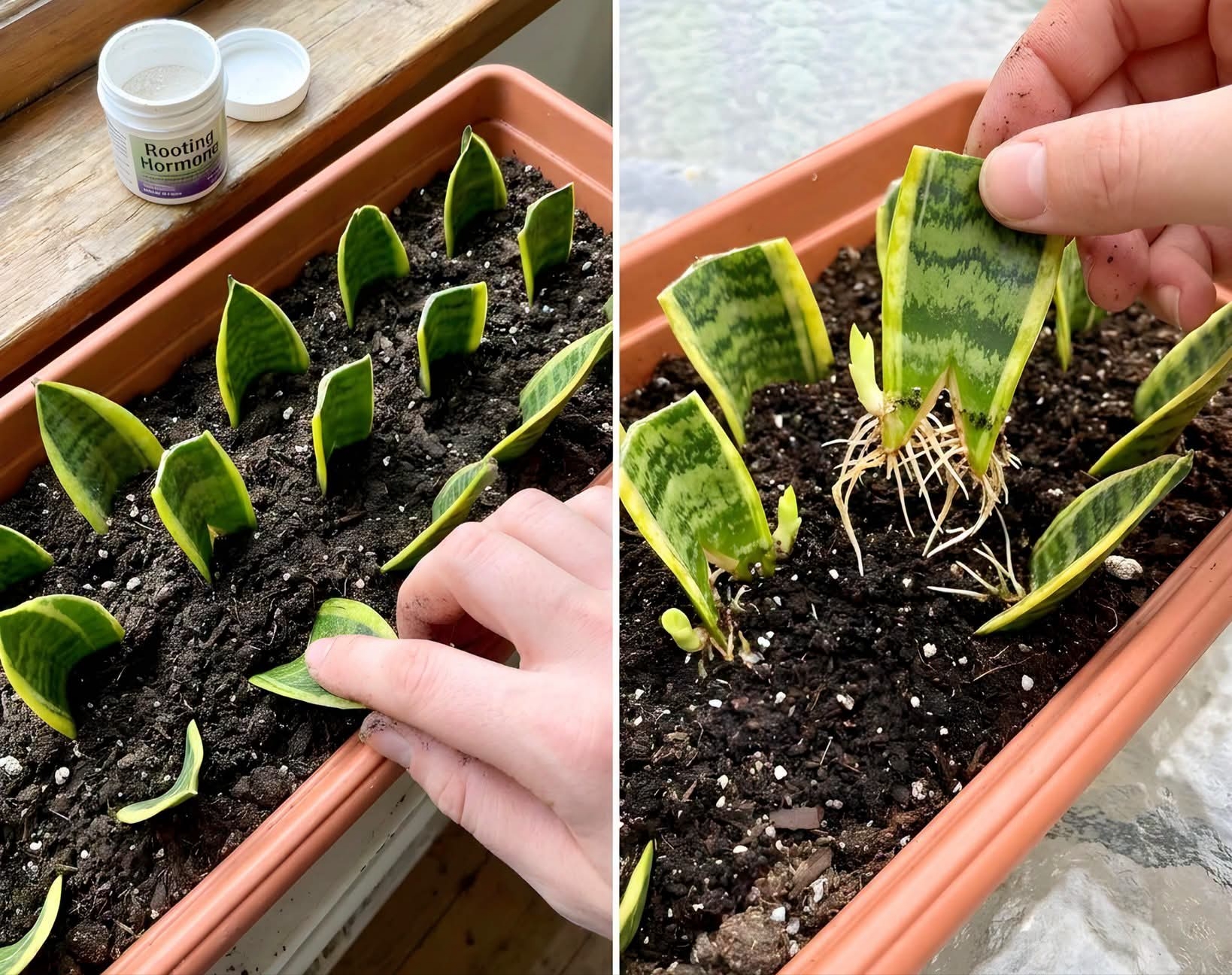
The Snake Plant (scientifically categorized under Sansevieria and recently reclassified as Dracaena trifasciata) stands unrivaled as one of the most resilient, architecturally striking, and popular houseplants in modern interior design. Revered for its stiff, sword-like variegated leaves and exceptional air-purifying capabilities, it has earned a permanent spot in homes and offices worldwide. Beyond its aesthetic appeal, one of the most rewarding aspects of owning a snake plant is the ease with which it can be multiplied. Through dedicated propagation techniques, a single mature specimen can supply an entire indoor garden.
1. The Science and Anatomy of Snake Plants
Native to the arid, tropical, and subtropical regions of West Africa, Madagascar, and South Asia, snake plants have evolved unique survival mechanisms. Their thick, succulent leaves act as water reservoirs, allowing them to endure prolonged periods of drought.
Understanding Leaf Tissues and Rhizomes
- The Root System: Snake plants grow primarily through underground stems known as rhizomes, from which roots and vertical shoots (pups) emerge.
- Cellular Adaptations: The leaves contain specialized parenchyma tissue designed for water storage, which makes them resilient against environmental stress but also sensitive to over-saturation and root rot.
2. Advanced Propagation Techniques: Leaf Cuttings & The V-Cut Method
Propagating snake plants from leaf cuttings is an engaging horticultural project. However, executing it with precision yields exponentially better results.
Step-by-Step Propagation Protocol:
- Selection: Choose a vibrant, healthy, and firm leaf from the mother plant. Avoid bruised, yellowing, or damaged foliage.
- Harvesting: Using a sterilized, sharp blade, cut the leaf cleanly near the soil line.
- Orientation Management: Always track the polarity of the cutting. The end that grew closest to the soil must remain facing downward; inverting a cutting will prevent root development entirely.
- The V-Cut Technique: Slice an inverted “V” shape into the bottom base of the cutting. This increases the surface area for cellular regeneration and encourages the plant’s energy to focus on the corners where roots and pups naturally form.
- Callusing: Allow the cut leaf sections to rest in a dry, shaded area for 24 to 48 hours. Forming a protective callus prevents fungal pathogens from entering the moist tissue when introduced to soil.
- Applying Rooting Hormone: Lightly dip the callused base into a rooting hormone powder. The synthetic auxins accelerate cell division, guaranteeing a robust, dense network of white roots.
- Planting: Insert the lower third of each cutting vertically into a shallow propagation tray filled with a fast-draining, sterile cactus and succulent mix.
3. Nutrient Management and Safe Feeding Routines
While snake plants are low-feeders, providing the right balance of nutrients during their active growing season supports vibrant leaf coloration and potential flowering.
- The Dangers of Over-Fertilization: Excessive chemical fertilizers lead to mineral salt accumulation in the soil, which draws moisture away from the roots via osmosis, causing fertilizer burn and root decay.
- Slow-Release Granules: Utilizing controlled-release granular fertilizers provides a steady, low-concentration trickle of minerals with every watering, entirely eliminating the risk of chemical shock.
- Seasonal Schedule: Restrict all fertilizing activities strictly to spring and summer, allowing the plant to enter its natural dormancy phase undisturbed during autumn and winter.
4. Post-Propagation Care and Troubleshooting
Maintaining optimal environmental conditions ensures that your newly rooted snake plants transition successfully into independent specimens:
- Lighting Conditions: Place your propagation trays and young plants in bright, indirect sunlight. Direct scorching sunlight can dehydrate unrooted tissues, while deep darkness stunts growth.
- Watering Discipline: Adopt a strict “soak and dry” methodology. Allow the potting soil to dry out completely (100%) between waterings.
- Patience: Snake plants are notoriously deliberate growers. It typically takes 4 to 8 weeks for root systems to anchor firmly, followed by tiny green shoots breaking through the soil surface.
By mastering these professional propagation and care routines, you can continuously expand your botanical collection sustainably and enjoy lush, thriving indoor greenery for years to come!