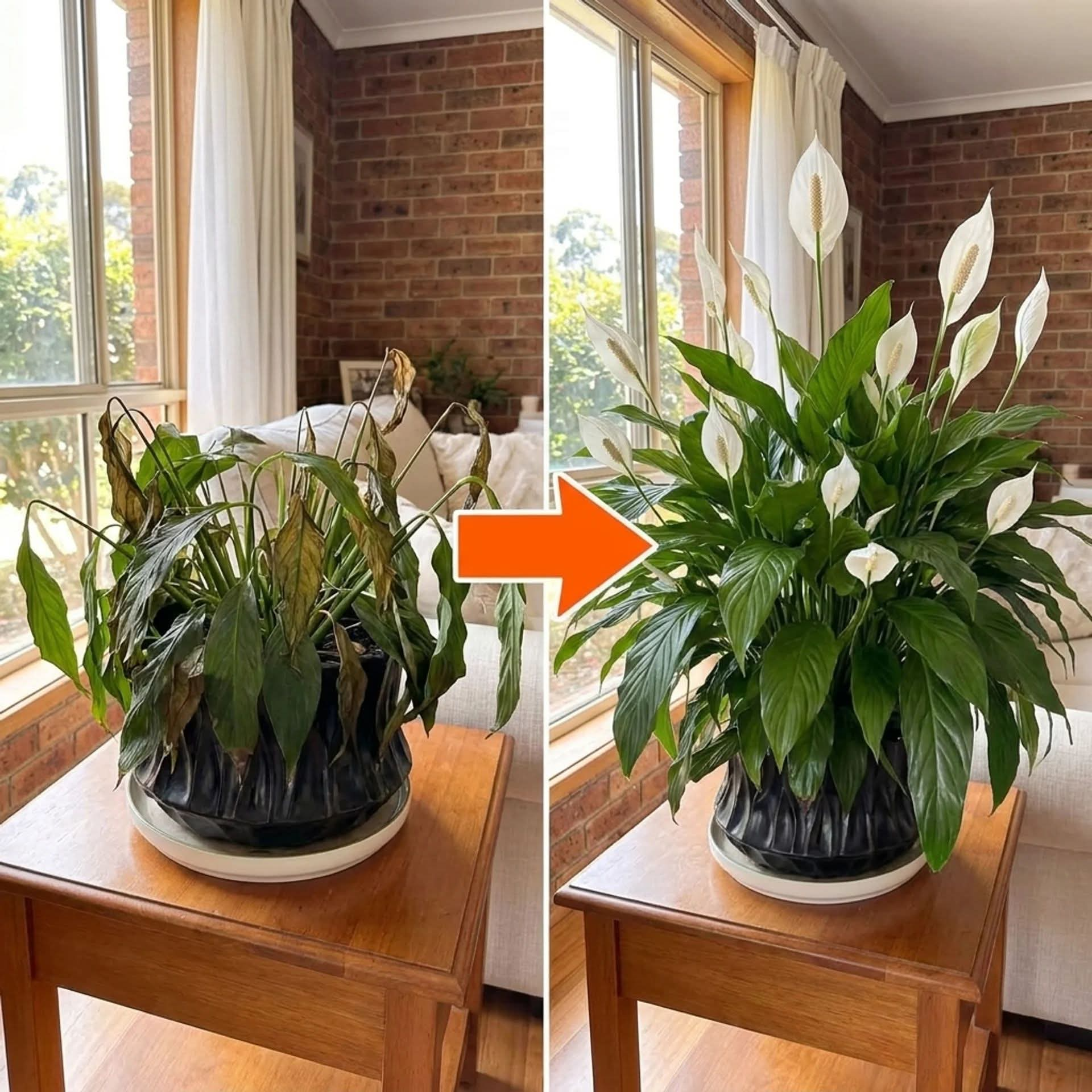
The Peace Lily (Spathiphyllum) is one of the most beloved indoor foliage plants, cherished for its glossy dark green leaves and elegant white spathes. However, it is famously sensitive to underwatering and substrate depletion, leading to dramatic drooping, yellowing leaves, and complete collapse.
As demonstrated in this impressive before-and-after transformation, a severely wilted Peace Lily can fully bounce back and flourish with abundant blooms when given proper care and a steady dose of Green Slow-Release Granules.
🔍 What Are “Green Granules”?
Green Granules are coated, solid fertilizer prills designed for controlled, long-term plant nutrition.
- Composition: They contain a balanced ratio of essential NPK nutrients (Nitrogen, Phosphorus, Potassium) enriched with magnesium and vital micronutrients (iron, zinc, manganese). Their distinct green coating often highlights the presence of magnesium and iron, which directly fuel chlorophyll production.
- How They Work: Featuring a temperature- and moisture-sensitive polymer coating, these granules slowly release small, measured amounts of nutrients into the soil each time you water over a period of 3 to 6 months, eliminating the risk of root burn.
📋 Care & Treatment Overview
| Metric | Optimal Specification |
|---|---|
| Plant Type | Peace Lily (Spathiphyllum wallisii) |
| Initial Condition | Severe wilting, dehydration, leaf browning, and collapse |
| Fertilizer Used | Green Slow-Release NPK Granules |
| Primary Goal | Restore leaf turgor, boost foliage density, and trigger white blooms |
| Application Frequency | Once every 4 to 6 months |
🔬 Scientific Benefits of Green Granules for Peace Lilies
1. Nitrogen & Magnesium for Deep Green Foliage
Nitrogen fuels vibrant leaf growth, while magnesium acts as the core building block for chlorophyll. The green prill formulation restores yellowed, pale leaves to a rich, dark green luster.
2. Phosphorus for Continuous Blooming
The steady supply of phosphorus signals the root system to initiate flower spikes, producing multiple strong white spathes above the foliage canopy.
3. Gentle & Continuous Root Feeding
Stressed roots recovering from drought are vulnerable to fertilizer shock. Controlled-release granules deliver nutrients gradually as the plant absorbs water, providing a safe, stress-free recovery environment.
🛠️ Step-by-Step Revival & Feeding Routine
Step 1: Emergency Cleanup & Deep Hydration
- Prune Damaged Foliage: Cut away dead, fully brown, or crispy leaf stems at the base using clean pruning shears.
- Bottom Water or Soak: Submerge the bottom of the pot in a bucket of room-temperature water for 20 minutes to thoroughly rehydrate the desiccated soil mix.
Step 2: Applying the Green Granules
- Dose: Evenly scatter about 1 teaspoon of green granules over the surface of the moist potting mix.
- Incorporate: Lightly scratch the top inch of soil with a fork to work the granules beneath the surface.
- Water In: Give a light surface watering to settle the granules into place and activate the slow-release coating.
Step 3: Optimal Placement
Position the plant near a window receiving bright, indirect sunlight. Avoid harsh direct sun, which scorches the leaves, and dim corners, which hinder flowering.
💡 Expert Care Tip
Don’t Wait for the Collapse: While Peace Lilies are famous for their dramatic droop when thirsty, repeated severe wilting weakens the root system over time. Water as soon as the top inch of soil feels dry to the touch to keep the foliage upright, bushy, and constantly blooming!