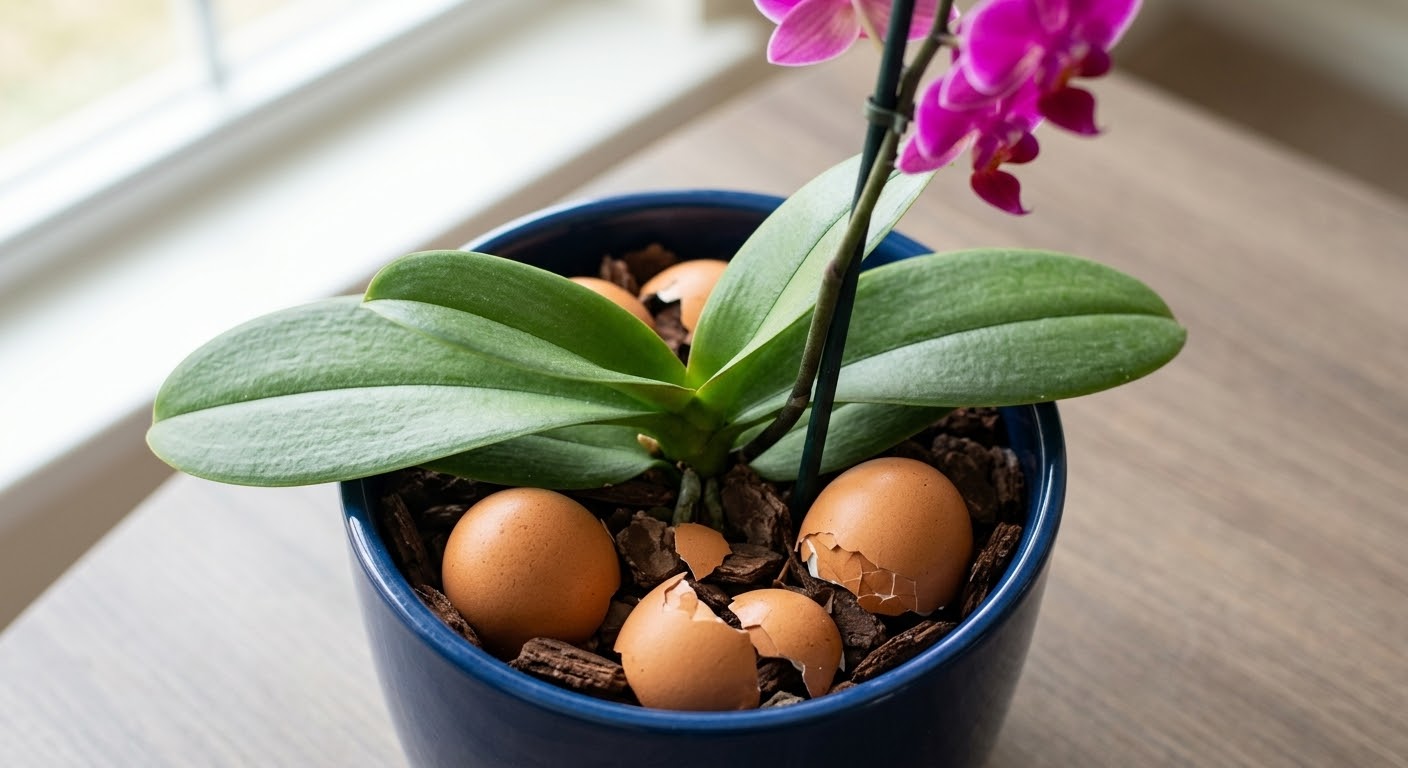
Phalaenopsis Orchids are among the most elegant and popular indoor plants, prized for their long-lasting and vibrant blooms. However, maintaining their health and encouraging recurring flower spikes requires a careful balance of essential nutrients.
Crushed eggshells offer a natural, cost-effective source of calcium carbonate, potassium, and magnesium—key minerals that build stronger cell walls in roots and leaves while promoting healthy, sustainable blooming cycles.
📋 Care Overview & Technical Summary
| Parameter | Specification |
|---|---|
| Plant Type | Phalaenopsis Orchid (Phalaenopsis spp.) |
| Natural Fertilizer | Dried, finely ground eggshells or boiled eggshell tea |
| Key Nutrients | Calcium (~95%), Magnesium, Potassium, Phosphorus |
| Growing Medium | Pine bark mix, sphagnum moss, or orchid substrate |
| Application Frequency | Once every 4 to 6 weeks during the active growing season |
🔬 Scientific Benefits of Eggshells for Orchids
1. Strengthening Roots and Foliage
Eggshells consist primarily of calcium carbonate. Calcium plays a direct role in strengthening the cellular structure of aerial roots and thick green leaves, preventing structural breakage and susceptibility to fungal soft rot.
2. Stimulating Flower Spikes & Blooms
The trace minerals found in eggshells help orchids transition smoothly from vegetative leaf growth to the reproductive blooming stage, resulting in sturdier flower stalks and longer-lasting petals.
3. Substrate pH Balancing
Over time, orchid bark mix tends to become acidic due to regular watering and fertilizer breakdown. The alkaline nature of calcium carbonate gently helps buffer and balance medium acidity to optimal levels.
🛠️ Preparation & Application Methods
There are two primary, safe methods to apply eggshell nutrients to orchids without introducing harmful bacteria or pests:
Method 1: Eggshell Tea (Recommended Liquid Solution)
- Clean & Sterilize: Thoroughly rinse the shells of 10–12 eggs with warm water to remove all raw membrane residues.
- Boil: Boil the shells in 2 liters of water for 10–15 minutes to sterilize them (eliminating pathogens like Salmonella) and extract the minerals.
- Cool & Strain: Allow the liquid to steep and cool completely overnight. Strain out all solid particles.
- Apply: Use the cooled, mineral-infused liquid to water your orchids once a month.
Method 2: Fine Eggshell Powder (Dry Application)
- Dry: Sun-dry the washed shells or bake them in an oven at a low temperature for 10 minutes until crisp.
- Grind: Pulse the dried shells in a blender or crush them with a mortar and pestle into a very fine, flour-like powder.
- Apply: Lightly dust 1 teaspoon of the fine powder over the orchid bark around the roots and water normally.
⚠️ Common Errors to Avoid
- Using Large Shell Fragments: Large crushed pieces take years to decompose and will not provide immediate nutrients to the plant.
- Unwashed Shells: Raw egg residues attract fruit flies, ants, and cause unpleasant odors and mold on aerial roots.
- Over-Application: Excessive calcium can block the plant’s ability to absorb iron and magnesium. Stick to a monthly feeding schedule.
💡 Pro Tip
Soak and Drain: When using eggshell tea, soak the orchid pot in the liquid for 10 minutes to allow the bark mix to absorb the solution thoroughly. Always let all excess water drain completely from the bottom of the pot before returning the plant to its decorative outer container to prevent root rot.