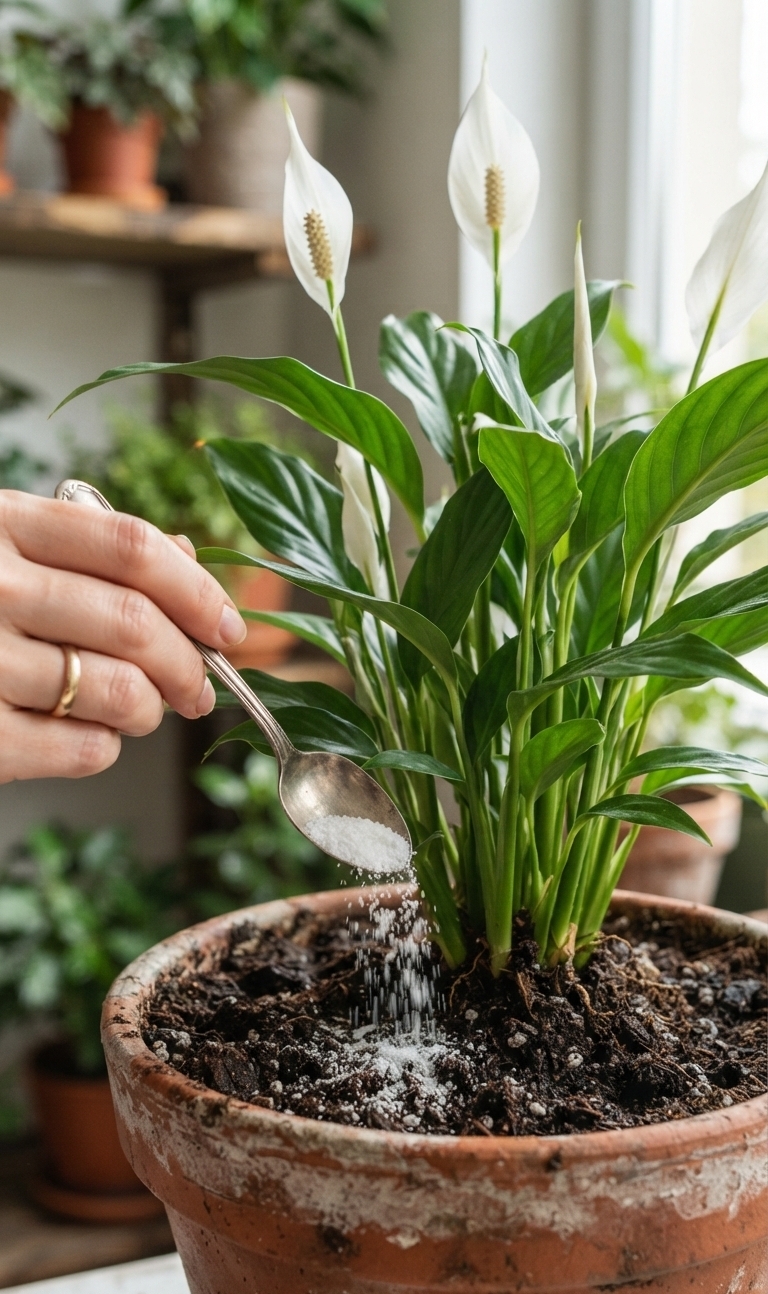
The Peace Lily (Spathiphyllum) is widely celebrated as one of the most elegant and popular indoor houseplants, prized for its glossy dark green leaves and pristine white blooms that add a sophisticated touch to any interior space. However, many indoor gardeners struggle with a lack of blooms or yellowing leaves due to a deficiency in essential nutrients like magnesium and sulfur.
Here is a quick, actionable guide to using Epsom salt to stimulate healthy foliage and continuous flowering.
📋 Care Summary
| Requirement | Essential Guidelines |
|---|---|
| Light | Medium to bright indirect light (avoid direct sunlight) |
| Watering | When the top inch of soil feels dry (once to twice a week) |
| Soil | Lightweight, well-draining potting mix rich in organic matter |
| Nutrients | A spoonful of Epsom salt monthly during the growing season |
💡 Care Steps Using Epsom Salt
1. Boosting Blooms with Epsom Salt
Epsom salt contains magnesium sulfate, which is essential for chlorophyll production and encouraging the development of vibrant white petals.
- Direct Application: Lightly sprinkle a small spoonful of Epsom salt around the base of the soil before watering.
- Liquid Application: Dissolve a teaspoon of Epsom salt in a liter of water and use it to water the soil once a month during spring and summer.
2. Moisture Control and Watering
- Peace Lilies prefer consistently moist soil, but it should never be waterlogged to prevent root rot.
- If the leaves begin to droop slightly, it serves as an immediate indicator that the plant needs watering.
3. Optimizing Lighting
While Peace Lilies can tolerate low-light conditions, placing them in bright, indirect light significantly accelerates blooming and the growth of fresh new buds.
💡 Pro Tip
Prevent Leaf Scorch: Do not overuse Epsom salt; applying it once a month during the growing season is entirely sufficient. Periodically wipe the leaves with a damp cloth to remove dust and allow the plant to breathe and photosynthesize at maximum efficiency.