🌱 Welcome!
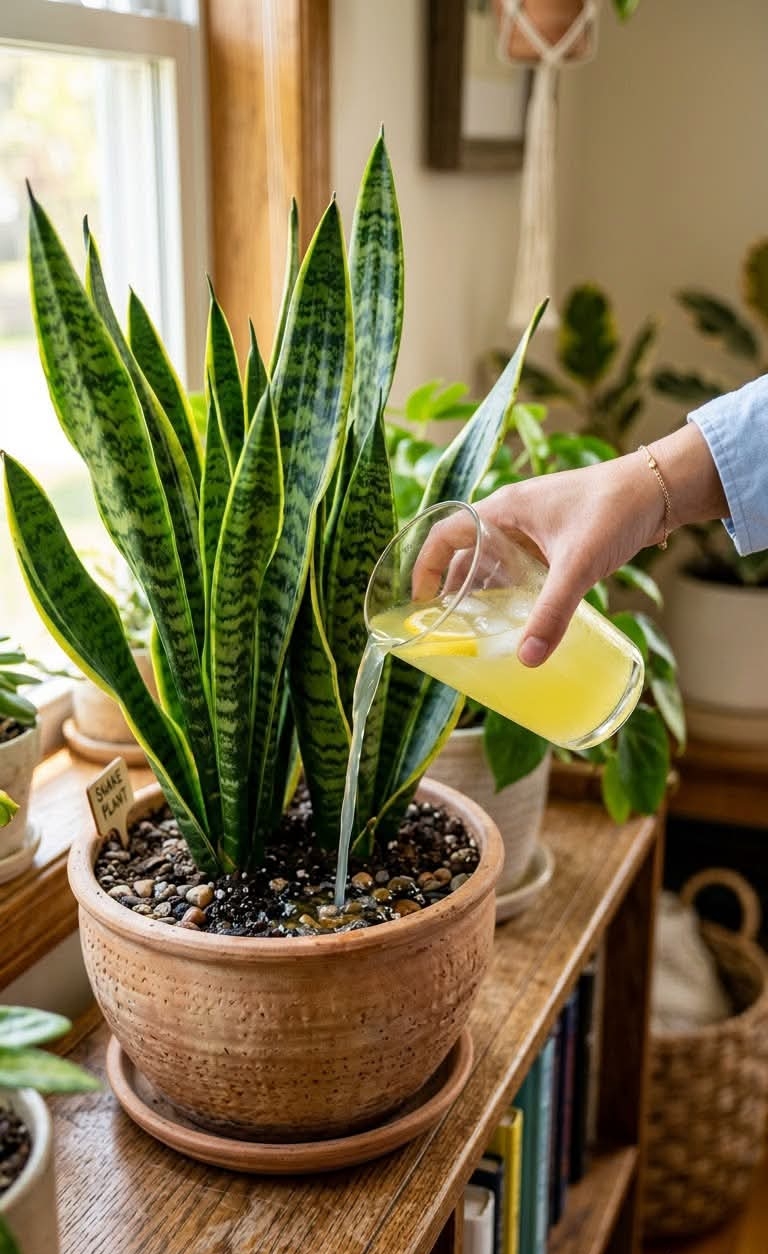
🟢If you’ve spent any time browsing social media, you’ve probably seen videos claiming that adding lemon water to a Snake Plant can make it grow faster, produce greener leaves, and even revive a struggling plant.But how much of this is true?
🟢Can lemon really improve your Snake Plant’s health?Should you try it?This complete guide answers every question with practical advice, proper care techniques, and safe recommendations so your Snake Plant can stay healthy for years.
🌵 What Is a Snake Plant?
- The Snake Plant (Dracaena trifasciata, formerly Sansevieria) is one of the toughest houseplants in the world.It naturally grows in dry regions of Africa where rainfall is limited.Because of this, it has evolved to store water inside its thick leaves.That’s why it survives neglect much better than many other indoor plants.
❤️ Why Millions Love Snake Plants
- ✨ Extremely beginner-friendly
- ✨ Beautiful upright modern appearance
- ✨ Needs very little water
- ✨ Lives for many years
- ✨ Adapts to low light
- ✨ Rarely suffers serious diseases
- ✨ Easy to propagate
🍋 Why Do Some Gardeners Add Lemon Water?
Many online gardeners believe that adding a very small amount of diluted lemon juice may help reduce the effects of alkaline tap water in certain areas.Hard water contains minerals like calcium and magnesium that may gradually increase soil alkalinity.A tiny amount of lemon juice slightly lowers the water’s pH.This may improve nutrient availability in some situations.However…
👉 Lemon water is not a miracle fertilizer.
👉 It cannot replace proper watering.
👉 It cannot repair root rot.
👉 It cannot instantly revive dying plants.
🧪 How Lemon Juice WorksFresh lemons naturally contain:
🍋 Citric acid🍋 Vitamin C🍋 Small amounts of potassiumThe most important part is the citric acid.When heavily diluted, it may temporarily lower water pH.That is why some gardeners experiment with it.⚠ Important WarningMore lemon is NOT better.Too much acid can:❌ Burn roots❌ Damage soil microbes❌ Slow growth❌ Cause yellow leavesAlways dilute properly.🥣 IngredientsYou’ll need:🍋 Fresh lemon💧 1 gallon (3.8 liters) room-temperature water🥄 Measuring spoon🌿 Optional liquid seaweed fertilizer
👨🌾 How To PrepareStep
1Fill your watering can with:1 gallon (3.8 L) of water
Step 2Add:1 teaspoon fresh lemon juiceMix thoroughly.
Step 3 (Optional)Add:1 teaspoon liquid seaweed fertilizer.This provides actual nutrients that lemon juice does not.🚿 How To ApplyWater only after the soil has dried completely.Pour slowly around the soil.
Avoid splashing leaves.Allow excess water to drain completely.Never allow the pot to stand in water.📅 How Often?Only use diluted lemon water:🗓 Once every 6–8 weeksNormal watering should always be plain water.
🌞 Best LightingSnake Plants prefer:☀ Bright indirect sunlight🌤
Morning sun🌥
Bright indoor roomsThey also tolerate low light but grow much slower.
💧 Watering ScheduleThis is the biggest secret.Never water on a fixed schedule.Instead:✔ Touch the soil.✔ If it’s dry all the way down…Then water.If it’s still moist…Wait.🌡 TemperatureIdeal temperatures:65°F–85°F(18°C–29°C)Protect from freezing.
💨 HumiditySnake Plants don’t need high humidity.Average indoor humidity is perfect.
🪴 Choosing The Right PotThe best pots are:🪴 Terracotta🪴 Clay🪴 Ceramic with drainage holesAvoid containers without drainage.
🌱 Best SoilSnake Plants hate wet soil.Use:✔ Cactus mix✔ Succulent mix✔ Fast-draining potting mixYou can improve drainage by adding:🪨 Perlite🪨 Coarse sand🪨 Pumice🌿 FertilizingUse a balanced houseplant fertilizer.Half strength is enough.Feed only during spring and summer.Avoid fertilizing during winter.
👀 How To Monitor Your PlantHealthy signs include:🌿 Upright leaves🌿 Rich green color🌿 Firm texture🌿 New shoots🌿 Strong roots⚠ Signs Something Is WrongWatch for:
✅Yellow leaves🍂
✅Soft leaves🍂
✅Mushy roots🍂
✅Brown tips🍂
▪️Black spotsMost problems come from overwatering.✂ RepottingRepot every:🗓 2–3 yearsOr when:Roots fill the pot.Soil breaks down.Drainage becomes poor.🌱
▪️PropagationSnake Plants are easy to multiply.Methods include:🌿 Leaf cuttings🌿 Root division🌿 Offsets (“pups”)🧽 Cleaning The LeavesDust blocks sunlight.Simply wipe leaves every few weeks using:✔ Soft cloth✔ Plain water🐛 Common PestsSometimes you’ll see:🐞 Mealybugs🐞 Spider mites🐞 Scale insectsTreat early using insecticidal soap or horticultural oil.❌ Common Mistakes
🚫 Watering every week
🚫 No drainage holes
🚫 Too much fertilizer
🚫 Direct afternoon sun
🚫 Constant wet soil
🚫 Using concentrated lemon juice🍋
🟢Does Lemon Water Really Help?Research doesn’t show that lemon water is a necessary part of Snake Plant care.Its main possible benefit is slightly lowering the pH of alkaline water.For most people, healthy watering habits and proper fertilizer make a much bigger difference.❓
🟢Frequently Asked QuestionsCan lemon water revive a dying Snake Plant?No. It cannot repair severe root damage or rot.Can I use bottled lemon juice?Fresh juice is preferred, as bottled products may contain preservatives.Can I use it every week?No. Once every 6–8 weeks at most.Is lemon a fertilizer?No. It contains very few nutrients.Should I spray lemon water on the leaves?No.
🟢Spray only clean water if needed.Why are my leaves turning yellow?Usually because of overwatering.Why isn’t my Snake Plant growing?Possible reasons:• Low light• Cold temperatures• Small pot• Poor soil• Root problemsCan Snake Plants live outdoors?
✅Yes, in warm climates without frost.How long do Snake Plants live?With proper care, they can live for decades.
🌟 Final ThoughtsThe healthiest Snake Plants don’t depend on secret ingredients—they thrive because of consistent care.Water only when the soil is dry, provide bright indirect light, use a well-draining soil mix, and fertilize lightly during the growing season.If you choose to experiment with very dilute lemon water, do so sparingly and observe how your plant responds.
🌿Every home and every water source is different, so what works in one environment may not make a noticeable difference in another.Healthy plants are built through patience, good habits, and careful observation—not overnight miracles✨