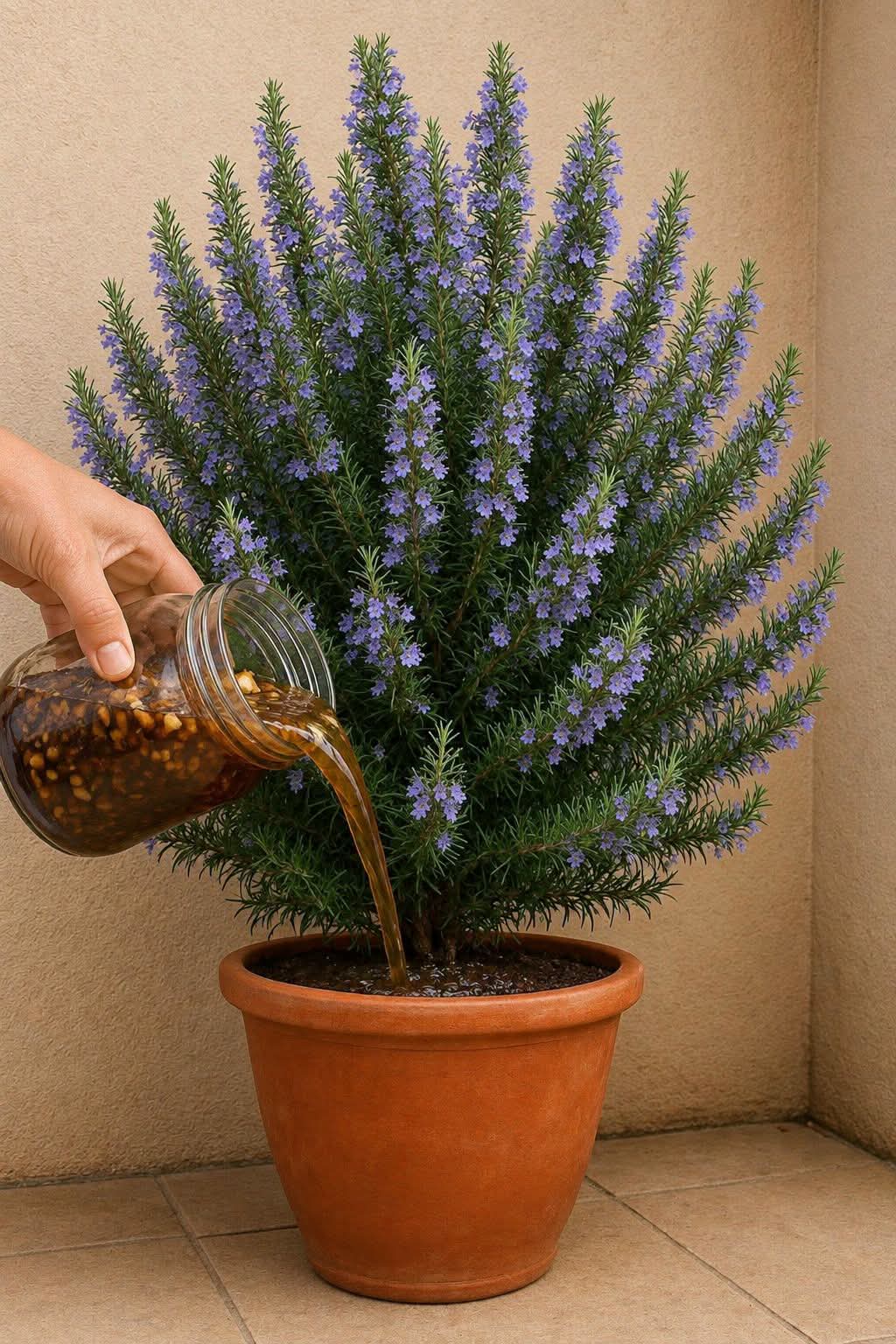
Rosemary (Salvia rosmarinus), widely prized for its aromatic needle-like foliage, woodsy fragrance, and delightful purple blossoms, is one of the most versatile perennial herbs in any garden or container setup 🪴💜. Whether grown for culinary seasoning, natural aromatherapy, or garden decoration, a thriving rosemary bush brings Mediterranean charm directly to your home 🏠✨.
However, many plant enthusiasts find that potted rosemary can easily become sluggish, woodsy, or reluctant to produce its iconic blue-violet flowers 🥀. While commercial synthetic fertilizers offer short-term growth spikes, they often leave harsh chemical residues in the soil that can damage sensitive root tips over time 🧪⚠️.
Fortunately, simple organic infusions—made right in your kitchen using natural, nutrient-dense ingredients like garlic cloves, rice water, coffee grounds, and eggshells—provide safe, bioavailable nutrients 🧄🌾☕🥚!
In this master blog guide, we will break down the botanical secrets to encouraging bushy growth and vibrant purple blooms, compare organic feeding options, and share step-by-step instructions for long-term herb vitality 📝👇🛡️!
🌿 The Botanical Science Behind Vibrant Rosemary Growth & Flowering 🧪✨
To stimulate dense branching, needle retention, and vibrant blue-purple blossoms, rosemary requires a balanced supply of macro-nutrients alongside vital trace elements 🔬🧬. Natural liquid fertilizers nourish the plant while simultaneously sustaining the beneficial soil microorganisms that convert minerals into easily absorbable forms.
Core Factors for Rosemary Health & Bloom Production:
- Phosphorus & Potassium Power 💜: Essential macro-nutrients that trigger root development, stem fortification, and abundant floral spikes.
- Calcium & Trace Minerals 🥚: Strengthens cellular structures in woody stems, allowing the plant to support heavy foliage and vertical flowering stems.
- Sulfur & Organic Compounds (Garlic) 🧄: Garlic infusions release sulfur compounds and natural antioxidants that fortify root immunity against soil-borne pathogens and pests.
- Organic Nitrogen Balance 🌾☕: Gentle nitrogen sources stimulate fresh, aromatic needle growth without causing weak, leggy stems.
📊 Comprehensive Comparison: Natural Care Solutions
To help you decide which natural approach fits your herb care routine, compare these organic liquid feed methods side-by-side 📋👇:
| Natural Option 🛡️ | Primary Focus 🎯 | Core Benefit for Rosemary Plants ✨ | Application Frequency 🗓️ |
|---|---|---|---|
| Garlic Immunity Infusion 🧄 | Root health & pest defense | Protects roots from fungi & stimulates growth 🛡️ | Every 3 to 4 weeks 🗓️ |
| Starchy Rice Water Brew 🌾 | Soil microbes & energy | Feeds beneficial soil bacteria & boosts vigor 🌿 | Every 2 to 3 weeks 🗓️ |
| Aromatic Nitrogen Tonic ☕ | Needle growth & color | Enhances foliage color & stem density 💚 | Every 4 weeks 🗓️ |
| Calcium Shell Drench 🥚 | Stem strength & bloom support | Fortifies cell walls & supports flower spikes 💜 | Every |
🛡️ Key Benefits of Using Homemade Liquid Feeds 🌿✨
1. Triggers Vibrant Blue-Purple Blossoms 💜✨
Supplying phosphorus and potassium-rich organic feeds provides the metabolic spark needed for your rosemary bush to produce dense, fragrant floral spikes throughout its blooming cycle!
2. Restores Lush, Deep Green Needles 🌿💚
Organic trace minerals and gentle nitrogen sources restore full chlorophyll production, transforming pale or dull foliage into vibrant, highly aromatic needle growth.
3. Prevents Fertilizer Burn & Chemical Salt Buildup 🛡️🪨
Unlike synthetic mineral salts that leave a crusty white residue on terra cotta pots and burn delicate feeder roots, natural liquid feeds break down cleanly in well-draining soil.
4. Shields Roots from Soil Pests & Fungi 🧄🛡️
Mild sulfur-rich infusions keep soil-dwelling insects and root pathogens at bay, maintaining a clean, resilient root environment.
📝 Step-by-Step Instructions: Preparing Natural Herb Tonics 💧✨
Pro-Tip: Always pour liquid feeds directly onto the soil around the base of the plant. Avoid pouring thick liquids over dense center foliage where trapped moisture can invite mildew!
1. Garlic Immunity Infusion 🧄✨
- How to Prepare: Crush 3 to 4 fresh garlic cloves and steep them in 1 liter of warm water for 24 hours. Strain out all solid garlic pieces thoroughly.
- Application: Drench the potting soil once every month during the active spring and summer growing seasons.
2. Starchy Rice Water Brew 🌾🌿
- How to Prepare: Save the leftover water after soaking or washing uncooked rice. Allow the cloudy liquid to ferment at room temperature for 12 to 24 hours.
- Application: Water the soil base every 2 to 3 weeks to feed beneficial soil bacteria and encourage strong growth.
3. Diluted Organic Nitrogen Wash ☕🧪
- How to Prepare: Steep used organic coffee grounds in water for 24 hours until golden brown. Strain out all grounds completely.
- Application: Apply to the soil every month to maintain ideal, slightly acidic soil conditions and vibrant needle growth.
4. Mineral Calcium Drench 🥚🛡️
- How to Prepare: Boil clean, dried crushed eggshells in water for 15 minutes. Let the liquid cool completely to room temperature, then strain out all shell fragments.
- Application: Use as a gentle soil drench every month and a half to fortify stems and support long-term flowering.
🗓️ Essential Rules for Healthy Rosemary Success 💡🛡️
Combining your liquid feeding routine with ideal care conditions ensures long-term vitality 🌟:
- Provide Maximum Sunlight ☀️: Rosemary thrives in full, direct sun! Ensure your plant receives at least 6 to 8 hours of bright sunlight every single day.
- Ensure Excellent Soil Drainage 🪨: Rosemary hates “wet feet.” Plant in a gritty, sandy potting mix containing perlite or coarse sand, and always use pots with drainage holes.
- Let Soil Dry Between Waterings 💧: Water only when the top 2 inches of soil feel completely dry to the touch. Over-watering is the leading cause of root rot in potted herbs!
- Prune Regularly for Bushiness ✂️: Trim back the green stem tips frequently during spring to encourage dense branching and prevent the plant from becoming overly woody.
🌟 Final Thoughts
Encouraging your rosemary bush to grow thick, fragrant, and loaded with purple blooms does not require expensive synthetic chemicals or artificial fertilizers 🌿💜✨. By utilizing simple, nutrient-dense natural infusions alongside proper sunlight and minimal watering, you can keep your Salvia rosmarinus flourishing for years to come 🏠🛡️. Try implementing these simple natural care steps today and enjoy a vibrant, thriving herb garden! 🚀💜💚