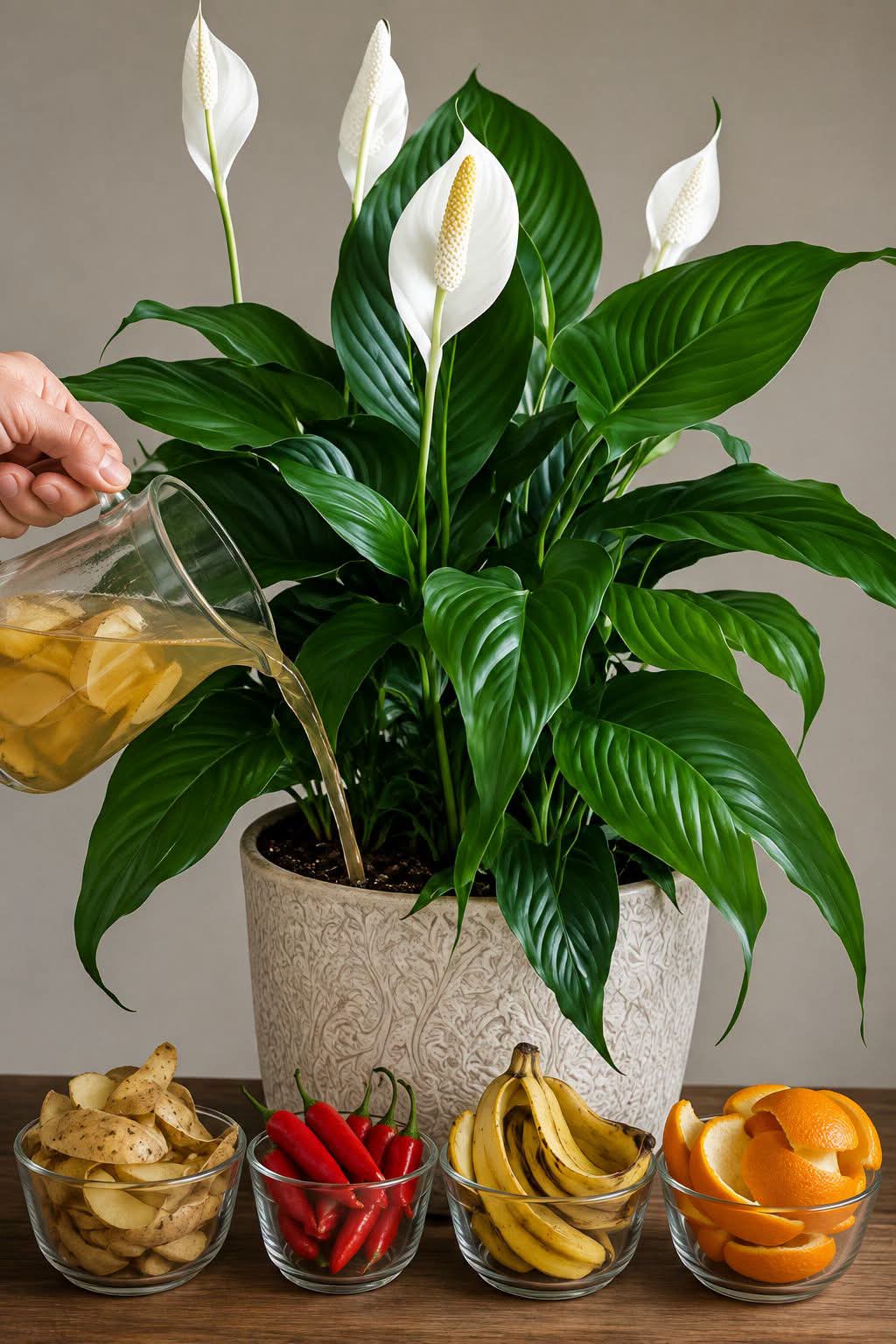
The Peace Lily (Spathiphyllum), widely loved for its air-purifying qualities and serene white spathe flowers, is one of the most popular indoor houseplants in the world 🏠💚. Featuring deep emerald-green leaves and elegant blooms, it serves as a stunning centerpiece in living rooms, bedrooms, and office spaces 🌿✨.
However, many indoor gardeners encounter a common frustration: a healthy-looking Peace Lily that simply stops producing new flowers 🥀. While many turn to commercial synthetic fertilizers, these can lead to harsh salt accumulation in the soil, which burns delicate root tips over time 🧪⚠️.
Fortunately, simple organic liquid remedies made right in your kitchen offer a safe, gentle, and highly effective way to supply essential nutrients without risking chemical damage 🌸🛡️.
In this master blog guide, we will break down the botanical secrets to encouraging non-stop flowers, compare organic feeding options, and share step-by-step instructions for long-term houseplant success 📝👇🛡️!
🌸 The Botanical Science Behind Continuous Peace Lily Blooms 🧪✨
To trigger consistent flowering, Peace Lilies require a delicate balance of Nitrogen, Phosphorus, Potassium, and trace minerals like Calcium, Magnesium, and Iron 🔬🧬. Natural liquid tonics feed the biological micro-flora in the soil, which in turn convert minerals into bioavailable forms for the plant’s roots.
Core Factors for Houseplant Growth & Flowering:
- Phosphorus Power 🌸: The fundamental nutrient responsible for triggering bloom cycles, root expansion, and flower strength.
- Potassium Balance 🍌: Regulates internal water pressure within stems, ensuring leaves stand upright and firm.
- Starch & Soil Microbes 🥔: Complex starches serve as fuel for beneficial soil bacteria that keep root systems healthy and protected.
- Balanced Soil Acidity 🍊: A slightly acidic soil environment (5.8\text{–}6.5 pH) unlocks nutrient uptake for lush green leaves and bright white spathes.
📊 Comprehensive Comparison: Natural Care Solutions
To help you decide which natural approach fits your houseplant routine, compare these organic liquid feed methods side-by-side 📋👇:
| Natural Option 🛡️ | Primary Focus 🎯 | Core Benefit for Houseplants ✨ | Application Frequency 🗓️ |
|---|---|---|---|
| Starchy Peel Infusion 🥔 | Soil microbes & foliage shine | Feeds soil bacteria & boosts green leaf vibrancy 🌿 | Every 3 to 4 weeks 🗓️ |
| Potassium Fruit Brew 🍌 | Flower production & root strength | Triggers fresh white flower spathes 🌸 | Every 3 weeks 🗓️ |
| Citrus Balancing Tonic 🍊 | Soil pH optimization | Enhances nutrient uptake efficiency 🧪 | Every 6 weeks 🗓️ |
| Diluted Spice Shield 🌶️ | Pest deterrence & root protection | Repels soil insects & enhances resilience 🛡️ | Every 2 months 🗓️ |
🛡️ Key Benefits of Using Homemade Liquid Feeds 🌿✨
1. Triggers Vibrant White Flowers 🌸✨
Supplying phosphorus-rich organic feeds provides the metabolic energy necessary for your Peace Lily to shoot up new white flower stalks throughout the spring and summer months!
2. Restores Glossy Emerald Green Leaves 🌿💚
Organic trace minerals like iron and magnesium restore full chlorophyll production, turning dull, pale leaves into dark, shiny foliage.
3. Prevents Fertilizer Burn & Salt Buildup 🛡️🪨
Unlike synthetic mineral salts that leave a crusty white residue on pot edges and burn sensitive feeder roots, natural liquid feeds break down cleanly in soil.
4. Keeps Soil Pests Away 🛡️🐛
Mild protective infusions keep soil-dwelling insects like fungus gnat larvae at bay, maintaining a clean, healthy root zone.
📝 Step-by-Step Instructions: Preparing Natural Houseplant Tonics 💧✨
Pro-Tip: Always pour liquid feeds directly onto the soil at the base of the plant. Avoid pouring liquid into the center leaf crowns where trapped moisture can cause rotting!
1. Starchy Root & Leaf Infusion 🥔✨
- How to Prepare: Boil clean vegetable or potato peels in water for 15 minutes. Let the liquid cool completely to room temperature, then strain out all solid pieces.
- Application: Drench the potting soil once every month during the active growing season.
2. Blooming Flower Tonic 🍌🌸
- How to Prepare: Soak fresh fruit peels in a jar of water for 48 hours. Strain the liquid and dilute it 1:1 with clean, filtered water.
- Application: Water the soil base every 3 weeks to encourage consistent bloom cycles.
3. Acidifying Soil Wash 🍊🧪
- How to Prepare: Steep citrus peels in warm water for 24 hours until the water turns golden. Strain out all solids.
- Application: Apply to the soil every month and a half to maintain an optimal, slightly acidic soil pH.
4. Mild Protective Drench 🌶️🛡️
- How to Prepare: Steep a tiny slice of mild pepper in hot water for 30 minutes, then strain and dilute heavily with 2 additional liters of fresh water.
- Application: Use as a gentle soil drench every two months to keep unwanted soil pests away.
🗓️ Essential Rules for Healthy Peace Lilies 💡🛡️
Combining your liquid feeding routine with ideal care conditions ensures long-term vitality 🌟:
- Maintain Consistent Soil Moisture 💧: Peace Lilies thrive in evenly moist soil. Water whenever the top inch of soil feels dry, but ensure the pot has drainage holes.
- Provide Bright, Indirect Light ☀️: Although Peace Lilies survive in low-light conditions, they need bright, filtered light to produce continuous white flowers.
- Wipe Down Foliage 🧽: Dust collects on large leaves and blocks sunlight absorption. Gently wipe leaves with a damp cloth every few weeks.
- Protect from Drafts 🌬️: Keep your plant away from cold air vents, drafty windows, or direct heating sources to prevent tip browning and drooping.
🌟 Final Thoughts
Encouraging your Peace Lily to bloom continuously and stay vibrant does not require expensive chemicals or synthetic plant food 🌸🌿✨. By utilizing simple, nutrient-dense natural elixirs along with proper light and moisture management, you can keep your Spathiphyllum thriving for years to come 🏠🛡️. Try implementing these simple care steps today and enjoy a flourishing indoor garden! 🚀🌸💚