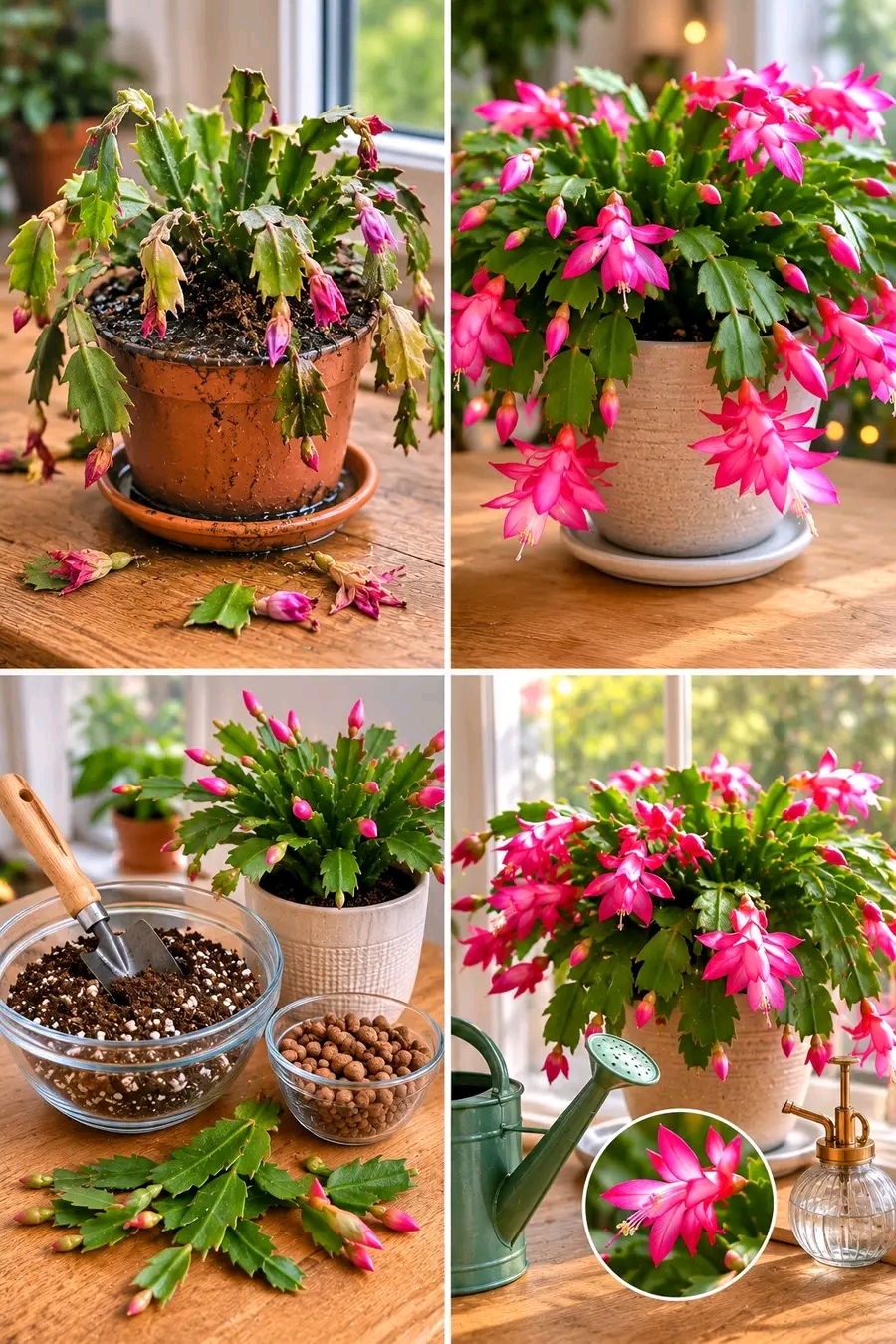
The Christmas Cactus (Schlumbergera) is one of the most beloved indoor plants 🪴💖. Known for its vibrant pink, red, and purple blooms that brighten up homes during the winter months, this tropical epiphyte is a stunning addition to any houseplant collection 🌸🏡. However, many plant owners face frustrating issues like wilting, leaf drop, or a complete lack of blooms 🥀🍂.
Whether your plant looks dry and limp or you simply want to turn a struggling cactus into a lush, flower-filled masterpiece, this ultimate step-by-step blog guide covers everything you need to know 🌿🛡️✨!
📸 What Causes Christmas Cactus Distress? 🔍⚡
Unlike desert cacti, the Christmas Cactus originates from the humid tropical rainforests of coastal Brazil 🇧🇷🌧️. In its natural environment, it grows on tree branches and rocks, thriving in shaded, humid air with well-draining organic matter 🌳🍃. Treating it like a typical desert cactus is the most common reason plants deteriorate 🌵❌.
Key Indicators of an Unhealthy Christmas Cactus:
- Drooping or Wrinkled Segments 🥀: Caused by severe underwatering, root rot from overwatering, or root damage.
- Reddish or Purple Foliage Color ☀️: Indicates sun stress from excessive direct sunlight exposure.
- Flower Bud Drop 🌸🚫: Triggered by sudden temperature fluctuations, drafts, dry indoor air, or improper watering while buds form.
- Fungal Infections & Soft Stems 🦠: Resulting from dense, waterlogged soil and poor air circulation around root systems.
📊 Comprehensive Comparison: Rescuing vs. Thriving Conditions
Understanding the clear differences between improper care and ideal growth environments makes saving your plant easy and straightforward 📋👇:
| Aspect / Care Factor 🛡️ | Poor Environment (Struggling Plant) 🥀 | Optimal Environment (Thriving & Blooming) 🌸✨ |
|---|---|---|
| Light Exposure | Direct scorching sunlight or deep shade ☀️🌑 | Bright, indirect sunlight near eastern windows 🌅 |
| Potting Mix & Drainage | Heavy garden soil with poor drainage 🏺💧 | Airy mixture (potting soil + perlite + clay pebbles) 🪵🪨 |
| Watering Routine | Waterlogged soil or prolonged dry spells 🌊🏜️ | Consistent moisture; top inch dries before rewatering 💧🌱 |
| Humidity Levels | Dry air from indoor heating units 💨 | High ambient humidity (50%+ with misting or trays) 🌫️✨ |
| Bloom Triggering | Constant 24/7 artificial warm light 💡 | 12–14 hours of continuous darkness & cooler temps 🌙🌡️ |
🛡️ Key Steps to Revive a Wilting Christmas Cactus 🩺✨
1. Inspect the Root System & Repot 🪴🪵
If your plant stems feel limp or mushy, remove it gently from its pot to inspect the root ball. Healthy roots are light-colored and firm, while rotted roots appear dark, stringy, and slimy 🦠❌.
- Trim away dead or rotted root strands using sterile pruning shears ✂️.
- Prepare an ultra-light, aerated potting substrate. Mix equal parts standard potting soil, perlite, and lightweight expanded clay pebbles (LECA) to ensure optimal aeration and drainage 🪨🍃.
2. Balance Water and Humidity 💧🌫️
Keep soil consistently moist during active growth, but never let water collect in the saucer under the pot 🚫🌊. Use a fine mister or place a water-filled pebble tray beneath the container to raise local atmospheric humidity around the branches 💨🌸.
3. Provide Optimal Bright, Indirect Sunlight ☀️🛋️
Position your plant where it receives plenty of indirect light, such as near an east-facing window. Avoid placing it in direct harsh midday light, which scorches segment leaves and causes reddish stress discoloration 🌅🎨.
✂️ Step-by-Step Propagation: How to Grow New Plants 🌱✨
Propagating a Christmas Cactus from stem cuttings is simple and highly rewarding 💖! You can easily propagate healthy stems removed during routine trimming or salvage healthy segments from a dying plant 🌿🛠️.
📝 Propagation Instructions:
- Twist or Cut Healthy Segments ✂️: Choose a healthy green stem section with 2 to 4 leaf segments. Carefully twist it at the joint or cut cleanly with a sharp, sterile blade 🔪.
- Allow the Cut Ends to Callus ⏳: Place the stem cuttings on a clean paper towel in a shaded area for 1 to 2 days until the cut edges heal and dry out slightly 💨.
- Plant in Fresh Substrate 🪴: Insert the calloused base about 1 inch deep into moist perlite or a light peat-and-perlite potting mix 🌾.
- Maintain Warmth & Humidity 🌡️✨: Keep the cuttings in a warm spot with bright indirect light. mist the soil lightly to keep it damp until roots establish within 3 to 4 weeks 🚀!
🌺 How to Force Your Christmas Cactus to Bloom Prolifically 🌟💖
To get a massive display of bright magenta pink blooms every holiday season, you need to trigger its natural dormancy cycle starting in early autumn 🍂🗓️:
- Darkness Protocol (12–14 Hours) 🌙: Starting 6 to 8 weeks before your desired blooming period, place the plant in pitch-black darkness for 12–14 continuous hours each night (a dark closet works perfectly) 🚪.
- Cooler Temperatures 🌡️: Maintain nighttime temperatures between 55°F and 65°F (13°C to 18°C) to stimulate rapid flower bud formation ❄️.
- Reduce Watering Gradually 💧📉: Cut back on watering slightly during dormancy until buds clearly visible at the segment tips appear 🌸✨.
🗓️ Quick Seasonal Care Checklist 💡
- Spring & Summer (Active Growth) 🟢: Water regularly when topsoil dries, apply balanced diluted plant food monthly, and keep in bright indirect light 🌿.
- Autumn (Dormancy & Bud Setting) 🍂: Reduce watering, lower ambient temperatures, and provide dark nights to force bud development 🌙.
- Winter (Full Bloom & Celebration) 🌺: Enjoy the spectacular floral show! Keep away from drafty windows or heating vents, and avoid moving the pot around unnecessarily 🏡💖.
With a little attention to soil drainage, moisture balance, and seasonal light cycles, your Christmas Cactus will reward you with decades of breathtaking blooms 🌸🛡️✨!