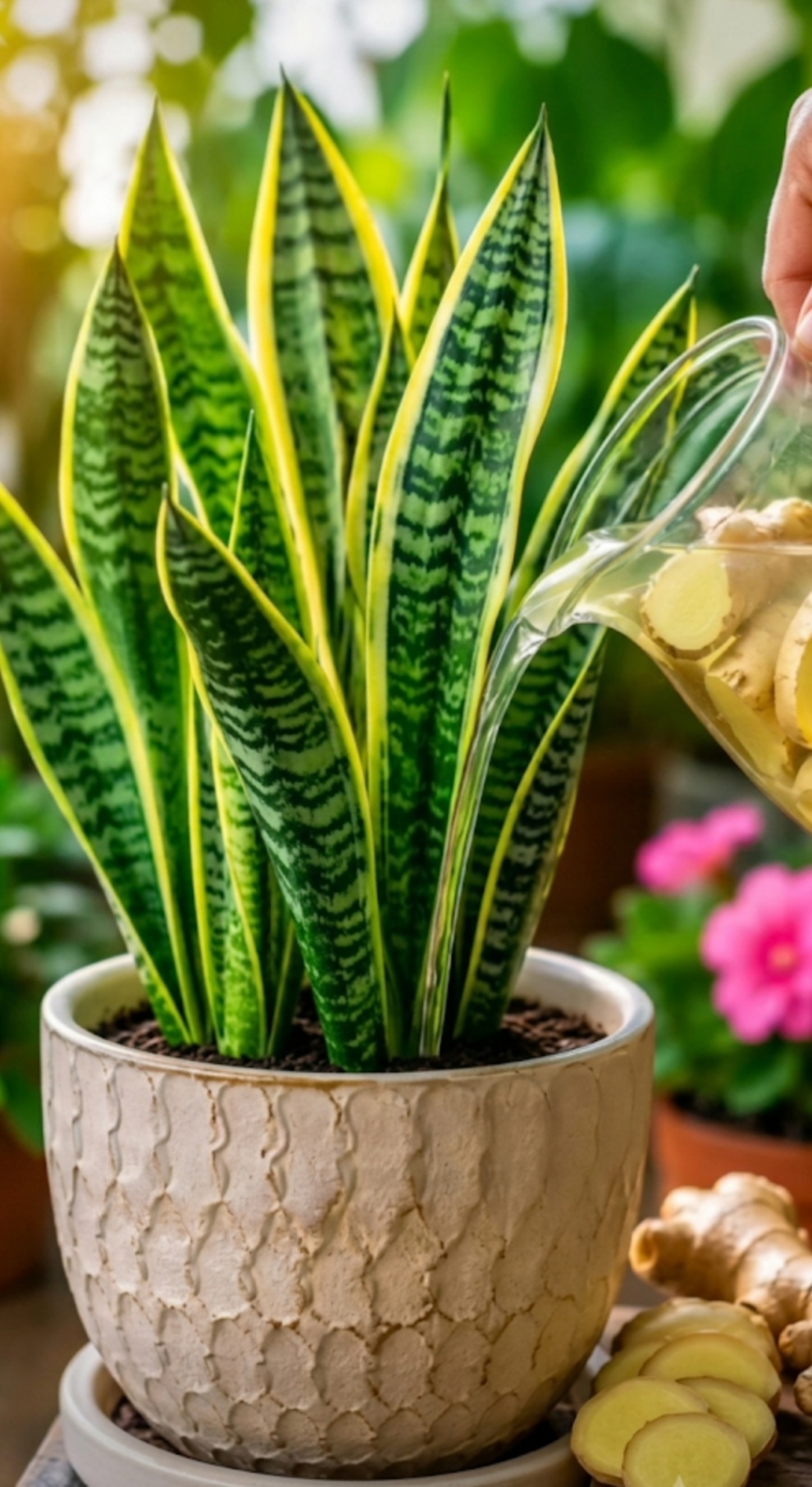
The Snake Plant (Sansevieria trifasciata), also affectionally known as Mother-in-Law’s Tongue, is one of the most resilient, stylish, and beginner-friendly houseplants on the planet 🏡🍃. With its architectural upright leaves, variegated green-and-gold stripes, and air-purifying qualities, it adds an instant touch of botanical elegance to any living room, bedroom, or office workspace 🪴💫.
However, even the toughest houseplants occasionally experience slowed growth, pale foliage, or weak root systems due to seasonal shifts, soil depletion, or accidental stress 🌧️⚡. While commercial synthetic fertilizers are widely available, a growing movement of organic gardening enthusiasts and urban plant parents are turning toward natural, home-brewed plant tonics 🧄🥛. Among these natural elixirs, one surprising kitchen ingredient stands out as a powerful booster: Ginger Water 🫚💦!
In this comprehensive blog guide, we will explore why pouring natural ginger infusion onto your potted snake plant can boost immunity, stimulate root growth, protect against pests, and revitalize dull foliage! 🌟🛡️
🌿 The Science Behind Ginger Water for Plants 🧪✨
Ginger root (Zingiber officinale) is renowned globally for its anti-inflammatory, antioxidant, and antimicrobial properties in human health 🍵💪. But did you know that these same active biochemical compounds can provide incredible benefits to your houseplant soil biome and root architecture? 🪴🧬
Key Active Components in Ginger:
- Gingerols & Shogaols 🛡️: Natural phytochemical compounds with strong antifungal and antibacterial qualities. They suppress soil-borne pathogens and root rot micro-organisms.
- Essential Minerals 🪙: Ginger contains bioavailable potassium, magnesium, phosphorus, and zinc, which are crucial macronutrients and micronutrients required for robust cell structure and chlorophyll production.
- Natural Growth Stimulants 🚀: Bioactive antioxidants stimulate cellular metabolism in root systems, encouraging stronger root development and faster shoot emergence.
When ginger root is sliced or crushed and infused into clean water, these beneficial compounds leach into the liquid, creating a mild, nutrient-rich, bio-protective tonic perfect for delicate root systems 🌊✨.
📊 Comprehensive Comparison: Ginger Water vs. Chemical Fertilizers
To understand why natural plant infusions are gaining popularity, let’s examine how ginger water compares to standard chemical fertilizers for snake plant care 📋👇:
| Feature / Benefit 🛡️ | Natural Ginger Water 🫚💦 | Synthetic Chemical Fertilizer 🧪⚠️ |
|---|---|---|
| Nutrient Delivery | Gentle, slow-release micro-boost | High-concentration rapid burst |
| Risk of Leaf Burn | Extremely Low (100% organic & safe) | High (if over-applied or improperly diluted) |
| Pathogen Defense | High antifungal & antibacterial activity | None (unless fungicide additives are present) |
| Soil Microbe Impact | Nourishes beneficial soil biology | Can disrupt microbial balance over time |
| Environmental Safety | Eco-friendly, non-toxic to pets & kids | Potential chemical runoff concerns |
| Cost & Availability | Highly affordable, made from kitchen staples | Requires purchase from specialized garden |
🛡️ Top Benefits of Using Ginger Water on Snake Plants 🪴✨
1. Superior Protection Against Root Rot & Fungal Infections 🛡️🦠
The biggest threat to any snake plant is overwatering, which creates anaerobic conditions in the potting mix and invites opportunistic fungi like Fusarium and Pythium 🥀💧. Ginger’s natural antimicrobial properties act as an organic shield around the root zone, inhibiting fungal spore proliferation and keeping root tissues healthy and firm.
2. Stimulates Strong Root Development & Shoot Sprouting 🌱🚀
A healthy plant starts underground! The trace minerals and bioactive compounds present in ginger tea act as a mild metabolic stimulant. Regular seasonal applications encourage the rhizomes (underground stems) of the snake plant to push out vibrant new vertical pups and shoots ✨🍃.
3. Enhances Leaf Color & Glossy Texture ✨🎨
Potassium and magnesium found in ginger infusions play a vital role in photosynthesizing efficiently. Boosting these micronutrients ensures that the golden yellow edges and dark green patterns on your snake plant’s leaves remain sharp, vivid, and glossy 💛🟢.
4. Natural Pest Deterrent in Soil 🐜🚫
Gnats, soil mites, and other subterranean pests dislike the natural spicy aromas and gingerol compounds present in ginger water. Drenching the soil with a diluted ginger infusion disrupts pest activity without using harsh chemical pesticides.
🍵 Step-by-Step Guide: How to Prepare & Apply Ginger Water 🫚💧
Preparing this homemade organic plant tonic is simple, fast, and satisfying! Follow this straightforward recipe to ensure your snake plant gets the optimal dosage 📝👇:
🧺 Ingredients & Equipment Needed:
- Fresh Ginger Root: 1 to 2 small pieces (about 20-30 grams) 🫚
- Clean Water: 1 liter of filtered or room-temperature tap water 🚰
- Knife & Cutting Board (or a blender / grater) 🔪
- Strainer or Cheesecloth 🪡
- Pouring Pitcher or Watering Can 🫖
👩🌾 Step-by-Step Instructions:
- Slice or Crush the Ginger 🔪🫚: Wash the fresh ginger root thoroughly. Cut it into thin slices or grate/blend it slightly to release the rich essential juices and aromatic compounds.
- Infuse in Warm Water 🫖🔥: Place the ginger slices into a pitcher and pour 1 liter of warm (not boiling) water over them. Let the mixture steep for 4 to 6 hours (or overnight) to allow the active nutrients to fully infuse into the liquid.
- Strain the Solution thoroughly 🪡💦: Strain out all solid ginger pieces using a fine mesh strainer or cloth. Note: Leaving solid pieces of ginger in the plant pot can attract unwanted mold or fruit flies.
- Dilute if Necessary 💧✨: The final liquid should be a pale, translucent yellow color. If the mixture is dark or overly strong, dilute it with equal parts plain water.
- Water Your Snake Plant 🪴🤲: Gently pour the prepared ginger water directly onto the potting soil surrounding the base of your snake plant. Allow the soil to absorb the liquid thoroughly and drain excess water out of the bottom drainage holes.
🗓️ Application Schedule & Pro-Tips for Success 💡🛡️
To maximize the benefits of ginger water without stressing your plant, keep these golden rules in mind 🌟:
- Frequency Matters ⏰: Apply ginger water once every 4 to 6 weeks during the spring and summer active growing season. Avoid over-application; snake plants prefer drier soil conditions!
- Winter Rest Period ❄️💤: Reduce watering during winter dormancy. Apply ginger water only once during late winter to prepare the plant for spring growth.
- Always Check Soil Moisture First ☝️🤎: Before watering, insert your finger 2 inches into the soil. If it feels wet or damp, wait a few more days before applying any liquid.
- Use Drainage Holes 🪴🕳️: Ensure your ceramic or terra-cotta pot has working bottom drainage holes to prevent standing water at the base.
🌟 Final Thoughts
Caring for your indoor plants doesn’t always require expensive chemical sprays or complex synthetic regimens 🌿✨. By utilizing simple, natural kitchen remedies like infused ginger water, you provide your snake plant with gentle nutrients, natural disease resistance, and robust root protection 🛡️💚. Try this easy organic method today, and watch your Sansevieria thrive with taller, greener, and healthier leaves year-round! 🪴🚀✨