Snake Plants (Dracaena trifasciata, formerly Sansevieria) are celebrated as virtually indestructible indoor companions! 🌿 Renowned for their architectural beauty, striking yellow margins, and air-purifying qualities, these desert natives thrive under minimal supervision. However, overwatering, poor drainage, or dense, compacted soil can cause root rot, turning rigid leaves into a sad, drooping mess. 🥀
If your Snake Plant is leaning, soft, or showing signs of decay, do not throw it away just yet! 🛑 With a combination of proper soil aeration, repotting, and green organic nutrient liquid, you can revive a dying plant and bring back vibrant green contrast and rapid shoot growth. 🌾✨
Below is a comprehensive guide detailing how to execute a step-by-step Snake Plant rescue using organic green tea liquid fertilizer and aeration potting mix, supported by a professional breakdown table! 🛡️✨
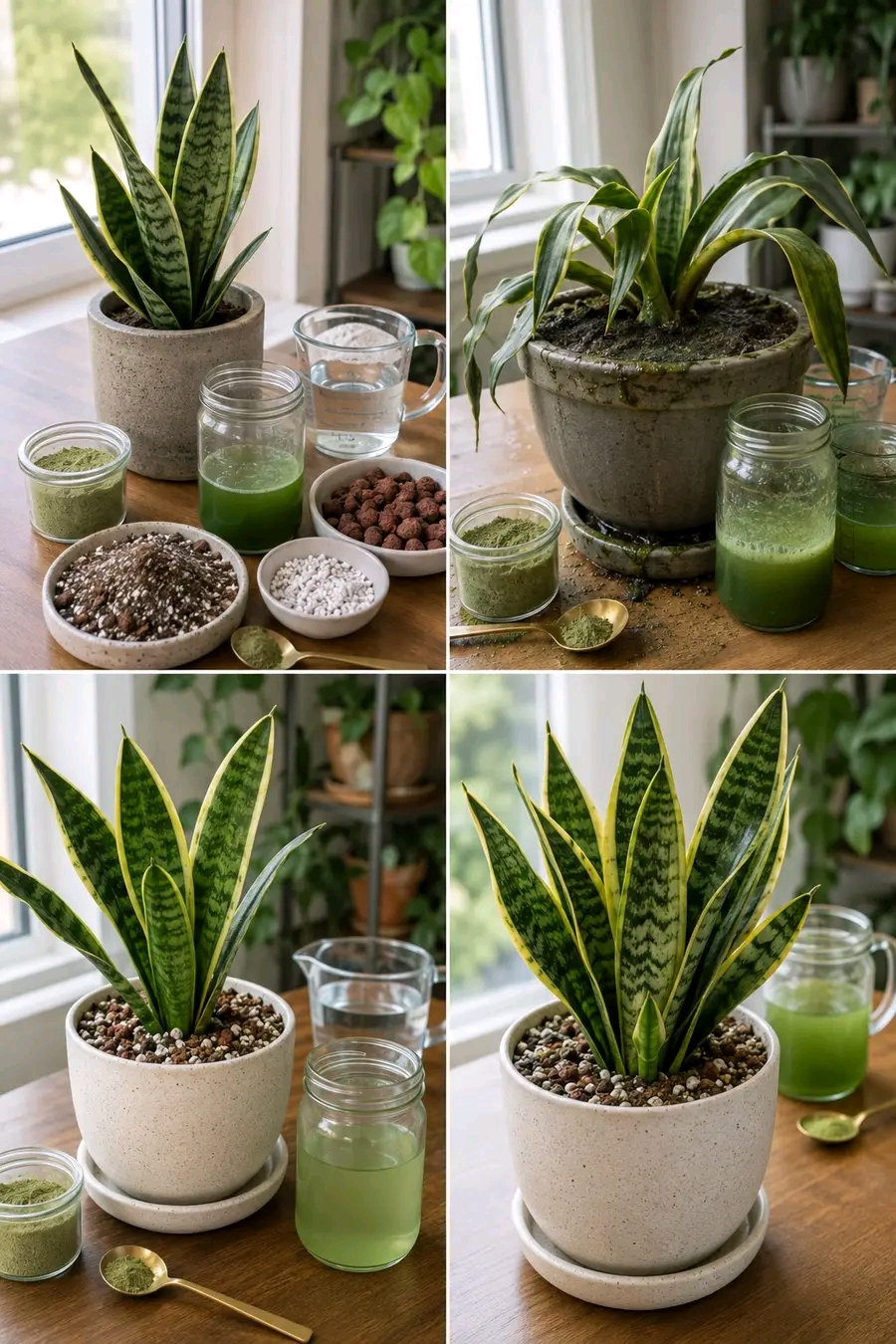
📸 Decoding the Image: The 4-Step Rescue Journey
The four-panel image sequence illustrates the full rehabilitation process for a struggling potted Snake Plant:
- Diagnosis & Material Preparation (Top Left): A healthy Snake Plant stands alongside essential repotting ingredients—coarse potting soil mix, perlite, expanded clay pebbles (LECA), powdered organic green plant food, green tea liquid extract in a glass jar, and fresh water. 🥣🌾
- The Overwatered Crisis (Top Right): The stark contrast of an overwatered, drooping Snake Plant sitting in wet, muddy, waterlogged soil. Excess standing water suffocates roots, leading to crown collapse and leaf wilting. 🚫🌊
- Repotting into Aerated Media (Bottom Left): The plant is rescued, cleaned of rotted soil, and repotted into a well-draining substrate amended with perlite and clay pebbles. It is lightly hydrated with diluted green tea liquid. 🫙💧
- Full Recovery & New Pup Growth (Bottom Right): The result is a fully restored, upright Snake Plant with firm foliage, bright yellow margins, and a brand-new baby offset (pup) emerging from the base soil line! 🐍🌸✨
📊 Comparison Table: Waterlogged Soil vs. Aerated Organic Rescue System
Understanding the structural differences between poor growing conditions and a healthy bio-organic soil setup helps you prevent future root rot issues completely! 🛠️🌱
| Feature / Metric | Waterlogged Heavy Soil 🚫🌊 | Aerated Rescue System with Green Tea 🐍✨ |
|---|---|---|
| Drainage Speed | Very Slow (Water traps around roots) 🛑 | Rapid / Instant (Excess water drains out) 💧 |
| Root Oxygenation | Near Zero (Causes fungal root rot) 🦠 | High (Air pockets allow healthy root respiration) 🌬️ |
| Nutrient Absorption | Stalled (Damaged roots cannot absorb food) | Optimal (Bio-available green tea antioxidants) 🛡️✨ |
| Substrate Composition | Heavy peat or garden soil without aggregates | Chunky mix with perlite, bark, & clay pebbles 🪵 |
| Leaf Structural Rigidity | Drooping, limp, yellowing, soft foliage 🥀 | Rigid, sword-like, upright variegated leaves 🐍 |
| Pup Production Speed | Stopped completely due to stress ⏸️ | High |
🛠️ Step-by-Step Guide: How to Rescue & Feed Your Snake Plant
Step 1: Remove and Inspect the Root System ✂️🧹
Carefully lift the struggling plant out of its old pot. Shake off all soggy, waterlogged soil under running room-temperature water. Inspect the root system closely. Cut away black, mushy, or foul-smelling roots using sterilized scissors, leaving only firm, healthy roots intact. Allow the bare plant to air-dry on paper towels for 12 to 24 hours to callus over any raw cuts. 🛡️
Step 2: Formulate the Perfect Well-Draining Soil Mix 🪴
Snake Plants are succulents that require fast-draining potting media. Create a balanced mix using:
- 2 parts standard cactus/succulent potting soil. 🤎
- 1 part coarse perlite (white granules) for internal air pockets. ⚪
- 1 part expanded clay pebbles (LECA) or coarse sand for rapid drainage. 🪨
- 1 tablespoon of organic leaf/green powder mixed directly into the substrate. 🌾
Step 3: Repotting in a Breathable Container 🏺
Select a pot with clear drainage holes at the bottom. Fill the bottom quarter with chunky clay pebbles or coarse soil mix. Center your dry, pruned Snake Plant in the pot and backfill with your newly prepared aerated mix. Tamp down the soil gently around the base so the plant stands firmly upright.
Step 4: Hydrate with Diluted Green Tea Liquid 🫙💧
Steep organic green tea in warm water and let it cool completely to room temperature. Green tea is rich in tannic acid, micro-minerals, and antioxidants that lower soil pH slightly to mimic natural desert rain conditions while protecting roots against fungal pathogens. 🛡️✨ Pour the diluted liquid around the soil perimeter until excess drains out from the base saucer. Discard any standing runoff water immediately! 🛑
🛡️ Key Plant Health Benefits & Nutritional Value
Switching to an aerated soil system supplemented with green tea extract provides a protective health shield for succulents:
- Fungal Defense & Antimicrobial Shield: The natural polyphenols and catechins in green tea suppress harmful soil bacteria and root-rot fungi, allowing damaged roots to heal cleanly. 🛡️
- Root Respiration Boost: Adding perlite and clay pebbles ensures that plant roots receive oxygen even after watering, eliminating anaerobic rot conditions permanently. 🌬️
- Rhizome Shoot Stimulation: Natural trace minerals and gentle nitrogen levels stimulate underground rhizomes, encouraging the plant to send up fresh, bright green pups quickly! 🐍🌱✨
💚 Essential Pro-Tips for Long-Term Maintenance
Keep your rescued Snake Plant in peak shape with these simple care guidelines:
- The Golden Rule of Dryness: Always let the soil dry out 100% between waterings. During spring and summer, water every 2 to 3 weeks. In winter, reduce watering to once every 4 to 6 weeks. 🌵💧
- Light Requirements: Place your plant in bright, indirect light near a window. While Snake Plants tolerate low light, bright indirect sunlight accelerates growth, enhances leaf patterns, and speeds up pup production! ☀️🪟
- Feeding Frequency: Apply room-temperature diluted green tea fertilizer once every 4 to 6 weeks during active growth in spring and summer only. Pause all feeding during winter dormancy. 🗓️
With the right combination of drainage, root care, and gentle organic feeding, your Snake Plant will recover quickly and remain a stunning, low-maintenance centerpiece for years to come! Happy growing! 🎉🐍✨