Have you ever looked at your Snake Plant (Sansevieria trifasciata) and wished its dark green, yellow-bordered leaves grew taller, thicker, and more vibrant? 🥀 Snake Plants are beloved for their architectural beauty, extreme hardiness, and top-tier air-purifying qualities. However, over time, indoor potting soil depletes its essential nutrients, leading to sluggish growth, pale leaves, and weak root systems.
Instead of relying on harsh synthetic fertilizers or expensive chemical plant food, look right inside your kitchen pantry! There is a powerful, 100% natural bio-fertilizer triad waiting for you: Used Coffee Grounds, Rice Water, and Crushed Eggshells! ☕🌾🥚✨
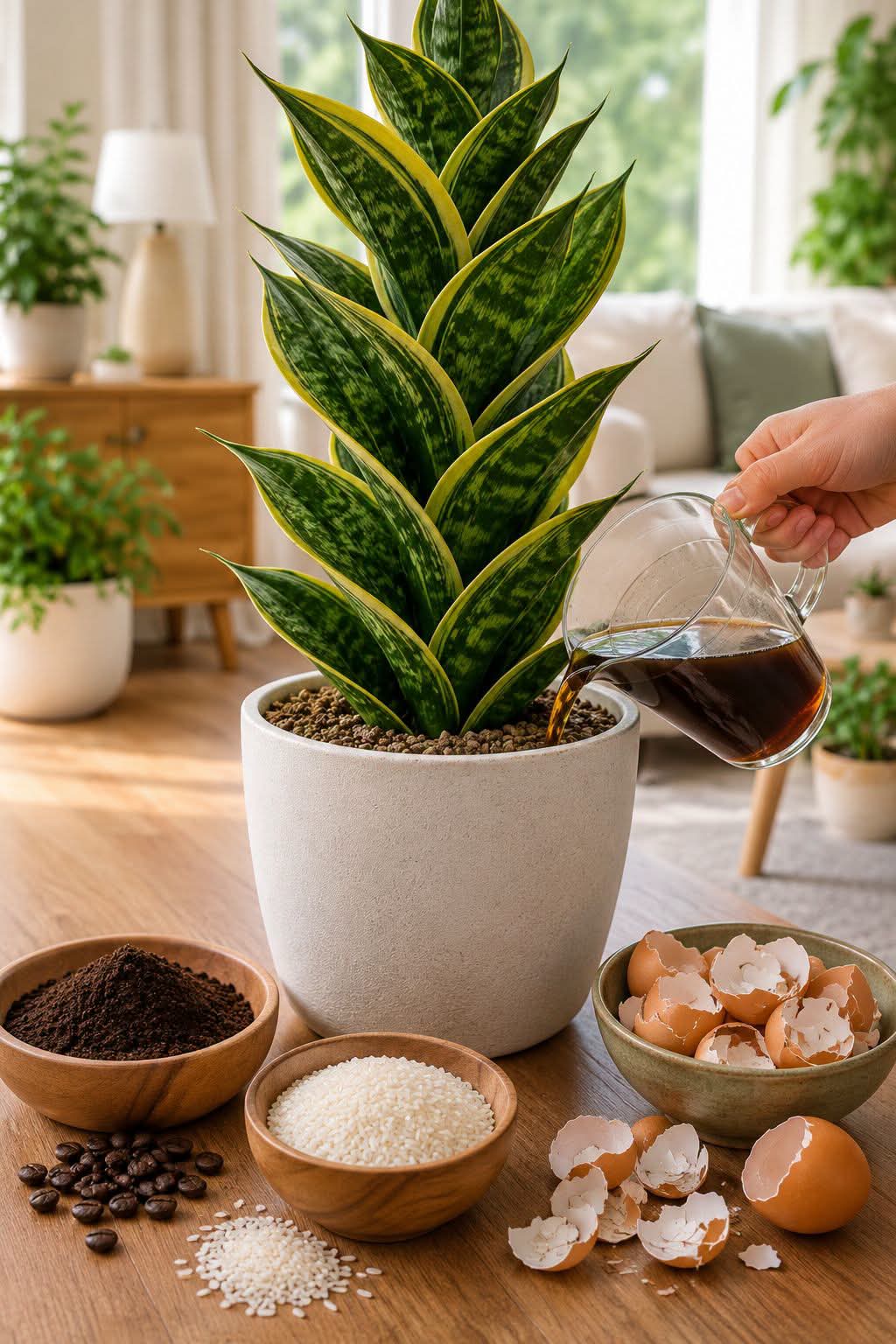
As captured in the featured image, combining brewed coffee liquid infusion with nitrogen-rich coffee grounds, starch-rich rice grains, and calcium-dense crushed eggshells creates an unbeatable organic elixir. Pouring this natural fertilizer liquid into the soil fuels rapid growth, builds strong leaf stalks, and protects against root diseases! 🪴🌿
In this comprehensive, SEO-optimized blog article, we will examine the botanical science behind this homemade fertilizer trio, present a clear comparison table, share step-by-step brewing instructions, and map out a 4-month plant revival roadmap! ☕🛡️✨
🛡️ The Botanical Science: How Kitchen Scrap Bio-Fertilizers Fuel Snake Plants 🧪✨
Each component in this kitchen organic fertilizer blend serves a vital biological function that mimics nature’s rich forest soil:
- Nitrogen & Acidity Boost (Brewed Coffee & Grounds): Coffee grounds are rich in nitrogen—the primary macronutrient responsible for lush, dark green foliage growth and energetic chlorophyll production ☕. The mild acidity helps break down minerals in potting soil so roots absorb them faster 🌿.
- Starch & Soil Microbe Energy (Rice Water): Rice water releases soluble starches, vitamin B complexes, and trace minerals into the potting medium 🌾. These starches act as food for beneficial soil bacteria, creating a thriving root ecosystem.
- Calcium & Structural Fortification (Crushed Eggshells): Eggshells consist of over 90% calcium carbonate 🥚. Calcium strengthens plant cell walls, ensuring tall, upright Sansevieria leaves that stand stiff without drooping or flopping over!
- Soil Structure & Aeration Improvement: Mixing organic coffee grounds and crushed shell fragments into potting soil prevents compaction, maintaining optimal air flow and drainage around delicate root rhizomes 🏺✨.
📊 Quick Comparison: Kitchen Scrap Bio-Fertilizers vs. Chemical Plant Foods ☕🧪
| Feature / Metric | Homemade Organic Fertilizer Trio ☕🌾🥚✨ | Synthetic Chemical Fertilizers 🧪 |
|---|---|---|
| Cost & Sustainability | 100% Free (Upcycled daily kitchen waste) 💰 | Costly commercial liquid bottles ($12 – $25) 💸 |
| Nutrient Release Rate | Slow-release, sustained organic nourishment 🌿 | Fast chemical spike, wears off quickly ⚡ |
| Risk of Fertilizer Burn | Extremely low risk when diluted properly 🛡️ | High risk of root burn & chemical salt crusts ⚠️ |
| Soil Ecosystem Benefit | Feeds beneficial soil bacteria & micro-fungi 🦠 | Chemical salts kill beneficial soil microbes ❌ |
| Leaf Structural Strength | Natural calcium builds thick, rigid stalks 🥚 | High nitrogen causes soft, weak, floppy leaves 🚫 |
| Eco-Friendly Impact | Zero waste, biodegradable & safe for pets 🐾 | Non |
🥣 Step-by-Step Guide: How to Make & Apply the Organic Bio-Fertilizer ☕🪴
Creating your own homemade Snake Plant fertilizer liquid is quick, clean, and highly effective when prepared correctly!
🛒 Ingredients & Tools Needed (As Shown in Image):
- Brewed Coffee / Coffee Grounds: 1/2 cup of used coffee grounds or diluted brewed black coffee ☕
- Uncooked Rice: 1/2 cup of white or brown rice (to make rice water) 🌾
- Clean Eggshells: Shells from 3 to 4 eggs, washed and dried 🥚
- Water: 1 quart (1 liter) of warm, room-temperature water 💧
- Glass Beaker / Pitcher: For mixing and pouring into the pot 🥛
📝 Step-by-Step Preparation & Application Instructions:
Step 1: Prepare the Rice Water 🌾
Rinse 1/2 cup of uncooked rice in 2 cups of warm water. Swirl the rice vigorously with your hands for 60 seconds until the water turns milky white. Strain the liquid into your pouring pitcher and set the rice aside for cooking.
Step 2: Brew & Dilute the Coffee Liquid ☕
Mix 1/2 cup of cooled, leftover brewed black coffee (or steep 2 tablespoons of used coffee grounds in warm water for 30 minutes). Ensure the coffee is 100% plain—free from sugar, milk, or flavored syrups! Dilute the coffee liquid with equal parts water to lower acidity 🥛.
Step 3: Crush the Eggshells 🥚
Wash eggshells thoroughly in warm water and dry them in the sun or oven. Crush them into small flakes using your hands, a rolling pin, or a blender (as displayed in the green bowl and wood table in the photo!).
Step 4: Blend & Apply to Potting Soil 💧
- Combine the milky rice water and diluted coffee liquid in your glass pouring beaker.
- Sprinkle a tablespoon of crushed eggshells directly onto the topsoil around your Snake Plant base.
- Pour the liquid bio-fertilizer slowly and evenly onto the soil (as demonstrated in the featured photo!).
- Allow excess water to drain completely from bottom drainage holes. Apply once every 3 to 4 weeks during Spring and Summer! 🪴✨
🗓️ The 4-Month Snake Plant Growth Roadmap: What to Expect 🌱➡️🌳
When pairing this natural fertilizer liquid with bright, indirect light, observe your Snake Plant’s transformation over 16 weeks:
- Month 1 (Soil Activation & Microbe Boost): Rice starch feeds beneficial soil bacteria; coffee nitrogen revives root absorption in a clean substrate ☕.
- Month 2 (Stem Fortification & Leaf Pigmentation): Calcium from eggshells thickens outer leaf walls. Yellow leaf borders brighten into vivid golden stripes 🌿.
- Month 3 (Rhizome Sprouting & New Pups): Underground rhizomes expand rapidly, pushing up fresh, bright green baby shoots (pups) from the soil base 🌾.
- Month 4 & Beyond (Towering, Rigid Foliage): Your Snake Plant develops a dense, architectural rosette structure with thick, waxy, upright leaves (matching the magnificent plant in the photo!) 🪴✨🎉.
💡 Pro Tips & Frequently Asked Questions (FAQs) 🚨
❓ Can I put fresh, unused coffee grounds directly on the soil?
Fresh coffee grounds are highly acidic and can compact into a moldy layer that blocks water penetration. Always use used brewed grounds or diluted liquid coffee, and mix grounds lightly into the top layer of soil ☕.
❓ Will rice water attract mold or gnats?
Using plain, unseasoned rice water once a month will not attract mold or gnats. Always let the top 2 inches of soil dry out completely between waterings to prevent fungus gnat breeding 🌾.
❓ How often should I feed my Snake Plant during Winter?
During Autumn and Winter, Snake Plants enter dormancy and require minimal nutrients. Cease fertilizing entirely from November to February, watering sparingly once every 4 to 6 weeks 🏺.
🌟 Final Thoughts: Lush, Upright Leaves with Simple Kitchen Scraps! ☕💖
Transforming your Snake Plant into a towering, thick-leafed indoor masterpiece does not require costly chemical sprays or complex store-bought fertilizers 🪴✨. By recycling everyday kitchen scraps like coffee grounds, rice water, and eggshells, you feed your plant essential nitrogen, calcium, and organic starches naturally!
Gather your coffee and eggshells today, brew your natural bio-fertilizer, and watch your indoor garden thrive with healthy green energy! ☕🌾🥚🪴✨🎉