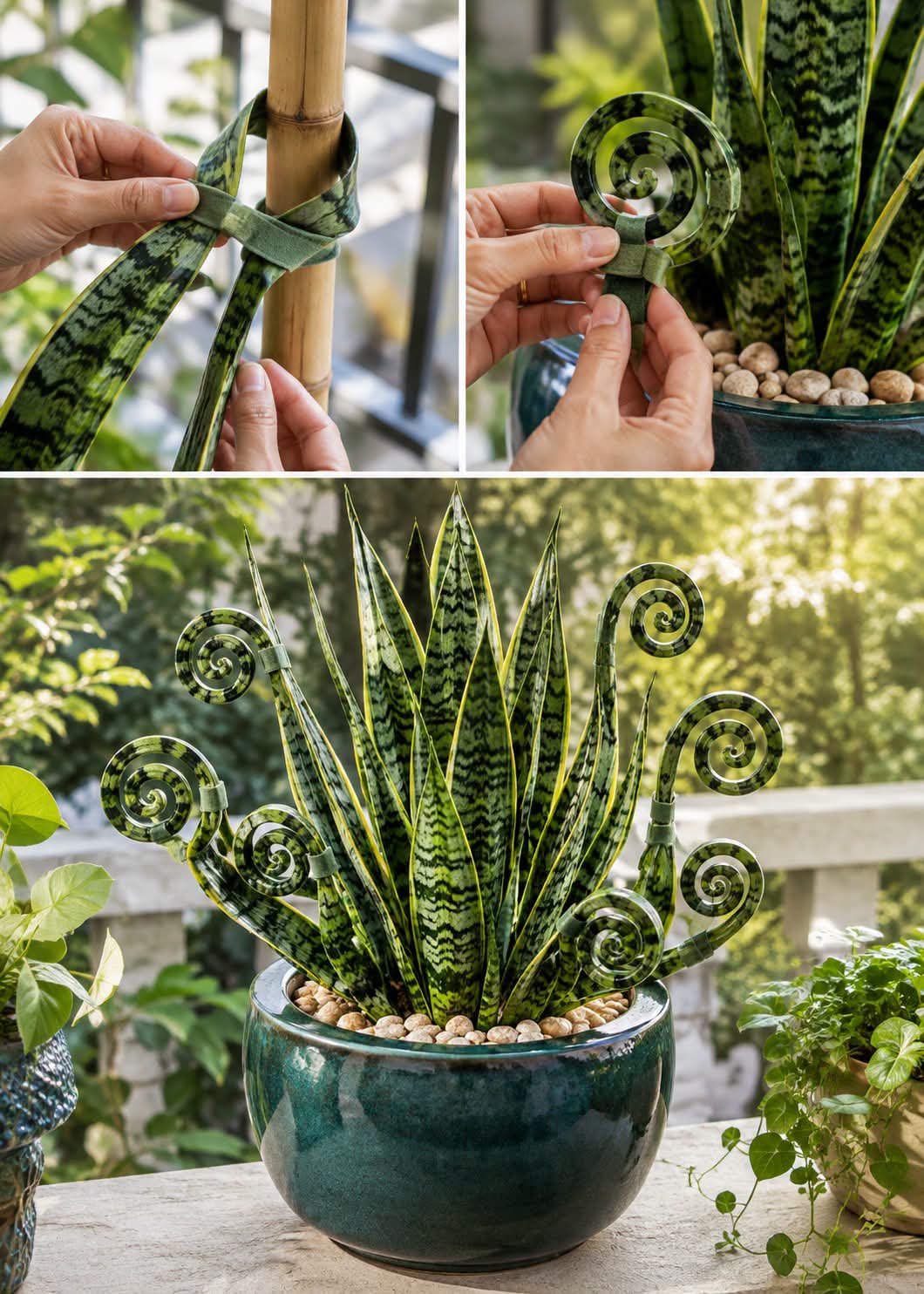
Snake plants (Dracaena trifasciata, formerly Sansevieria) are famous worldwide for their indestructible nature, air-purifying qualities, and striking vertical architecture! 🏠💚 From modern living rooms to sunny balconies, these tropical favorites add instantly recognizable structure to any indoor garden setup. 🪴✨ But if you want to take your plant decor to the next level, there is a mesmerizing viral trend sweeping social media: shaping snake plant leaves into artistic, elegant spiral curves! 🌀🤩
By using gentle leaf-training techniques, soft supportive ties, and natural bamboo stakes, you can guide newly emerging outer leaves into sculptural, curled tendrils while keeping the core plant healthy and vigorous. 🧙♂️✨
In this complete, step-by-step masterclass, we will explore the botany of leaf flexibility, outline the exact curling procedure shown in the image, provide a professional care schedule table, and share key secrets to keeping your spiraled snake plant thriving for years to come! 🐍🌀🚀✨
🔍 The Botanical Art Behind Spiral Leaf Shaping 🌀🧪🛡️
Snake plants are succulents with thick, fibrous leaves that store water and nutrients for long periods. 💧 While mature, thick central leaves are rigid and firm, younger foliage—especially leaf tips—remains remarkably pliable when trained correctly! 🌿✨
1. Leaf Pliability and Hydration Balance 💧🍃
Young snake plant leaves contain high amounts of turgor pressure and flexible cellular walls. When leaves are hydrated but supple, they can be gently curved without snapping or tearing leaf fibers. 🧬 Curved training utilizes this natural flexibility to create decorative spiral accents surrounding the upright central foliage! 🌀🛡️
2. Supportive Structural Ties 🎀🪵
Attempting to force a leaf to stay curled without support will cause micro-tears or leaf damage. Using soft fabric ribbons, plant-safe soft tape, or padded garden ties around a support frame (like a bamboo cane) holds the spiral curve firmly in place while the plant tissue adapts to its new form! 🪵👍
3. Protecting Leaf Tissue Health 🛡️🦠
Proper leaf manipulation requires clean, dry conditions and gentle pressure. Over-tightening ties can pinch off water-transporting vascular bundles inside the leaf, leading to brown tips or localized decay. 🚫✂️ Maintaining mild, supportive pressure ensures smooth nutrient circulation while locking in the decorative spiral design! 🛡️✨
📊 Quick Summary: Spiral Snake Plant Care & Styling Matrix 📝🛡️
Here is a quick overview of how to train, protect, and maintain your spiraled snake plant safely:
| Styling Step / Element 🛠️ | Technique & Action 🎯 | Botanical Purpose 🧪 | Key Benefit for Plant 🛡️✨ |
|---|---|---|---|
| Pliable Leaf Selection 🍃 | Select soft, young outer leaves for bending. | High cellular elasticity prevents fiber cracking. | Enables smooth, crack-free spiral shaping! 🌀✨ |
| Soft Fabric Ribbon Ties 🎀 | Wrap soft cloth tape gently around support stakes. | Secures shape without biting into leaf skin. | Keeps leaf tissue safe, green, and intact! 🛡️ |
| Supportive Bamboo Rods 🪵 | Anchor bamboo stakes firmly in potting mix. | Acts as a rigid center frame during curve setting. | Holds symmetrical, uniform spiral loops! 📐 |
| Bright Indirect Sunlight ☀️🪟 | Place pot in bright, filtered indoor light. | Drives photosynthesis to lock shape into place. | Keeps |
✂️ Step-by-Step Guide: How to Shape & Spiral Snake Plant Leaves 🛠️🌀💧
Follow these four clear steps to achieve the viral spiral leaf look shown in the image while maintaining complete plant health! 👇✨
Step 1: Prepare the Plant & Tools 🪴✂️
- Choose the Right Plant: Select a healthy, well-established snake plant with a combination of tall, firm center leaves and flexible outer leaves. 🐍
- Gather Equipment: Get clean bamboo support stakes, soft green fabric ties or padded garden tape, and smooth decorative top-dressing pebbles. 🪨
- Check Hydration: Water your plant lightly 2 days before shaping so leaves are fully hydrated, plump, and flexible—never dry or brittle! 💧
Step 2: Form the Initial Spiral Loops 🌀🌿
- Select Outer Leaves: Identify healthy, pliable outer leaves that bend naturally without resistance. 🍃
- Gently Curl Tip: Starting at the leaf tip, carefully roll the top 3 to 6 inches of the leaf inward or around a thin bamboo rod to create a spiral loop. 🌀
- Avoid Hard Bends: Do not force sharp angles; maintain a smooth, gradual curve so you don’t crease or break the central rib of the leaf. 🚫⚡
Step 3: Secure with Soft Fabric Ties 🎀🪵
- Wrap the Tie: Take a strip of soft green fabric ribbon or plant-safe tie and wrap it around the base of the spiral loop as shown in the top tutorial frames. 🎀
- Fasten to Support: Secure the tie gently around a bamboo stake anchored into the soil to hold the curl in position. 🪵
- Check Tension: Ensure the tie holds the loop firmly, but leave enough space so it doesn’t cut into the leaf surface or restrict growth. 🛡️✨
Step 4: Maintenance & Setting the Shape ☀️🗓️
- Allow Shape to Set: Keep the ties in place for 4 to 6 weeks. Over time, new plant cell growth will naturally harden into the spiraled orientation! ⏳✨
- Bright Indirect Exposure: Place the potted snake plant near a bright window with indirect sunlight. 🪟☀️
- Proper Watering: Water sparingly—only when the soil topsoil dries out completely. Avoid getting water inside the curled leaf folds to prevent rot! 🚫💧
🐍 What Results to Expect: A Sculptural Masterpiece! 🎉💖
After applying this leaf-shaping technique, your snake plant will transform into a stunning conversation piece:
- Dramatic Visual Contrast: Upright, sword-like center leaves combined with elegant, spiraled outer tendrils create a high-end botanical artwork! 🌀🔥
- Thick Glossy Foliage: With proper light and rare waterings, leaves retain deep green tones with rich yellow variegated margins! 🌿✨
- Long-Lasting Form: Once set, the spiraled leaves hold their unique curled look permanently, giving your home a stylish, viral garden accent! 🏡💖
Give this creative, easy, and satisfying plant-styling method a try today and elevate your indoor botanical collection! 🌿✨ Happy gardening! 👩🌾🌾