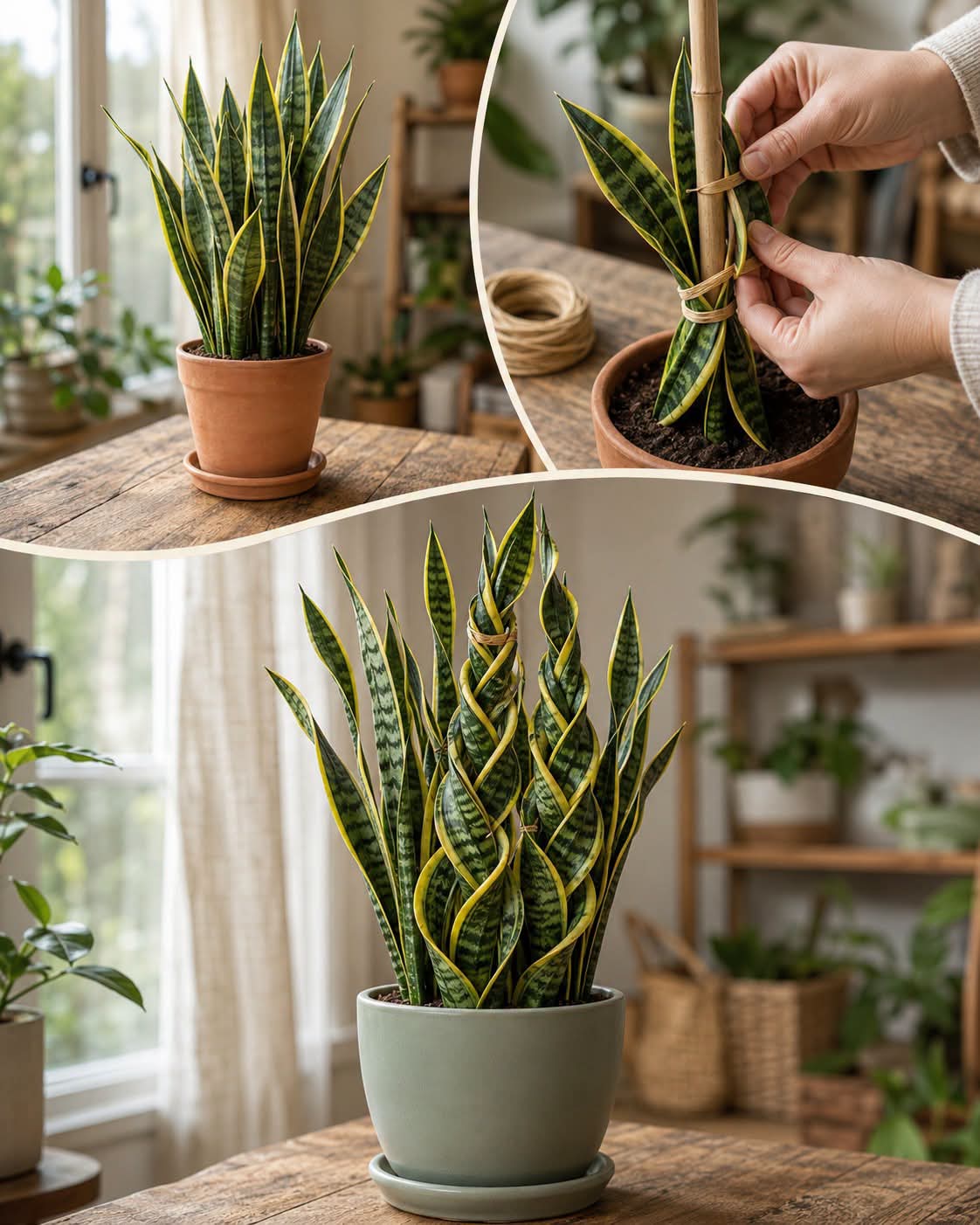
Snake plants (Sansevieria trifasciata) are legendary in the houseplant community for their structural beauty, air-purifying properties, and structural durability! 🏡🛡️ While standard upright snake plants bring immediate architectural charm to any living room or office desk, plant enthusiasts are taking indoor gardening aesthetics to the next level through the art of Sansevieria Braid Styling! 🧵✨
By gently weaving flexible leaves around a central bamboo support stake, you can turn a classic pot of snake plant leaves into an eye-catching, braided living sculpture. 🪴🎨 In this detailed blog post, we will cover the step-by-step technique to braid your snake plant safely, protect leaf tissues from structural damage, and maintain a healthy, upright specimen year-round! 🛡️🌿
🔍 Why Braiding Snake Plants Is the Ultimate Home Decor Trend 🪴✨
Braiding indoor plants like Pachira aquatica (Money Tree) or Sansevieria offers both visual and functional advantages for urban indoor plant styling:
- Space-Saving Vertical Structure 📐: Braiding clusters of spreading leaves pulls the foliage inward, creating a compact, upright silhouette that fits neatly into tight corners or small desks. 🛋️
- Striking Sculptural Aesthetic 🎨: The interplay of yellow-margined green leaves intertwining creates a dynamic geometric pattern that serves as a high-end centerpiece! ✨
- Support for Tall Foliage 🎋: Staking and gently tying upper leaves around a sturdy central bamboo pole prevents floppy or leaning leaves from bending over time. 🛡️
🛠️ Tools & Materials You Will Need 🧵🎋
Before beginning your Sansevieria braiding process, gather these simple, plant-safe supplies:
- Young, Flexible Snake Plant (Sansevieria): Plants with long, slender, pliable leaves work best! 🪴
- Bamboo Stake or Wooden Support Pole: Serves as the central anchor for the braided structure. 🎋
- Jute Twine, Natural Raffia, or Soft Garden Ties: For securing leaf clusters softly without cutting into plant tissue. 🧵
- Pruning Shears or Scissors: For trimming loose ends of twine cleanly. ✂️
- Well-Draining Terracotta or Ceramic Pot: Equipped with drainage holes and fresh cactus/succulent potting soil. 🏺
📊 Summary Table: Sansevieria Braiding & Care Routine 📝🛡️
Here is a quick overview of each stage in the braiding process along with essential care guidelines to keep your sculpted plant thriving:
| Step / Component 🛠️ | Action & Technique 🎯 | Key Benefits 🛡️✨ |
|---|---|---|
| Plant Selection 🪴 | Choose pliable, young leaves with long blades. | Prevents leaf snapping or structural creasing during weaving. |
| Central Anchor 🎋 | Insert a bamboo stake deep near the root base. | Provides central rigidity and vertical guidance for the braid. |
| Gently Weaving 🔄 | Cross leaf groups over the center stake alternately. | Forms an intricate, braided living sculpture. 🎨 |
| Soft Tying 🧵 | Secure top leaves with natural jute or raffia. | Holds shape in place while leaves train and acclimate over time. |
| Lighting Needs ☀️ | Place in bright, indirect light near a window. | Promotes steady growth and keeps leaf coloration vibrant! ✨ |
| Watering Method 💧 | Allow potting soil to dry out completely between waterings. | Protects |
✂️ Step-by-Step Guide: How to Braid Your Snake Plant 🌿🧵
Follow these four clear steps to achieve a stunning braided Sansevieria without causing injury to your plant! 👇✨
Step 1: Select and Hydrate Your Plant 🪴💧
- Choose the Right Specimen: Select a snake plant container that contains multiple individual leaf crowns or long, thin foliage shoots. 🌿
- Water Lightly 24 Hours Prior: Give your plant a light watering one day before braiding. Hydrated leaf tissues are slightly more pliable and less prone to cracking than dry, brittle leaves! 💦
Step 2: Set up the Central Support Anchor 🎋📍
- Insert the Bamboo Pole: Gently insert a slender bamboo stake into the center of the potting soil, pushing it down until it rests firmly near the bottom of the pot. 🎋
- Group the Leaves: Separate the surrounding leaves into three equal sections or groupings around the central pole (Left, Center, Right). 🌿
Step 3: Weave the Leaf Groups Over the Center Pole 🔄✨
- Begin at the Base: Take the left group of leaves and cross them over the central bamboo stake toward the right. 🧵
- Cross the Opposite Side: Take the right group of leaves and cross them over the center group toward the left, mimicking a standard hair braid or three-strand weave. 👧
- Keep Tension Gentle: Maintain a smooth, consistent fold without forcing stiff leaves to bend beyond their natural flexibility. 🚫⚡
Step 4: Secure the Braid with Soft Twine 🧵🔒
- Tie at the Apex: Once you reach near the top of the foliage, bind the tips gently around the bamboo stake using natural jute twine or raffia. 🌿
- Check Knot Firmness: Secure the knot so it holds the weave in place without pinching or crushing the leaf blades. ✂️
- Trim Excess Twine: Snip off loose ends for a clean, professional finish! ✨
🌤️ Essential Aftercare for Braided Snake Plants 🛡️💧
To ensure your newly styled Sansevieria stays healthy and continues to grow in its braided form:
- Bright, Indirect Light ☀️: Place your pot near a bright window filtered by sheer curtains. Plenty of indirect light encourages new growth from the base while maintaining intense yellow and green leaf contrast! 🪟
- Strict Water Control 🚫💧: Snake plants are succulents that store water inside their leaves. Allow the soil to dry out 100% between waterings. Overwatering can cause soft rot inside the braided foliage! 🍂
- Periodic Maintenance 🧹: As the plant grows taller, you can gradually loosen the twine, weave newly extended growth higher up the bamboo pole, and re-tie for continuous vertical beauty! 🚀✨
Transforming a simple Sansevieria into a braided green masterpiece is a rewarding weekend DIY project that elevates your indoor plant collection! 🌿💖 Give this technique a try, tag your plant friends, and let your green decor shine! 👩🌾🌾