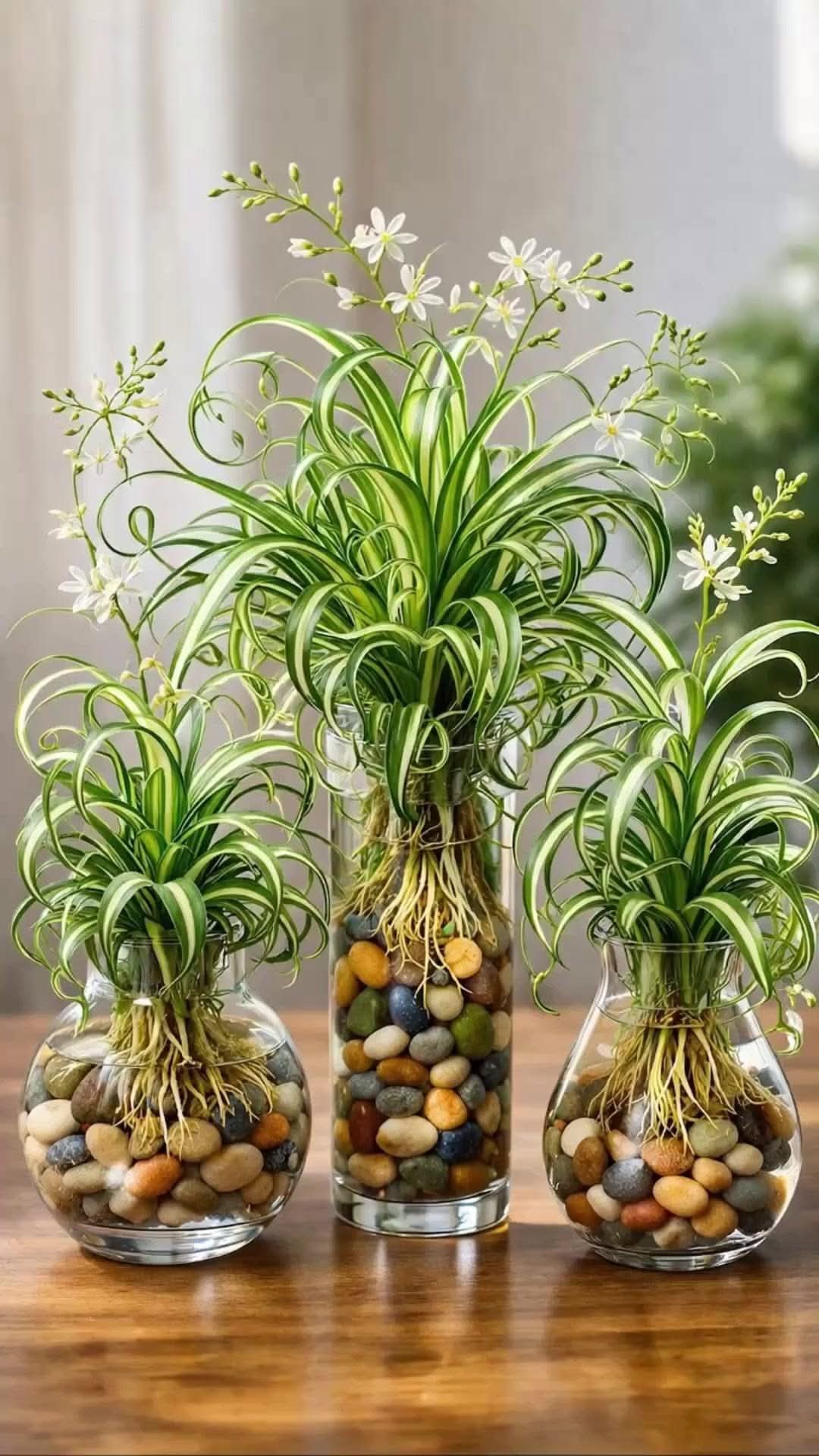
Have you ever wanted to transform your living space into a serene, tropical oasis using sleek modern decor? 🏺✨ Hydroponic indoor gardening—specifically growing plants in clear glass vases filled with smooth river pebbles and crystal-clear water—is taking the plant world by storm! Not only does this method look breathtakingly elegant on dining tables, windowsills, and office desks, but it also completely eliminates messy soil, repels soil-dwelling pests, and makes watering worry-free! 🪴💧
Among all indoor plants, the popular Spider Plant (Chlorophytum comosum) is the undisputed king of water propagation. Its arching variegated leaves, delicate white star-shaped flowers, and fast-growing root systems make it the ideal candidate for a glass vase arrangement. In this comprehensive, step-by-step guide, we will break down the science behind glass hydroponics, present a detailed comparison table, detail the exact planting process, and share essential care secrets to keep your plants lush, blooming, and vibrant! 🌟🛡️🌾
🛡️ The Science & Magic Behind Glass Vase Hydroponics 🧪✨
Growing plants without soil is known as hydroponics. When you place a Spider Plant in a transparent glass container filled with water and decorative pebbles, you create a self-sustaining micro-environment that offers several distinct advantages over traditional potted soil gardening:
- Continuous Oxygenation & Stability: Smooth pebbles stabilize the root base, anchoring the plant upright while creating natural air gaps for oxygen exchange in water 🪨.
- Visual Root Inspection: Transparent glass allows you to monitor root development, check water purity, and spot any signs of root stress early 👁️✨.
- Pest Control: Without organic potting soil, troublesome pests like fungus gnats, soil mold, and root mites simply cannot survive 🐜🚫.
- Enhanced Aesthetic & Moisture: The exposed root structure floating among colorful stones creates a stunning architectural piece while naturally elevating indoor humidity 💧🌸.
📊 Quick Comparison: Traditional Soil Potting vs. Glass Vase Water Cultivation 🪴💧
| Feature / Metric | Traditional Soil Potting 🪴 | Glass Vase Hydroponics 🏺✨ |
|---|---|---|
| Aesthetic Appeal | Standard ceramic/plastic pot look 🏺 | Modern, elegant, luxury interior aesthetic ✨ |
| Mess & Maintenance | Potential dirt spills, repotting dust 🧹 | Clean, soil-free, 100% mess-free setup 🧼 |
| Pest Control | High risk of fungus gnats & soil mold 🐛 | Zero soil-dwelling pests 🛡️ |
| Root Health Monitoring | Invisible roots inside opaque pots 🙈 | 100% visible root growth & easy inspection 👀 |
| Watering Frequency | Frequent check for soil moisture levels ⏱️ | Simple top-up or water change every 1–2 weeks 💧 |
| Nutrient Source | Organic nutrients present in soil 🪱 | Requires liquid hydroponic drops added to water 🧪 |
🥣 Step-by-Step Guide: How to Plant Spider Plants in a Glass Vase 🏺🪨
To achieve the picture-perfect arrangement shown in the image—with healthy green foliage, blooming flower stalks, and neat stone bases—follow this precise step-by-step process:
🛒 Ingredients & Equipment Needed:
- Clear Glass Vases: Cylindrical or round glass vases 🏺
- Decorative River Pebbles: Smooth, washed aquarium stones or river pebbles 🪨
- Healthy Spider Plant: A rooted baby spiderette or a soil-grown plant with sturdy roots 🌾
- Filtered Water: Rainwater, distilled water, or filtered tap water (de-chlorinated) 💧
- Liquid Hydroponic Fertilizer: Balanced organic liquid plant food 🧪
📝 Step-by-Step Planting Instructions:
Step 1: Prepare & Sanitize the Glass Container 🏺🧼
Thoroughly wash your clear glass vase with warm, soapy water to remove any bacteria or residues. Rinse completely and dry. A clean glass container prevents early algae bloom!
Step 2: Wash the River Pebbles 🪨💧
Place your decorative pebbles in a colander and rinse them vigorously under running water until all fine dust, dirt, and debris are completely washed away. Dirty stones will make your vase water cloudy!
Step 3: Prepare the Spider Plant Roots 🌾🚿
If transferring a plant from soil, gently remove it from its pot and soak the roots in a bowl of lukewarm water. Gently wash away every trace of soil attached to the root system. Trim any soft, decayed, or dark root tips using sterile shears ✂️.
Step 4: Layer the Stones & Anchor the Roots 🪨🌱
- Fill the bottom 1/3 of the glass vase with clean river pebbles.
- Carefully place the Spider Plant inside, fanning out its roots over the stone base.
- Add more pebbles around the roots to secure the plant firmly in an upright position. Crucial Rule: The root system should be supported by stones, but the crown (where the leaves meet) must sit above the water line to prevent stem rot! 🚫💧
Step 5: Add Filtered Water & Liquid Nutrients 💧🧪
Pour filtered or distilled water into the vase until it covers the bottom root system completely, leaving the upper base and foliage dry. Add 2 to 3 drops of balanced liquid hydroponic fertilizer to nourish the plant 🌿.
🗓️ Hydroponic Growth & Care Timeline: What to Expect 🌱➡️🌸
Cultivating Spider Plants in glass vases is rewarding and low-maintenance. Here is how your arrangement will progress over time:
- Week 1 – 2 (Adaptation Phase): The roots transition from soil to aquatic environment. Fresh, bright white water roots begin extending down through the pebbles 💧✨.
- Week 3 – 4 (Foliage Surge): Leaves turn a deeper green with vibrant white stripes. The foliage arches gracefully over the rim of the glass vase 🍃.
- Month 2 – 3 (Flower Spikes Emerge): Supported by optimal humidity and water nutrition, long flowering runners shoot upwards, displaying delicate white star-shaped blooms! 🌸✨
- Month 4+ (Spiderette Offshoots): Small baby plantlets (spiderettes) form on the long flower stalks, ready to be harvested for new glass vase propagation! 🎉🌾
💡 Pro Tips & Frequently Asked Questions (FAQs) 🚨
❓ How often should I change the water in the glass vase?
Change the water completely once every 10 to 14 days to keep it fresh and oxygenated. If you notice cloudy water or green algae forming on the glass, rinse the stones and refill with clean water immediately 🧼💧.
❓ Why are the tips of my spider plant leaves turning brown?
Brown leaf tips usually indicate chlorine or fluorides in tap water, or direct scorching sunlight. Always use filtered, distilled, or rainwater, and place the vase in bright, indirect sunlight ☀️🛡️.
❓ Can I add small aquatic fish or snails to the vase? 🐟
While tiny snails or small fish (like Betta fish) are sometimes kept in large hydroponic setups, it is generally best for beginner plant care to keep the glass vase dedicated solely to roots and pebbles to maintain pristine water chemistry!
🌟 Final Thoughts: Create Your Own Water Garden Today! 🌸💖
Growing Spider Plants in glass vases with river pebbles is one of the most elegant, rewarding, and hassle-free ways to enjoy indoor greenery. Whether placed on a sunlit table or styled as a modern center arrangement, these lush, flowering hydroponic displays will bring natural serenity and charm to your home 🏺🌾✨.
Grab a clear glass vase, a handful of smooth stones, and a healthy plant offshoot today to start your very own soil-free indoor garden! 🪨💧🌸