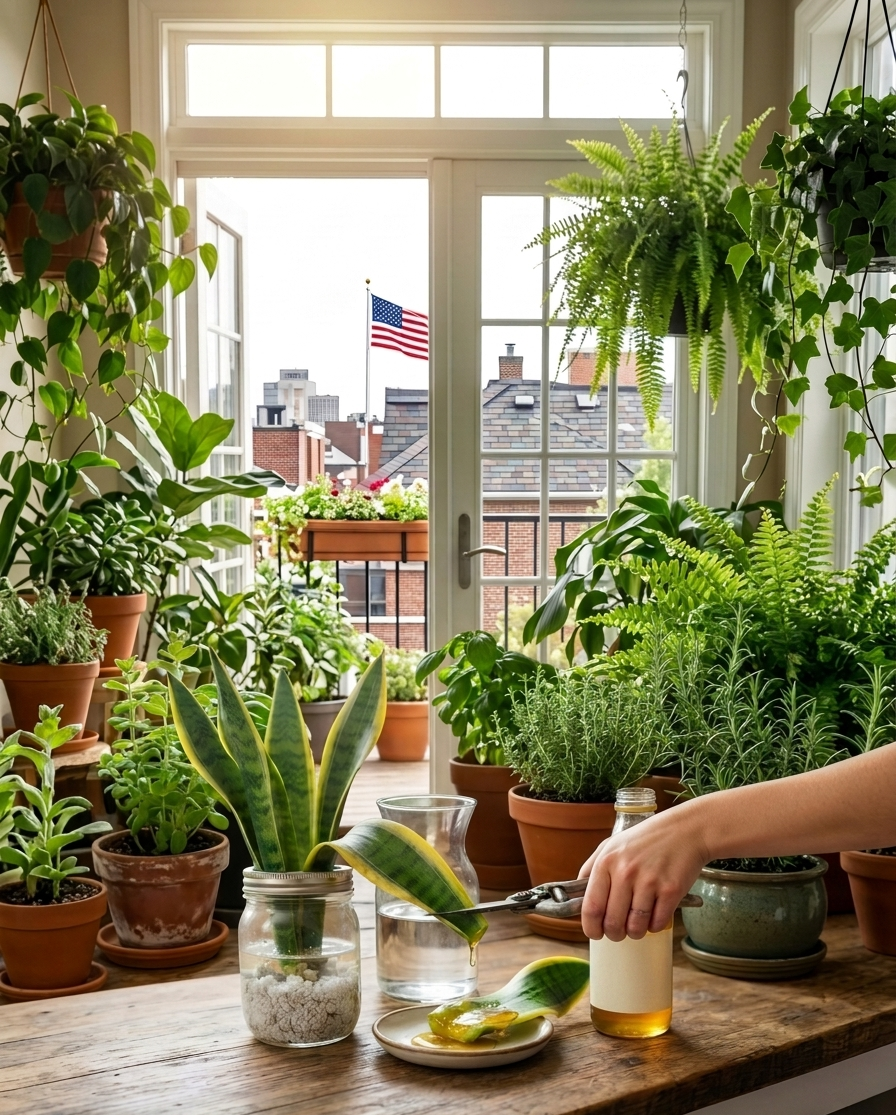
◾Welcome to the ultimate guide on propagating Snake Plant (Sansevieria) leaf cuttings in a glass vessel using a powerful organic growth booster made from banana peel infusion, pure natural honey, and nutrient-dense compost tea. Known for their structural upright foliage, air-purifying qualities, and extreme resilience, snake plants are a favorite among indoor gardening enthusiasts. While leaf propagation in water is a classic technique, adding natural growth root stimulators accelerates root development and supports new pup growth.
◾In this comprehensive guide, you will learn the step-by-step process of cutting healthy snake plant leaf segments, rooting them in a glass jar, and feeding them with a banana peel, honey, and compost tea elixir to transform a single cutting into a lush, thriving new plant.
🌟 Why This Organic Rooting Blend Works Key Benefits
🍌 Rich Natural Potassium and Phosphorus: Banana peel infusion delivers essential macronutrients that trigger fast root cell elongation and stem development.
🍯 Natural Antimicrobial Rooting Hormone: Pure yellow honey acts as a natural antibacterial and antifungal shield, protecting fresh leaf cuts from rotting in water.
🍃 Active Microbe Boost: Compost tea introduces beneficial micro-organisms that keep the water environment healthy and enhance nutrient uptake.
🥛 Glass Propagation Clarity: Growing in transparent glass allows you to monitor root growth, water purity, and root system progress daily.
⏱️ High Success Rate: Combining organic rooting stimulants significantly reduces propagation time compared to plain water rooting.
📑 Required Ingredients and Tools Quantity Breakdown
Gather the following items before starting your snake plant propagation project:
✂️ Item: Sharp Pruning Shears or Knife
Quantity: 1 Clean Disinfected Tool
Purpose: Ensures clean, precise cuts across snake plant leaf segments to prevent cell damage
🌿 Item: Healthy Snake Plant Leaf
Quantity: 1 Mature, Firm Leaf
Purpose: Serves as the source material for cutting propagation segments
🫙 Item: Transparent Glass Jar or Vase
Quantity: 1 Clean Glass Container
Purpose: Houses the cutting, water, and organic nutrient blend with full root visibility
🍌 Item: Banana Peel Infusion
Quantity: Half cup prepared liquid
Purpose: Delivers natural potassium, magnesium, and phosphorus to encourage root activity
🍯 Item: Pure Raw Yellow Honey
Quantity: 1 Teaspoon
Purpose: Acts as a natural organic rooting catalyst and protects cut tissue against fungal infection
🍃 Item: Strained Compost Tea
Quantity: Half cup liquid
Purpose: Supplies beneficial micro-organisms and rich trace minerals for balanced nutrition
💧 Item: Clean Filtered Water
Quantity: 1 to 2 cups room temperature
Purpose: Dilutes the mixture to create a safe liquid medium for rooting
🔬 The Science Behind Honey, Banana Peel, and Compost Tea
Snake plant leaf cuttings require clean conditions, mild hormone stimulation, and essential minerals to generate new adventitious roots and root shoots (pups). This organic combination functions through distinct botanical pathways:
- Fungal Protection with Honey: Honey contains natural enzymes and hydrogen peroxide compounds that seal fresh plant wounds, creating a protective barrier against water-borne pathogens while stimulating initial root initiation.
- Rooting Acceleration via Potassium and Microbes: Banana peels release potassium and natural carbohydrates that fuel root apical meristem growth. Meanwhile, the microbes in compost tea break down these organic compounds into micro-nutrients that cut leaves absorb through cellular transport.
👩🌾 Step-by-Step Propagation and Care Protocol
Follow this simple protocol to turn leaf cuttings into established plants:
Step 1: Select and Cut the Snake Plant Leaf ✂️
Select a healthy, firm snake plant leaf free of damage or discoloration. Using a sanitized knife or shears, slice the leaf into 3 to 4-inch segments. Note the orientation of each cutting—the bottom end of each cut must face downward in the glass jar to root properly.
Step 2: Prepare the Natural Organic Liquid Blend 🫙
Soak fresh banana peels in warm water for 12 to 24 hours to create a nutrient-rich tea. In your glass jar, combine half a cup of strained banana peel water, half a cup of strained compost tea, and one teaspoon of raw yellow honey. Stir thoroughly until the honey is fully dissolved, then dilute with 1 to 2 cups of clean filtered water.
Step 3: Place Cuttings in the Glass Vessel 🌿
Insert your snake plant leaf cuttings into the glass jar, ensuring the bottom edge of each segment is submerged 1 to 2 inches into the liquid blend. Keep the top half of the leaf cuts above the water line.
Step 4: Position in Bright Indirect Light ☀️
Place the glass propagation jar in a warm spot receiving bright, indirect sunlight. Avoid direct scorching sun, which can overheat the water and slow down root initiation.
Step 5: Monitor Root Growth and Transition to Soil 🪴
Change the liquid mix every 7 to 10 days to keep oxygen levels high and prevent algae build-up. Within 3 to 5 weeks, white roots will emerge from the bottom cut, followed by tiny green leaf shoots (pups). Once roots reach 2 inches in length, plant your new snake plants in well-draining succulent soil.
📊 Propagation Timeline and Summary
🗓️ Best Propagation Season: Spring and Summer (Active growth phase)
⏳ Initial Rooting Time: 3 to 5 weeks
🌱 Pup Emergence Time: 6 to 8 weeks
🎯 Expected Outcome: Strong root structures and new, independent snake plant shoots
👁️ Maintenance and Safety Guidelines
🟢 Respect Leaf Polarity: Always plant cuttings right-side up; cuttings placed upside down will not grow roots.
🧄 Keep Honey Pure: Use 100% natural raw honey without artificial additives or corn syrup.
✂️ Allow Cut Ends to Callus: Let fresh leaf cuts sit in a dry, shaded area for 2 to 3 hours before submerging them in liquid to form a thin callus seal.
❓ Frequently Asked Questions
Q1: Can I leave the snake plant growing permanently in this glass jar setup?
A: While cuttings can root and produce small pups in glass water setups, long-term growth and thick foliage development are best achieved by transplanting rooted cuttings into well-draining soil.
Q2: What should I do if the water in the glass jar becomes cloudy?
A: Rinse the cuttings gently under room-temperature water, clean the glass jar, and fill it with fresh filtered water and a diluted organic mixture.
Q3: Will this rooting method work for other succulents?
A: Yes! This honey, banana peel, and compost tea blend can also stimulate root growth in cuttings of Peperomia, Pothos, Jade Plants, and Philodendrons.