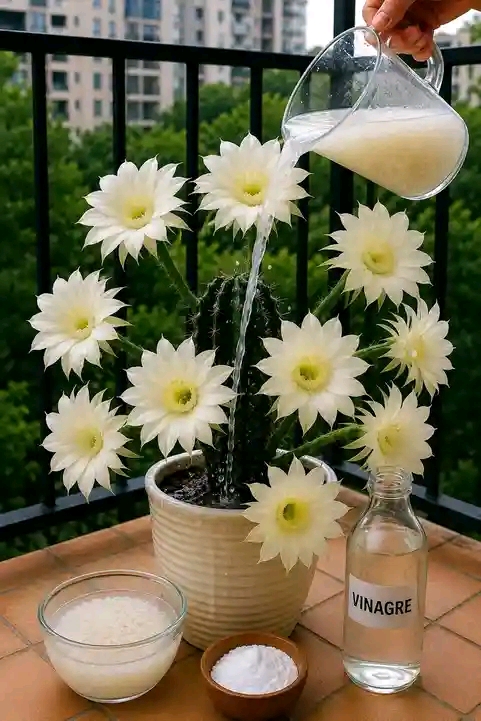
If you are an indoor plant enthusiast, balcony gardener, or succulent lover aiming to trigger an explosion of dazzling white blossoms on your Echinopsis Cactus (Echinopsis oxygona), look no further 🌵🥛! Frequently celebrated as the Easter Lily Cactus, these desert beauties are renowned for producing massive, star-shaped nocturnal flowers. However, encouraging potted cacti to bloom profusely requires balancing essential soil minerals, proper organic starch fermentation, and ideal acid levels 🛡️✨.
While commercial plant food can sometimes overwhelm delicate succulent roots, natural homemade organic soil boosters made from fermented rice water, white vinegar, and baking soda provide gentle, bio-available nitrogen, potassium, B-complex vitamins, and soil pH balance 🥛✨. Rice water provides rich starches to feed beneficial soil microbes, a drop of vinegar lowers soil pH to mimic natural desert rainfall acidity, and baking soda prevents root fungal rot. Let’s explore the master nutrient specifications, step-by-step preparation guide, complete maintenance parameters, and professional botanical care secrets!
🛒 Master Setup & Fertilizer Specifications
Cultivating abundant white blooms on potted Echinopsis cacti using a natural fermented rice water and vinegar mixture requires balancing substrate porosity, natural starch ratios, and outdoor sunlight exposure 🌵🛡️. Here is your master specifications breakdown 📋✨:
| Equipment & Botanical Component | Key Features & Specifications | Botanical Function & Horticultural Impact | Recommended Alternatives |
|---|---|---|---|
| Plant Species 🌵 | Echinopsis (Easter Lily Cactus) | Features ribbed green stems surrounded by star-shaped, pure white blossoms (pictured). | Grandiflorus or Mammillaria Cactus. |
| Primary Starch Booster 🌾 | Fermented Rice Water | Delivers nitrogen, phosphorus, potassium, and B-vitamins that fuel flower bud development (pictured). | Potato Water or Starchy Pasta Water. |
| pH Acidifier 🍾 | White Vinegar (VINAGRE) | Lowers alkaline soil pH to optimal range (5.5 – 6.5), unlocking bound soil nutrients (pictured). | Apple Cider Vinegar or Lemon Juice. |
| Antifungal Soil Buffer 🥣 | Pure Baking Soda / Mineral Salt | Buffers acidity levels and neutralizes root-decaying fungal spores in container soil (pictured). | Potassium Bicarbonate or Epsom Salt. |
| Potted Container 🏺 | Ribbed Ceramic Pot with Drainage | Ensures rapid excess moisture release to prevent root rot in succulent roots (pictured). | Terracotta Clay or Glazed Stoneware Pot. |
| Lighting Environment ☀️ | Full Sun / Bright Balcony Exposure | Essential for triggering bud initiation and driving starch conversion into big blooms. | Direct |
👩🌾 Step-by-Step DIY Rice Water & Vinegar Fertilizer Guide
Follow this simple 4-step professional guide to formulate your organic bio-stimulant, apply it correctly, and maintain your potted flowering cactus, exactly as demonstrated in the featured balcony setup 🌵✨!
Step 1: Prepare the Starch Base & Ferment 🌾🥛
- Measure 1 cup of uncooked white rice into a glass bowl and add 2 cups of room-temperature filtered water (as shown in the bottom-left glass bowl).
- Swirl the rice vigorously with your hands or a spoon for 2 to 3 minutes until the water turns cloudy and milky white.
- Strain the milky liquid into a clean glass jug, separating the rice grains.
- Cover loosely and let it rest at room temperature for 24 hours to undergo light organic fermentation.
- Horticultural Secret: Light fermentation releases lactobacilli micro-flora, which break down raw starches into easily absorbable plant sugars!
Step 2: Mix Vinegar & Baking Soda Solution 🍾🥣
- Take your jar of fermented rice water and add 1/2 teaspoon of white distilled vinegar (VINAGRE bottle shown on the right).
- Add a small pinch (1/4 teaspoon) of baking soda (bowl shown in the front center) to buffer the acidity and act as a natural fungal deterrent.
- Stir the mixture gently; you will observe a mild fizzing action as the vinegar reacts with the sodium bicarbonate.
- Dilute the entire mixture with 2 cups of fresh filtered water to create a balanced, mild liquid fertilizer solution.
Step 3: Apply Liquid Feeder to Cactus Soil 🏺💧
- Pour the prepared rice water and vinegar solution slowly over the soil mix at the base of your cactus using a glass pouring pitcher (as featured in the main watering action shot).
- Ensure the liquid drench reaches the root zone while avoiding heavy splashing directly on the cactus body or open white flower petals.
- Allow the liquid to drain completely through the bottom holes of your ceramic pot.
- Frequency: Apply this specialized feeding solution once every 4 weeks during spring and summer to induce continuous flowering cycles.
Step 4: Optimize Balcony Light & Watering Rhythm ☀️🌵
- Position your potted cactus on a sunny balcony ledge or outdoor patio receiving at least 6 hours of direct sunlight daily.
- Allow the soil mix to dry out 100% completely between waterings; cacti thrive on a deep soak-and-dry watering cycle.
- During winter dormancy, cease all liquid fertilization and reduce watering to once every 6 weeks to let the plant rest.
💡 Pro Secrets for Explosive Cactus Blooming
- Replicate Acidic Rainwater: Natural desert rainwater is slightly acidic (pH\ 5.5 – 6.0). Adding a tiny splash of white vinegar to tap water neutralizes hard mineral carbonates and allows cactus roots to absorb iron and phosphorus efficiently 🍾!
- Ensure Winter Temperature Drop: To trigger mass flower bud initiation in spring, keep your cactus in a cool location (50°F to 55°F / 10°C to 13°C) during winter months 🌵.
- Never Overwater during Bloom: While white flowers are open, maintain dry soil conditions; excess moisture at the root zone can cause fully opened blooms to drop prematurely!
Incorporate this eco-friendly rice water and vinegar feeding ritual into your plant care routine today to enjoy plump stems, disease-free roots, and stunning, fragrant white cactus blooms all summer long! 🌵🥛🍾🛡️✨