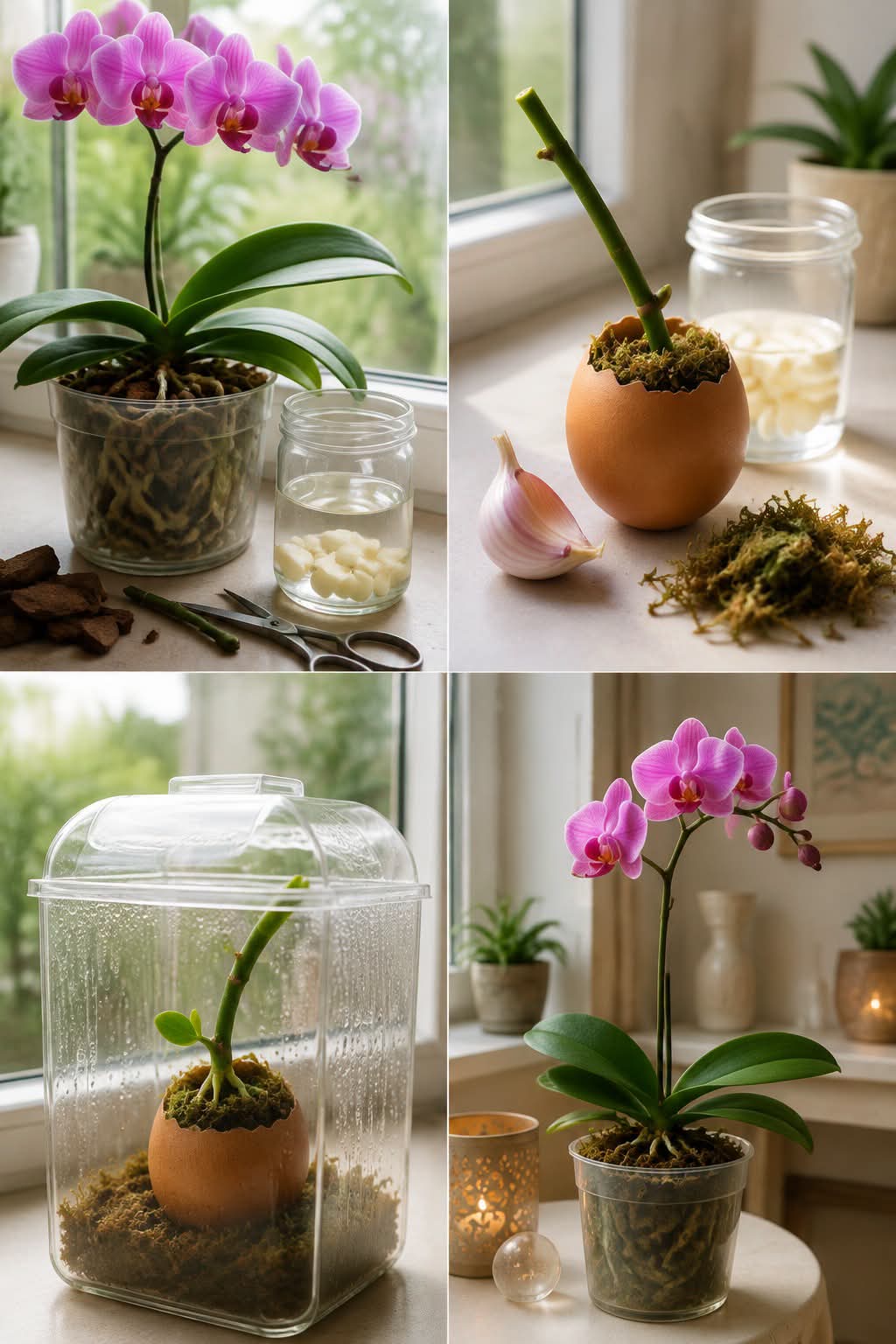
If you are an indoor plant enthusiast, orchid lover, or home gardener seeking to propagate your favorite Phalaenopsis Orchid (Phalaenopsis orchidaceae) stem cuttings, look no further 🌸🧄! Moth Orchids are beloved worldwide for their long-lasting, vibrant pink blossoms. However, encouraging spent flower spikes to produce brand-new baby plants—known botanically as keikis—can often seem like a delicate challenge without proper natural bio-stimulants ✨.
While synthetic hormone pastes can be harsh, combining natural antibacterial remedies like infused garlic water with calcium-rich eggshell planters and moist sphagnum moss creates the perfect sterile, nutrient-rich environment for node activation 🥚🌱. Garlic contains allicin, a natural compound that wards off fungal spores and bacterial rot, while eggshells slowly release essential calcium to build strong cell walls in emerging roots. Let’s explore the master nutrient specifications, step-by-step propagation guide, humidity parameters, and professional botanical care secrets!
🛒 Master Propagation Equipment & Botanical Specifications
Propagating Phalaenopsis orchid spikes inside eggshell containers with garlic water treatment requires balancing sterile rooting media, organic antifungal agents, and controlled humidity 🌸🛡️. Here is your master specifications breakdown 📋✨:
| Propagation Component | Key Materials & Specifications | Botanical Function & Horticultural Impact | Recommended Alternatives |
|---|---|---|---|
| Plant Material 🌸 | Spent Phalaenopsis Flower Spike | Cut spike featuring dormant vegetative node buds (pictured in top panels). | Green stem cutting with active node. |
| Antifungal Soak 🧄 | Infused Raw Garlic Water | Rich in allicin & sulfur compounds that sterilize node tissue against rot (pictured). | Diluted Hydrogen Peroxide (3%) or Cinnamon Water. |
| Rooting Pot Container 🥚 | Empty Cleaned Brown Eggshell | Provides natural calcium carbonate (CaCO_3) while holding damp rooting media (pictured). | Biodegradable Seedling Cup or Coir Plug. |
| Substrate Medium 🌿 | Premium Long-Fiber Sphagnum Moss | Holds moisture around dormant nodes while ensuring optimal air circulation (pictured). | Chilean Sphagnum Moss or Perlite Mix. |
| Mini Greenhouse 🫙 | Clear Acrylic / Glass Terrarium Dome | Maintains 80%+ relative humidity to prevent node drying during shoot growth (pictured). | Clear Plastic Bag or Recycled Plastic Bottle. |
| Potting Substrate 🪵 | Coarse Pine Bark & Sphagnum | Provides aerated drainage when transplanting the rooted keiki into clear pots (pictured). | Coconut |
👩🌾 Step-by-Step Garlic & Eggshell Orchid Propagation Guide
Follow this simple 4-step professional guide to prepare garlic water, set up your eggshell planter, generate new keikis under a humidity dome, and pot up your thriving orchid, exactly as demonstrated in the featured 4-panel tutorial 🌸✨!
Step 1: Trim Spike & Soak in Antifungal Garlic Water 🧄✂️
- Locate a healthy, green spent flower spike from a mother Phalaenopsis orchid (as seen in the top-left panel).
- Using sterilized pruning shears, snip a 4 to 6-inch stem section featuring at least one healthy, dormant node bud.
- Crush 4 to 5 fresh garlic cloves into a glass jar filled with 1 cup of filtered room-temperature water.
- Let the garlic steep for 30 minutes, then soak the bottom end of your trimmed orchid stem in the garlic infusion for 15 minutes.
- Horticultural Secret: The sulfur compounds and allicin in fresh garlic water seal the fresh stem cut, neutralizing pathogens before the stem enters the humid rooting chamber!
Step 2: Prepare Eggshell Planter with Sphagnum Moss 🥚🌿
- Clean an empty brown eggshell gently with warm water and let it dry completely.
- Dampen a small handful of long-fiber sphagnum moss with plain water and squeeze out all excess moisture until damp but not dripping.
- Fill the eggshell with the damp moss and insert the garlic-treated orchid stem cutting vertically into the center (as featured in the top-right panel).
- Ensure the node on the stem remains exposed just above the moss line so it receives ambient light!
Step 3: Create a Humid Greenhouse Dome Environment 🫙💧
- Place the eggshell planter onto a tray or bed of moist moss inside a clear acrylic terrarium box or glass cloche dome (as demonstrated in the bottom-left panel).
- Cover tightly to trap internal moisture, creating a warm microclimate with 80% to 90% humidity.
- Position the mini greenhouse in a warm spot receiving bright, indirect sunlight near a windowsill (68°F to 78°F / 20°C to 26°C).
- Care Tip: Open the humidity dome for 5 minutes once a week to allow fresh air exchange and inspect for newly emerging green leaves!
Step 4: Pot Up the Rooted Keiki & Enjoy Blooms 🌸🪴
- After several weeks, the dormant stem node will sprout tiny green leaves and developing white aerial roots inside the eggshell.
- Once the baby orchid (keiki) develops 3 roots that are at least 2 inches long, gently remove it from the eggshell.
- Plant the young orchid into a clear plastic pot filled with a mix of coarse pine bark and sphagnum moss.
- Place the pot on your bright window ledge and water regularly; in time, your new orchid will produce a full spike of pink blossoms (as captured in the bottom-right showcase)!
💡 Pro Secrets for Orchid Node Propagation
- Peel the Node Bract Gently: To help the dormant node sprout faster, use sterilized tweezers to peel back the paper-like brown scale covering the node bud before soaking in garlic water 🌿.
- Keep Sphagnum Moss Damp, Not Soggy: Excess water inside the eggshell starves roots of oxygen and invites mold growth 🥚. Always wring out moss thoroughly before filling your planter!
- Maintain Warm Room Temperatures: Orchids rely on warmth to trigger cell division inside node tissue ☀️. Keep your mini greenhouse in a room between 70°F and 75°F for maximum germination success!
Try this unique, eco-friendly garlic water and eggshell propagation technique today to multiply your orchid collection and enjoy vibrant pink blooms all year round! 🌸🧄🥚✨