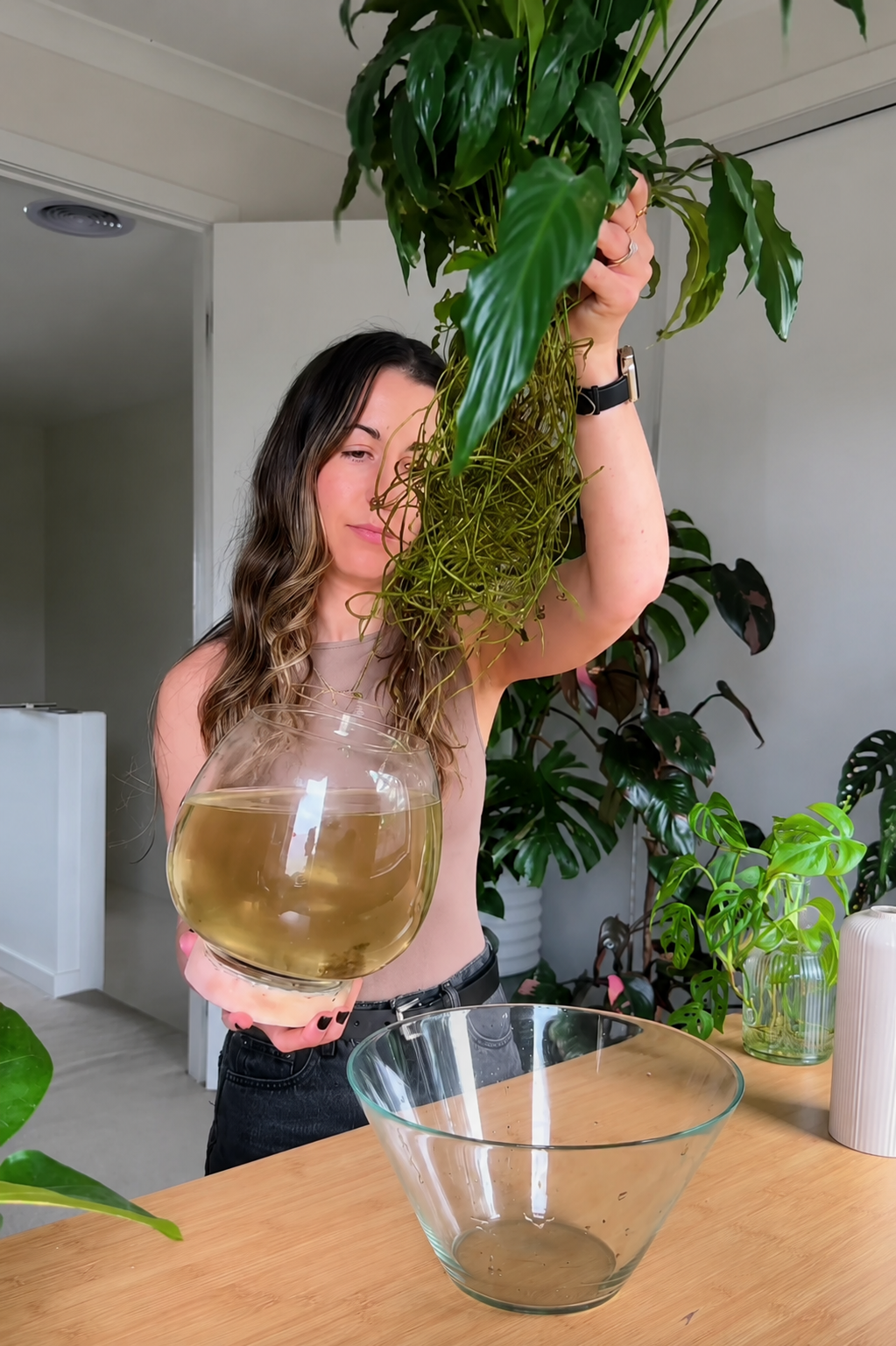
🌿 Revive Water-Propagated Pothos with Honey & Banana Compost Tea 🍯
Water-propagated Pothos (Epipremnum aureum) can develop root rot due to stagnant water, bacterial buildup, or poor oxygenation. Pruning away dark, mushy roots, transferring the cutting to a fresh vessel with clean water, and feeding it a tablespoon of natural Honey, Banana Peel & Compost Tea Elixir helps sterilize damaged root tissue and stimulates rapid new leaf and root growth.
| Component | Role in Pothos Revival |
|---|---|
| Pruning Rotted Roots | Stops fungal decay from spreading up the stem nodes. |
| Fresh Container & Water | Restores clean oxygen levels and eliminates anaerobic bacteria. |
| Natural Raw Honey | Acts as an antibacterial root-stimulating agent with natural enzymes. |
| Banana Peel Tea | Delivers soluble Potassium (K) for leaf development and shoot growth. |
| Aerated Compost Tea | Supplies beneficial micro-flora that protect root nodes. |
| Application Dosage | 1 to 2 tablespoons added directly into the water vessel monthly. |
Combining mechanical rot removal with a rich bio-stimulant allows water-growing Pothos cuttings to bounce back quickly.
- Honey Anti-Microbial Barrier: Honey contains natural enzymes and antimicrobial properties that seal freshly pruned root tips, preventing root rot pathogens from re-entering the plant tissue.
- Potassium-Powered Leaf Renewal: Banana peel extract provides potassium, essential for cell expansion and foliage rejuvenation, helping faded Pothos stems sprout fresh green leaves.
- Compost Microorganisms: Beneficial bacteria from compost tea consume organic debris in the water, maintaining a healthy hydro-environment.
- Rooting Hormone Mimicry: Trace sugars and minerals stimulate node development, turning dormant brown nodes into active water roots within weeks.
- Remove & Prune Rotten Roots: Take the Pothos out of its old vessel. Using sterilized shears, snip off all brown, mushy, or slimy roots until only clean, firm root tissue remains.
- Clean & Repot in Fresh Vessel: Sterilize a glass jar or vase, fill it with clean room-temperature water (filtered or rested tap water), and place the pruned Pothos inside.
- Brew the Golden Elixir: Steep chopped banana peels and organic compost in warm water for 24 hours, strain completely, and mix in 1 teaspoon of raw organic honey per cup of liquid.
- Feed by the Spoonful: Add 1 to 2 tablespoons of this honey-banana compost tea directly to the fresh water vessel. Place the jar in bright, indirect sunlight.
Honey seals cut root ends, preventing soft-rot bacteria from returning in the fresh water environment.
Swelling occurs around stem nodes as white secondary water root tips begin pushing through.
Potassium and compost enzymes trigger new shoot growth, unfurling vibrant green, variegated Pothos leaves.
A: Change the vessel water completely every 7 to 10 days to maintain high dissolved oxygen levels, adding a fresh tablespoon of the liquid mixture each time.
A: No, when used sparingly (a small spoon in diluted tea), honey’s natural antibacterial qualities protect the roots. Avoid over-dosing to keep water clear.
A: Yes! Once new white roots reach 2 to 3 inches in length, the Pothos can be potted into rich, well-draining potting soil.
💡 Final Thoughts
Reviving a ailing Pothos plant in water is easy when you combine clean pruning with organic nourishment. Removing rotted roots gives the plant a clean slate, while adding a spoonful of honey, banana peel, and compost tea delivers the exact sugars, potassium, and protective micro-flora needed to stimulate new growth. Keep your jar in bright indirect light and watch your Pothos thrive once again!