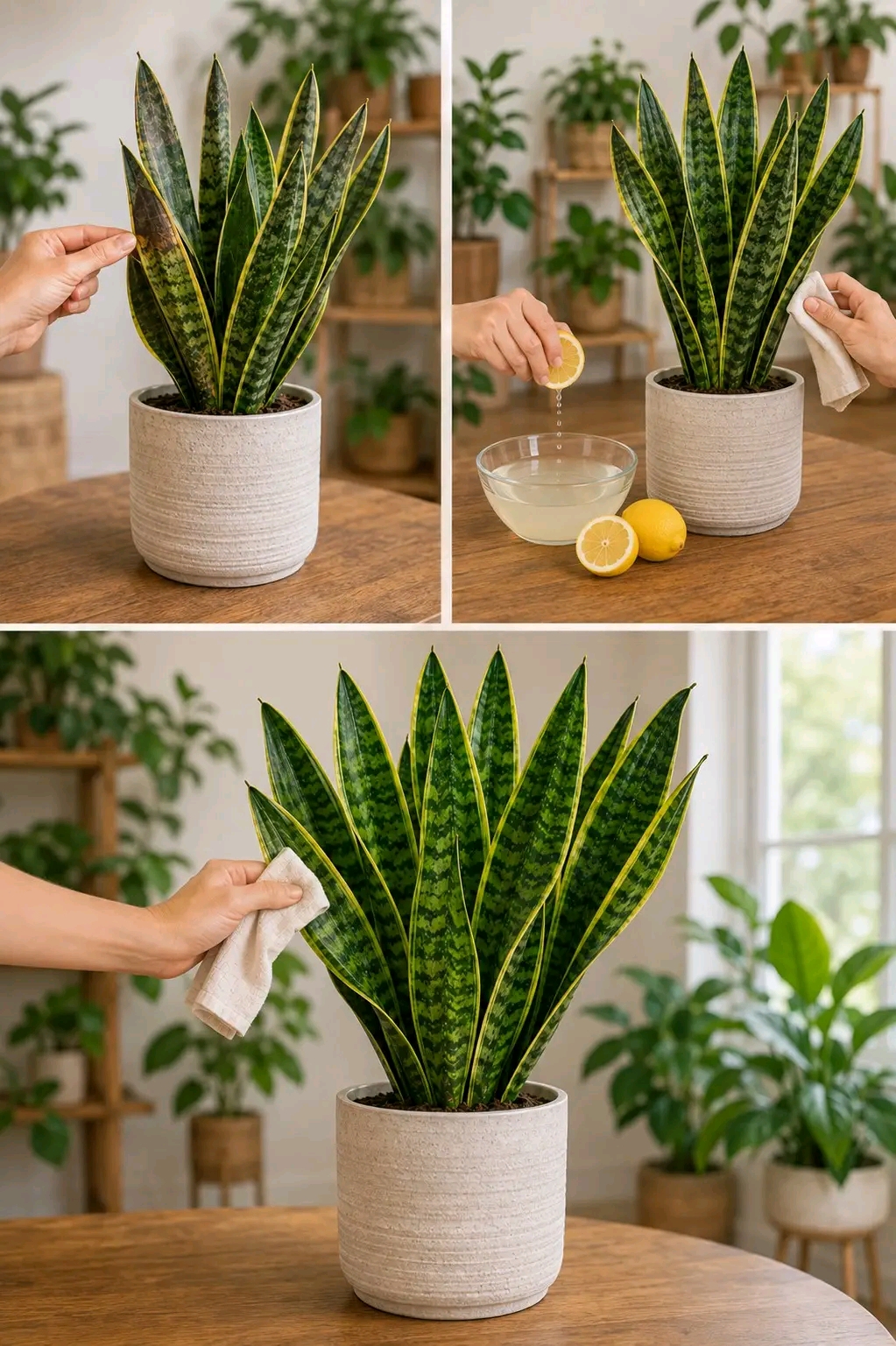
If you are a houseplant lover, interior decorator, or urban gardener searching for a professional technique to cultivate healthy Snake Plants (Sansevieria / Dracaena trifasciata) in glass vessels, look no further ✨! Growing snake plants in transparent glass containers while maintaining them with a natural lemon juice leaf-cleaning method is the ultimate secret to vibrant variegated foliage, dust-free leaves, and robust, pest-free indoor growth 🍋🌿.
Fresh lemon juice contains natural citric acid, which dissolves mineral deposits, hard water spots, and accumulated dust from snake plant leaves without clogging leaf stomata 💧. Combining a sleek glass container setup with regular citrus care keeps your plant looking glossy, boosts photosynthesis, and protects the leaves from fungal blemishes. Let’s dive into the master specifications, step-by-step instructions, exact ingredient ratios, and pro secrets for cultivating snake plants like a professional gardener!
🛒 Master Setup & Citrus Care Specifications
Cultivating a healthy snake plant in a glass container while applying natural lemon leaf care requires balancing moisture control, light exposure, and organic cleaning ratios 🌿✨. Here is your master specifications breakdown 📋✨:
| Equipment & Organic Component | Key Features & Specifications | Horticultural Purpose & Care Function | Recommended Alternatives |
|---|---|---|---|
| Indoor Plant Variety 🌿 | Sansevieria Trifasciata ‘Laurentii’ | Resilient succulent with erect, sword-like leaves bounded by bright yellow margins (pictured). | Sansevieria Zeylanica or Hahnii. |
| Glass Growing Vessel 🏺 | Clear Cylindrical Glass Pot | Offers 360° light penetration and complete root visibility for precise moisture checking. | Glass Terrarium or Large Mason Jar. |
| Natural Leaf Cleaner 🍋 | Freshly Squeezed Lemon Juice | Citric acid dissolves hard water spots, dust, and grease to restore natural leaf shine (pictured). | Diluted Apple Cider Vinegar or Neem Oil. |
| Cleaning Cloth & Water 🧽 | Soft Microfiber Cloth + Warm Water | Gently wipes leaf surfaces without scratching or damaging the protective waxy cuticle layer. | Soft Cotton Pad or Sponge. |
| Aeration Substrate Layer 🪨 | Coarse Bark + Perlite / Clay Pebbles | Creates a lightweight, airy root zone that prevents stagnant moisture build-up inside glass. | Smooth River Stones or Pumice. |
| Light Exposure Zone ☀️ | Bright, Indirect Sunlight | Drives photosynthetically active radiation to keep leaf variegation vibrant and colorful. | Medium |
👩🌾 Step-by-Step Professional Growing & Cleaning Guide
Follow this simple 4-step professional guide to inspect leaves, prepare the organic citrus wash, clean the foliage, and maintain your snake plant in a glass vessel, exactly as demonstrated in the featured image 🌿✨!
Step 1: Inspect Leaves and Prune Blemishes 🌿✨
- Carefully examine your snake plant foliage for dried tips, physical damage, or brown fungal spots (as shown in the top-left panel).
- Use sterilized pruning shears to trim away damaged brown leaf sections at a clean angle that mimics the natural pointed tip of the leaf.
- Pro Tip: Always sterilize your shears with rubbing alcohol between cuts to avoid transferring pathogens across plant tissues!
Step 2: Prepare the Fresh Lemon Cleaning Solution 🍋💧
- Squeeze the juice of half a fresh lemon into a small glass bowl containing 1 cup of warm distilled water (as illustrated in the top-right panel).
- Stir the mixture well to ensure the citric acid is evenly diluted throughout the water.
- Gardener’s Secret: Never apply pure, undiluted lemon juice directly to plant leaves! Diluting it with water ensures it cleans safely without burning the leaf surface under sunlight.
Step 3: Wipe and Polish Foliage Thoroughly 🧽🍃
- Dip a clean microfiber cloth into the diluted lemon juice solution and wring out any excess liquid until it is lightly damp.
- Support the back of a snake plant leaf with one hand and gently wipe the front surface from the base upward using the damp cloth (as captured in the bottom panel).
- Flip the cloth and wipe the back of the leaf to remove hidden dust, spider mites, or pests.
- Repeat this process for all leaves until the entire plant shines with a rich, vibrant green and yellow glow!
Step 4: Glass Vessel Setup & Long-Term Maintenance 🏺☀️
- Set up your clean glass vessel with a 2-inch layer of hydroton clay pebbles or smooth river stones at the bottom to act as a drainage reservoir.
- Layer a well-draining succulent mix (equal parts coarse sand, perlite, and potting soil) over the pebbles.
- Plant your cleaned snake plant centrally, securing the base gently with potting medium.
- Place the glass container in a bright spot receiving indirect sunlight, and water lightly only when the soil substrate inside the glass is completely dry!
💡 Pro Secrets for Growing Snake Plants in Glass
- Lemon Juice Boosts Photosynthesis: Dust particles block sunlight from reaching leaf cells ☀️. Cleaning leaves monthly with lemon water removes dirt film, allowing your plant to absorb maximum light and produce crisp new leaves!
- Prevent Root Rot in Glass Vessels: Glass pots lack bottom drainage holes 🏺. Always inspect moisture levels through the transparent glass before watering, and keep the lower pebble layer free of standing water.
- Keep Leaf Crowns Dry: When wiping leaves, avoid letting water pool in the central rosette, as excess moisture in the crown can cause stem rot 🌿.
Try this natural lemon cleaning method today to keep your glass-potted snake plant healthy, shiny, and thriving! 🌿✨🍋