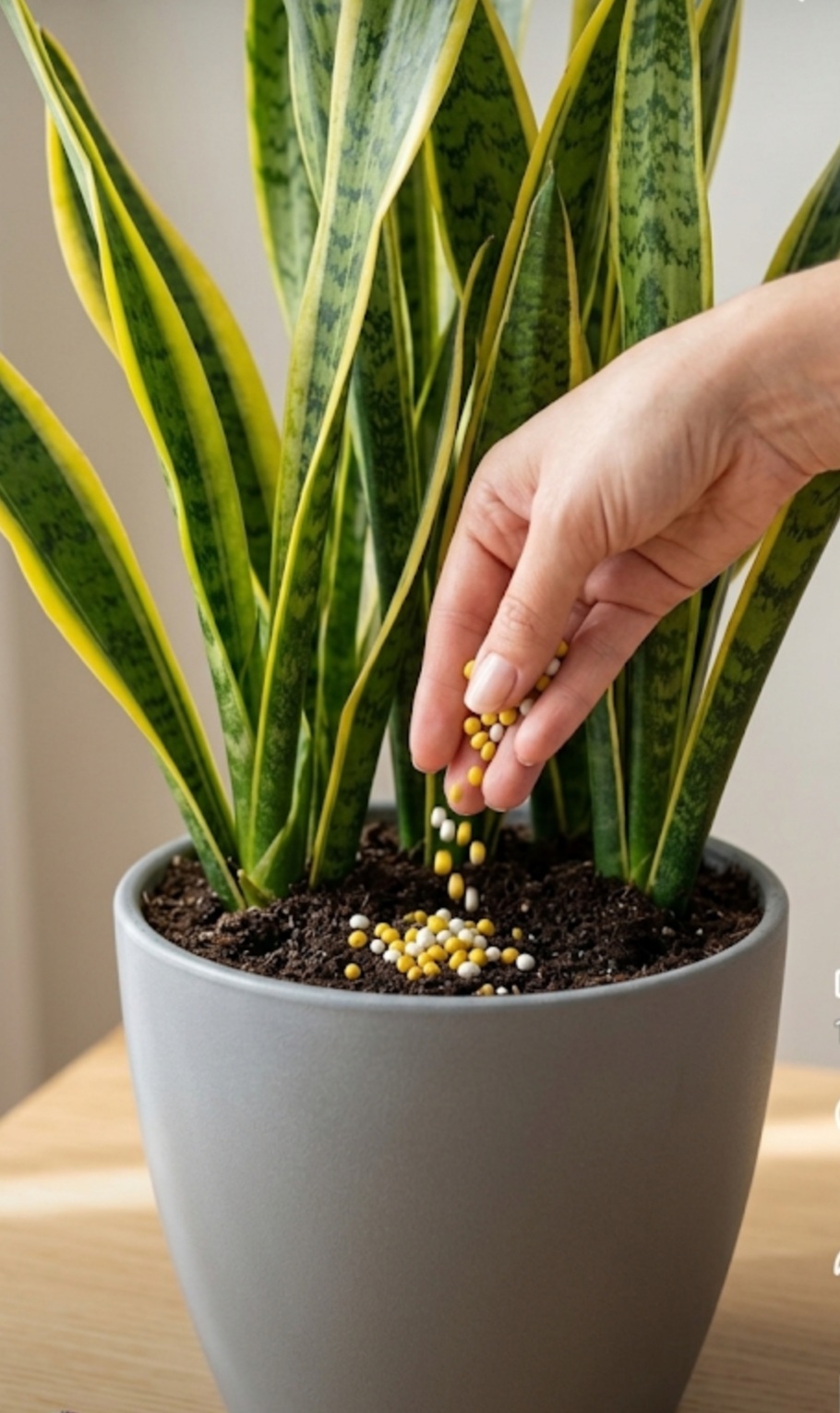
If you are a houseplant enthusiast, urban gardener, or interior greenery lover searching for the easiest way to keep your Snake Plant (Sansevieria trifasciata) healthy, tall, and vibrant, look no further ✨! Known for their bold, upright leaves with striking yellow margins and mottled green centers, snake plants are among the most resilient indoor plants. However, even the toughest houseplants require essential nutrients to fuel steady growth and maintain robust cellular structures 🌿.
Using slow-release fertilizer granules (fertilizer prills) is one of the safest, most effective ways to feed potted indoor plants without risking chemical burn or over-fertilization 🪴. These small yellow and white fertilizer spheres gradually dissolve over months whenever you water, providing a balanced, continuous stream of key minerals like nitrogen, phosphorus, and potassium directly to the root zone. Let’s explore the complete master care specifications, step-by-step application guide, nutritional breakdowns, and pro plant-parent secrets to ensure your potted Snake Plant thrives in any room!
🛒 Master Plant Care Specifications & Nutrient Ratios
Feeding potted succulents and indoor foliage with slow-release fertilizer granules ensures a steady supply of micro and macro-nutrients while minimizing maintenance efforts 🌿✨. Here is your master specifications breakdown 📋✨:
| Plant Care Component | Key Ingredients & Quantities | Botanical Purpose & Plant Benefit | Easy Botanical Alternatives |
|---|---|---|---|
| Nutrient Carrier 🟡⚪ | 1 to 2 Tbsp Slow-Release Fertilizer Granules (NPK 10-10-10 or 14-14-14) | Delivers time-released Nitrogen (growth), Phosphorus (roots), and Potassium (strength). | Organic Compost Pellets or Liquid Fish Emulsion. |
| Target Houseplant 🌿 | Snake Plant (Sansevieria trifasciata) | Succulent houseplant that prefers well-draining soil and gentle, steady feeding. | ZZ Plant (Zamioculcas), Pothos, or Aloe Vera. |
| Growing Medium 🪴 | Aerated Succulent / Cactus Potting Mix | Prevents moisture buildup around roots while allowing fertilizer prills to breakdown naturally. | Perlite + Coarse Sand + Peat Moss Blend. |
| Potted Container 🏺 | Ceramic Pot with Drainage Holes | Ensures excess water drains away, preventing root rot and fertilizer salt buildup. | Terracotta or Unglazed Clay Pots. |
👩🌾 Step-by-Step Slow-Release Fertilizer Application Guide
Follow this simple 4-step botanical guide to feed, incorporate, and water your potted Snake Plant, exactly as demonstrated in the featured photograph 🌿✨!
Step 1: Inspect Your Plant and Soil 🪴✨
- Examine your snake plant to ensure the leaves are firm and free of pests or signs of severe root rot.
- Check the surface of the potting soil inside the ceramic planter. Ensure the top layer of soil is dry to the touch before applying fertilizer.
- Pro Tip: Always fertilize indoor plants during their active growing seasons (spring and summer) when they can efficiently absorb nutrients!
Step 2: Measure and Distribute Fertilizer Granules 🟡⚪
- Measure out approximately 1 tablespoon of slow-release fertilizer granules (yellow and white prills) for a medium 6-to-8-inch pot.
- Hold the granules in your hand and gently sprinkle them in a circle around the base of the snake plant (as clearly shown in the central photograph).
- Avoid piling granules directly against the main leaf stems; space them evenly across the soil surface to ensure balanced root access.
Step 3: Mix Granules Gently into the Topsoil 🌿✨
- Using a small wooden stick, chopstick, or your fingers, lightly push the granules ¼ to ½ inch into the topsoil layer.
- Covering the granules slightly with soil protects them from direct light, retains moisture around the prills, and accelerates the controlled breakdown process during watering cycles.
Step 4: Water Lightly and Position for Light 💧☀️
- Water the snake plant lightly to activate the slow-release coating on the granules. Ensure water drains completely out of the bottom drainage hole.
- Place your ceramic pot in a location with bright, indirect sunlight to maximize photosynthetic activity and leaf variegation.
- Because slow-release granules feed continuously over 3 to 6 months, you only need to repeat this application 1 to 2 times per year!
💡 Pro Plant-Parent Tips for Bountiful Snake Plants
- Avoid Over-Fertilizing: Snake plants are slow growers and light feeders 🌿. Less is always more! Over-fertilizing can cause leaf tips to brown or curl, so stick to low-dose slow-release formulas.
- Choose Drainage-Friendly Pots: Always use pots with proper bottom drainage holes (like the grey ceramic planter in the image) 🏺. Good drainage prevents stagnant water, which causes root rot and nutrient lockout.
- Wipe Down Leaves Regularly: Snake plant leaves collect household dust over time, blocking light absorption. Wipe the leaves gently with a damp microfiber cloth once a month to keep them shiny and performing at their best!
Try this effortless slow-release fertilizer technique today to keep your Snake Plant vibrant, lush, and growing tall with beautiful yellow-bordered foliage all year long! 🌿✨🪴