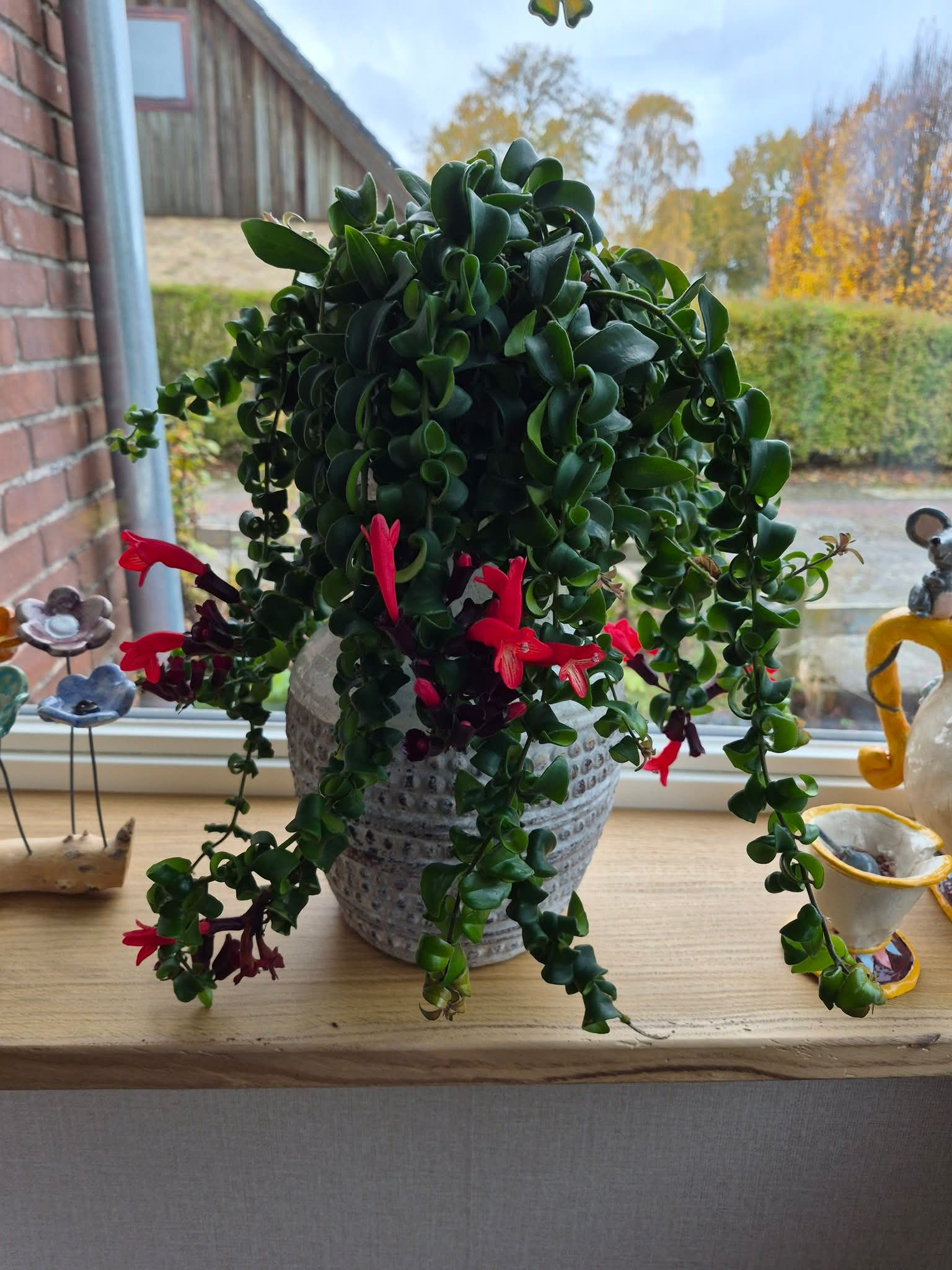
Baking Soda, Diatomaceous Earth, and Eggshell Powder
Caring for a curly lipstick plant (Aeschynanthus radicans ‘Twister’ or ‘Rasta’) often leads indoor gardeners to reach for household “white powders” to solve common houseplant problems—whether to treat powdery mildew, eliminate pests hidden in twisted leaves, or supply calcium to the soil. Native to the humid, tropical rainforests of Southeast Asia, this trailing epiphyte grows on tree branches in filtered sunlight and relies on airy, fast-draining potting media. Because its tightly curled, waxy leaves trap moisture and pests easily while its fine roots dislike dense or overly alkaline soil, choosing the right white powder—and using it carefully—makes all the difference between a thriving, blooming vine and damaged foliage.
Three Common White Powders Used on Lipstick Plants
Different household white powders serve completely different purposes in plant care, and mixing them up can harm a curly lipstick plant:
- Food-grade diatomaceous earth (DE): A fine, chalky powder made from fossilized aquatic algae. Its microscopic sharp edges dehydrate soft-bodied and crawling pests—such as fungus gnats, thrips, and mealybugs—on contact without using synthetic chemicals.
- Baking soda (sodium bicarbonate): Often mixed into DIY sprays to alter leaf-surface pH and discourage fungal spores like powdery mildew, though it carries a high risk of sodium buildup and leaf burn if overapplied.
- Finely ground eggshell powder: Pure calcium carbonate used as a slow-release mineral supplement in potting soil rather than a pest or fungus treatment.
(Note: Never use talcum powder, household bleach powder, or scented cleaning powders on houseplants, as they contain additives that clog leaf pores and poison roots.)
Why Curly Lipstick Plants Need Extra Caution
The signature twisted, cupped foliage of a curly lipstick plant creates micro-pockets that hold onto water droplets, dust, and powder residues much longer than flat-leaved houseplants. In addition, as an epiphytic plant, Aeschynanthus radicans prefers a slightly acidic, airy potting mix (around pH 5.5 to 6.5). Heavy applications of alkaline powders—such as baking soda or large doses of eggshell powder—can raise soil pH, lock out iron and micronutrients, and cause yellowing leaves or stalled flower production.
How to Safely Use Each White Powder
1. Diatomaceous Earth for Pests (Fungus Gnats, Thrips, Mealybugs)
- Use food-grade DE only: Avoid pool-grade diatomaceous earth, which is chemically treated and unsafe for indoor use.
- Apply to dry surfaces: Diatomaceous earth only works when completely dry. Wait until the top inch of potting mix is dry, then dust a light, thin layer across the soil surface to target fungus gnat larvae and crawling pests.
- Avoid heavy leaf coating: If dusting foliage for thrips or mites, apply a barely visible mist with a powder duster in a well-ventilated area, avoid inhaling the fine dust, and wipe or rinse leaves clean after a few days so sunlight reaches the chlorophyll.
2. Baking Soda Spray for Surface Mildew (Use Sparingly)
- Dilute heavily: Dissolve half a teaspoon of baking soda and a single drop of mild, unscented liquid castile soap in one quart (about one liter) of water.
- Spot-test first: Spray one or two curled leaves and wait 24 to 48 hours to confirm no brown edges or scorching develop.
- Keep off the soil: Shield the potting mix with a paper towel while misting affected foliage lightly so excess sodium does not wash into the root zone. Repeat no more than once every 10 to 14 days if needed.
3. Finely Ground Eggshell Powder for Calcium Support
- Bake and pulverize: Wash empty eggshells thoroughly, bake at 200°F (95°C) for 20 minutes until brittle, and grind into a fine flour-like dust.
- Use in moderation: Mix half a teaspoon lightly into the top layer of potting mix once every two to three months during spring and summer—never more often, so the potting mix does not become overly alkaline.
What White Powder on Leaves Might Actually Be
If you noticed a white powdery coating already appearing on your curly lipstick plant rather than planning to apply one, inspect the foliage closely before treating:
- Hard water mineral deposits: Tap water droplets trapped inside curled leaves evaporate and leave behind harmless chalky white spots. Wiping leaves gently with a damp microfiber cloth dipped in filtered or rainwater removes the residue.
- Mealybugs: Cottony white clusters tucked deep inside leaf curls and stem nodes are pests rather than fungus. Dab them directly with a cotton swab soaked in 70 percent isopropyl alcohol.
- Powdery mildew: A dusty, flour-like white film spreading across leaf surfaces—usually triggered by cool nights, high humidity, and stagnant air—can be managed by removing heavily affected leaves, improving airflow, and applying a gentle potassium bicarbonate or neem oil treatment.
Best Practices for Lush Foliage and Bright Blooms
White powders work best as targeted, occasional tools rather than everyday plant care routines. To keep a curly lipstick plant producing glossy dark green spirals and vibrant red tubular flowers, provide bright indirect sunlight, an airy epiphytic mix of potting soil, orchid bark, and perlite, and consistent watering whenever the top inch of media dries out.