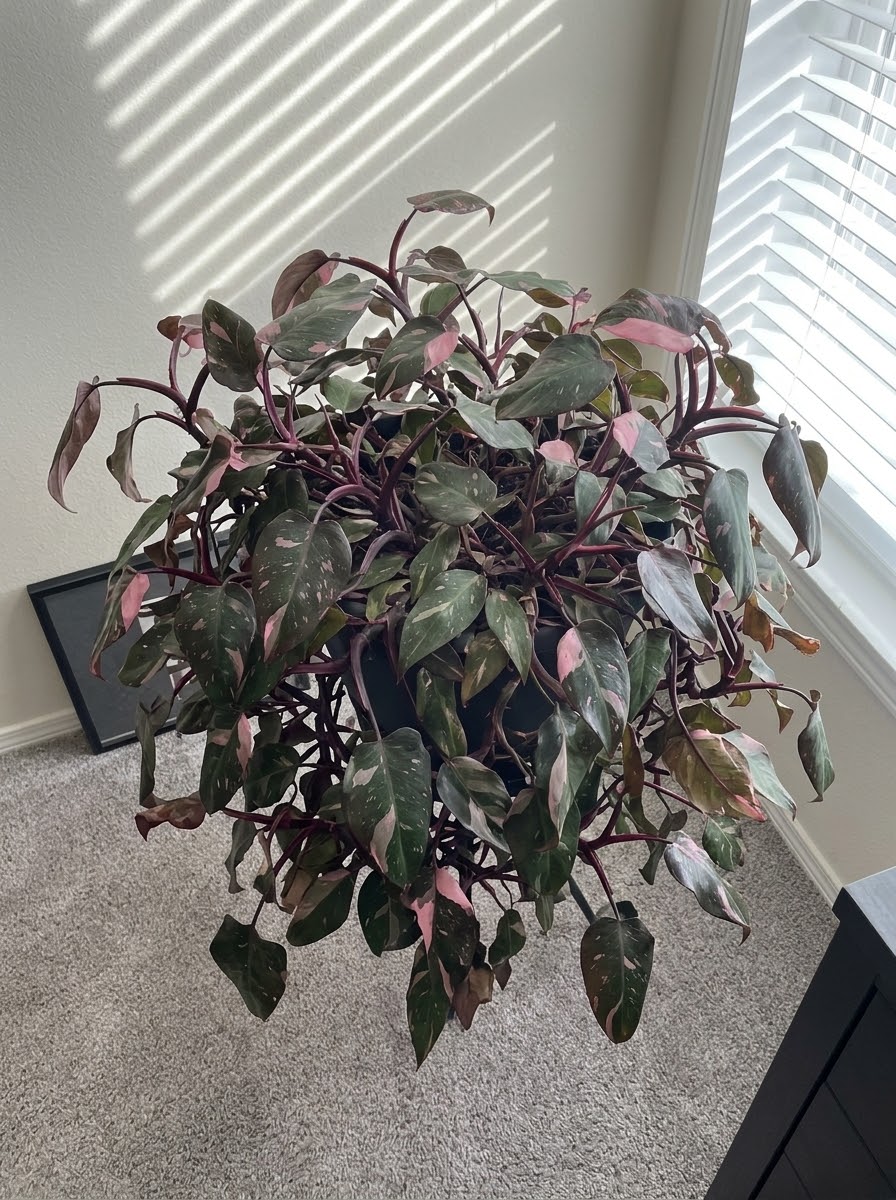
Pouring Compost Tea With Coffee on a Philodendron Pink Princess:
Growing a Philodendron Pink Princess at home is all about balance. The plant is loved for its deep burgundy-green leaves splashed with soft or bold pink variegation, and keeping that foliage healthy starts beneath the soil surface. Many gardeners experiment with compost tea and coffee to give potted houseplants a gentle boost—but combining the two for an indoor aroid requires careful dilution, proper drainage, and realistic expectations.
How Compost Tea Supports Root Health
Compost tea is a liquid extract made by steeping finished compost in water so beneficial microbes and soluble nutrients move into the solution. When poured gently into the root zone of a potted Philodendron, it can help refresh tired potting mix and support active root growth without the harshness of heavy synthetic salts.
For best results with indoor containers:
- Use finished compost only: Unfinished compost can carry unwanted odors or fungal issues indoors.
- Keep it mild: A light, earthy tea works much better for container roots than a thick, sludge-heavy mix.
- Let excess drain: Make sure the pot has drainage holes and a chunky, airy mix (such as bark, perlite, and coco coir or potting soil) so roots never sit waterlogged.
Where Coffee Fits In (and Where It Can Go Wrong)
Coffee—whether brewed black coffee cooled to room temperature or heavily diluted rinses—is sometimes added to plant routines for mild organic matter and trace nutrients. However, pouring straight, strong coffee or piling thick grounds onto a potted Philodendron can cause more trouble than help.
- Watch the acidity and strength: Concentrated coffee can lower soil pH or irritate sensitive roots if used too often or at full strength.
- Avoid heavy grounds on the surface: Thick grounds can clump, hold excess moisture, attract fungus gnats, or crust over the top layer of potting mix.
- Keep it diluted and occasional: If you include a splash of cooled, weak coffee in a compost tea routine, treat it as an occasional mild supplement rather than a replacement for regular balanced care.
Smart Habits for Applying It to a Pink Princess
Even the best root-zone treatment will not fix poor light or soggy soil. A Philodendron Pink Princess typically thrives in bright, indirect light—enough to encourage healthy leaves without scorching pink tissue in harsh direct sun—paired with a chunky mix that dries partially between waterings.
When applying a mild compost tea and diluted coffee blend:
- Check the soil first: Water lightly or apply the mix when the upper layer of potting mix is starting to dry—never on bone-dry or soaking-wet roots.
- Pour slowly around the base: Aim for the root zone rather than splashing liquid into leaf joints or unopened new leaves.
- Watch how the plant responds: Look for steady, healthy new leaves over time rather than expecting overnight changes. If you notice yellowing leaves, unpleasant soil smells, or gnats, pause the coffee addition and check drainage.
| Care Factor | Helpful Habit | Common Pitfall to Avoid |
|---|---|---|
| Mixture Strength | Mild, well-diluted compost tea with only a light splash of cooled weak coffee | Heavy, undiluted coffee or thick sludge sitting in the pot |
| Potting Mix | Chunky, airy, well-draining mix with drainage holes | Dense soil that stays soggy around the roots |
| Application | Poured slowly around the root zone on an occasional schedule | Frequent pouring onto already wet soil or over leaves |
| Light & Environment | Bright, indirect light and steady room temperatures | Harsh direct sun or cold drafts near a window |
Realistic Expectations for Pink Variegation
It is easy to hope a single pour will make every new leaf bright pink, yet variegation on a Pink Princess is largely genetic and tied to overall plant vigor and lighting. Gentle root care, airy soil, and steady light help the plant push out healthy leaves smoothly—which gives you the best chance of enjoying clean, attractive foliage indoors.