The White Mineral Tablet & Epsom Salt Secret:
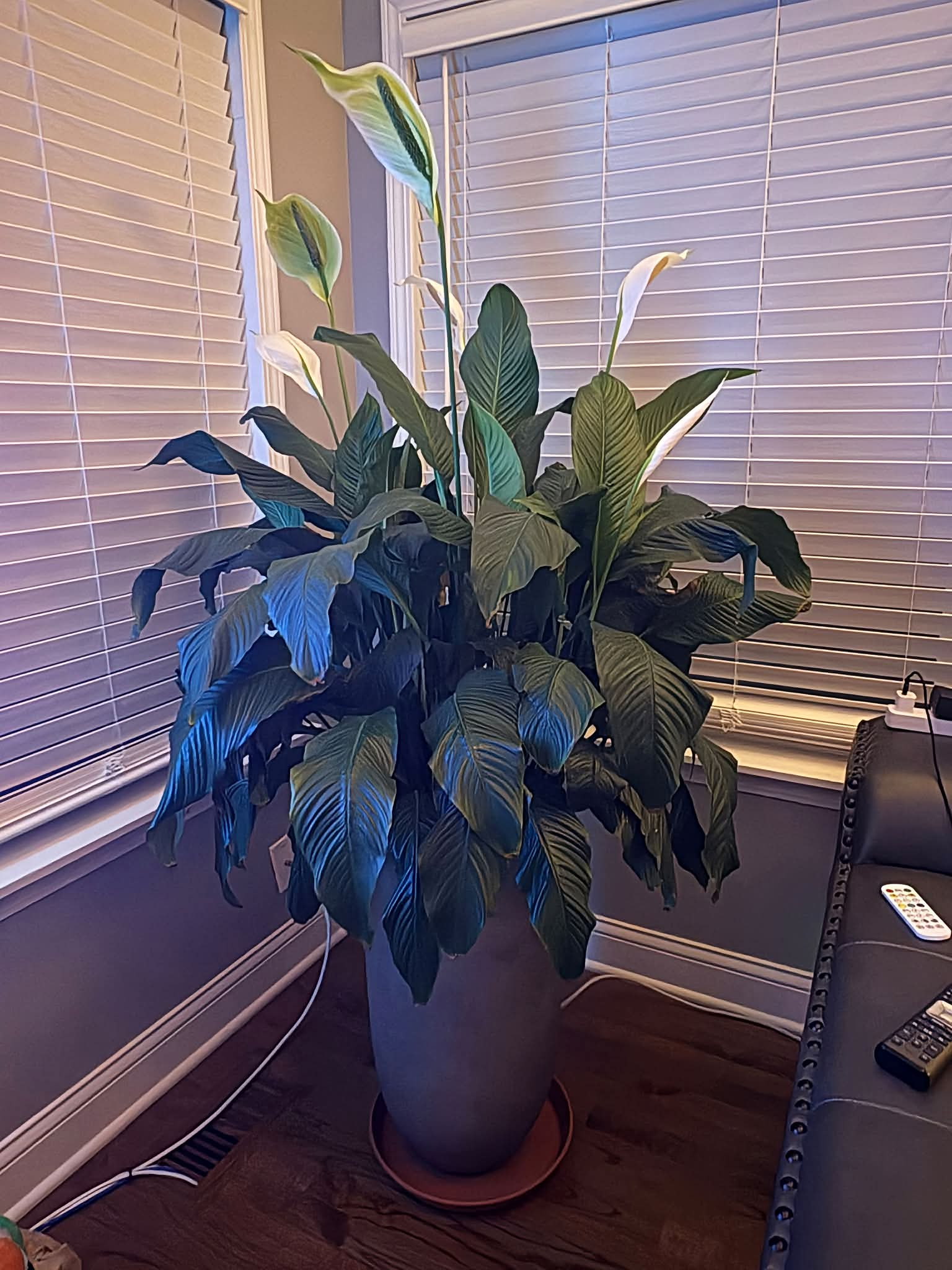
There are indoor houseplants that languish in corners with pale, drooping foliage and refuse to flower no matter how often they are watered, and then there are magnificent botanical masterpieces featuring deep emerald-green leaves and brilliant white spathes that command an entire room. If you have ever admired a thriving, oversized indoor specimen—just like the towering Peace Lily (Spathiphyllum) with its lush dark leaves and elegant white blooms positioned gracefully in front of a bright window above—you know how rewarding it is to achieve that level of vibrancy. For over fifty years, master indoor gardeners and heirloom plant caretakers have relied on a clean, highly effective potting-bench routine to keep large indoor foliage robust without risking chemical salt burn from heavy commercial fertilizers: a dual-action protocol combining a white slow-dissolving mineral tablet with a measured dose of magnesium-rich Epsom salt.
When integrated into a thoughtful seasonal care routine, this powerful combination targets the root zone directly, correcting hidden nutrient deficiencies and restoring the cellular vigor necessary for continuous, breathtaking blooms.
Why Large Indoor Peace Lilies Struggle in Containers
Unlike tropical specimens growing freely in rich, damp rainforest floors where decaying organic matter constantly replenishes the soil, container-grown indoor plants face a unique set of physiological limitations.
When a large Peace Lily is housed in an indoor ceramic or composite planter—such as the sleek grey floor pot resting on a terracotta saucer near the slatted window blinds above—the surrounding potting mix rapidly exhausts its bio-available mineral reserves. Routine tap water often lacks the essential secondary macronutrients required for heavy-foliage plants, leading to interveinal chlorosis, sluggish growth, and a complete absence of white spathes. However, pouring high-dose synthetic liquid fertilizers into confined potting soil frequently triggers toxic salt buildups, scorching sensitive root tips and causing leaf tips to turn brown and crispy. That is why veteran growers utilize the slow-release precision of white mineral tablets paired with the natural enzymatic boost of Epsom salt.
The Science Behind the White Tablet and Epsom Salt Protocol
Using a structured mineral approach supports large indoor foliage plants and heavy bloomers through three targeted botanical mechanisms:
- Magnesium-Driven Chlorophyll Synthesis (Deep Green Foliage): Epsom salt (magnesium sulfate) provides the central metallic ion required for chlorophyll molecules, instantly transforming pale, lackluster leaves into rich, glossy emerald-green foliage while improving overall light absorption.
- Controlled Mineral Release (Sustained Cellular Health): Unlike fast-acting liquid feeds that surge through the soil and leach out quickly, a white slow-dissolving mineral tablet meters out steady calcium, potassium, and trace elements over months, ensuring continuous structural support for heavy stems and upright white flowers.
- Enhanced Nutrient Uptake and Osmotic Balance: The sulfur component in Epsom salt works synergistically with the trace minerals from the white tablet to boost nitrogen and phosphorus assimilation, allowing the root system to extract moisture and nutrients efficiently from confined potting mix without experiencing chemical shock.
Step-by-Step Guide to Executing the Dual-Action Protocol
If you want your indoor Peace Lily collection to display the lush, commanding vitality of the window-side specimen pictured above, follow this comprehensive four-step care routine:
- Assess Soil Moisture and Root Conditions: Check the potting mix down to the first two inches to ensure it has reached an appropriate drying threshold before applying any amendments. Inspect the base of the plant to verify that the root system has adequate breathing room within its container.
- Apply the White Slow-Dissolving Tablet: Place 1 white mineral tablet into the outer perimeter of the potting soil, pushing it approximately one inch deep into the medium and keeping it safely away from the central crown of the plant to allow steady, long-term nutrient metering.
- Administer the Epsom Salt Drench: Dissolve 1 teaspoon of pharmaceutical-grade Epsom salt into 1 gallon (3.7 liters) of tepid, filtered water. Stir thoroughly until fully dissolved, then water the potting mix evenly until liquid begins to trickle through the bottom drainage holes into the saucer.
- Manage Drainage and Light Exposure: Empty any standing water from the saucer beneath the pot to prevent root rot. Position your large planter near a bright, indirect light source—matching the ideal window exposure shown above—and repeat the Epsom salt drench once every two months while leaving the white tablet to dissolve naturally over the season.