The Black Powder Secret:
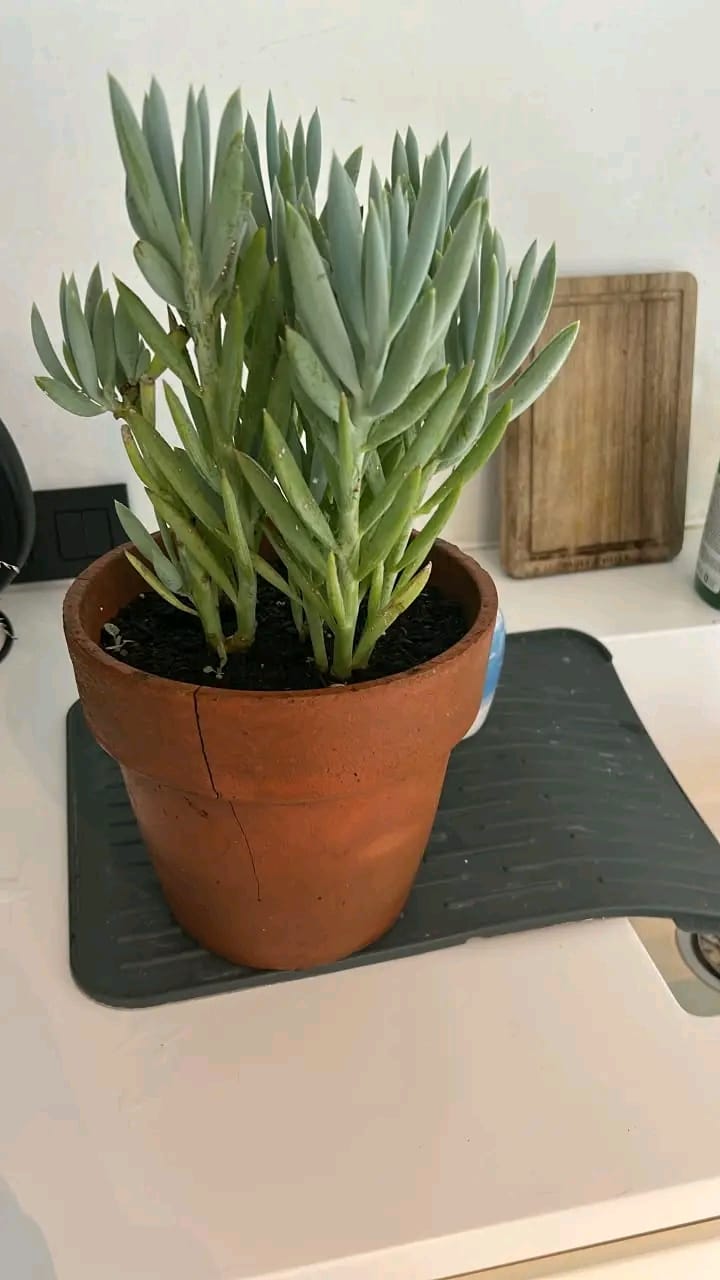
There are indoor succulents that slowly lose their vibrant powdery blue coating and turn mushy at the base, and then there are vigorous, upright specimens that stand tall and healthy year-round. If you have ever admired a lush pot of Blue Chalksticks (Curio repens or Senecio serpens)—just like the dense, architectural blue-green cluster growing upright in its classic terracotta pot by the kitchen sink above—you know how striking their silvery-blue, finger-like leaves look in any bright room. For decades, seasoned succulent growers have relied on an old apothecary and potting-bench secret to prevent root rot, purify dense potting soil, and keep succulent foliage firm and vibrant: activated black charcoal powder. Blended into the topsoil or dusted around the base of the stems, this fine black carbon powder acts as an invisible shield against excess moisture and stagnant soil bacteria.
Why Indoor Blue Chalksticks Struggle Without Soil Detoxification
Native to the rocky, fast-draining slopes of South Africa, Blue Chalksticks store water inside their thick, fleshy leaves and cannot tolerate wet, stagnant roots. When grown indoors in standard potting mix—even inside a breathable terracotta container like the one pictured above—organic soil components slowly break down, compact, and trap excess moisture after watering.
Once air pockets disappear around the root ball, harmful anaerobic fungi multiply, causing lower leaves to yellow, soften, or drop prematurely. Using heavy synthetic liquid fertilizers on indoor succulents only forces weak, leggy green growth and leaves behind harsh mineral salts that burn sensitive roots. Instead, succulents thrive when their soil stays sweet, airy, and biologically clean.
The Science Behind the Activated Black Powder Protocol
Working fine horticultural or food-grade black charcoal powder into the potting mix delivers three targeted benefits for Blue Chalksticks and other fleshy succulents:
- Microscopic Moisture & Toxin Sponge: Each grain of activated black powder contains millions of tiny pores that adsorb sour organic acids, chemical impurities from tap water, and excess stagnant moisture before they can trigger root rot.
- Natural Fungal & Rot Barrier: By keeping the upper root zone dry, alkaline-balanced, and oxygenated, black charcoal powder inhibits the fungal pathogens responsible for stem rot at the soil line.
- Enhanced Soil Aeration & Color Retention: Blending black carbon powder into dark potting soil prevents compaction, allowing roots to breathe freely so the plant maintains its signature powdery blue-green farina coating and sturdy, upright stems.
Step-by-Step Guide to Applying Black Powder to Your Blue Chalksticks
If you want your Blue Chalksticks succulent to stay as dense, upright, and vibrant as the specimen pictured above, follow this simple four-step application method:
- Clear the Soil Surface: Remove any fallen, dried lower leaves resting on top of the soil around the succulent stems so air can circulate freely at the base. Ensure the top inch of soil is dry before starting.
- Measure & Dust the Black Powder: Take 1 to 2 tablespoons of fine activated black charcoal powder and sprinkle it evenly across the dark soil surface around the base of the stems.
- Work Gently Into the Topsoil: Use a wooden chopstick, fork, or your fingertips to lightly scratch the black powder into the top half-inch of potting mix, creating subtle air channels without disturbing the main root system.
- Water Sparingly & Provide Bright Light: Water thoroughly only when the soil has dried out completely, allowing excess water to drain freely out the bottom of the terracotta pot. Keep your Blue Chalksticks in a bright spot with abundant indirect sunlight—or a sunny windowsill—to preserve its compact, upright silhouette and silvery-blue foliage.
Join Our Plant-Loving Community
Did this activated black powder soil-purifying method help keep your Blue Chalksticks or indoor succulents thriving? We would love for you to grow with us:
- Follow our page for daily heirloom plant-care protocols, organic soil remedies, and step-by-step succulent care guides.
- Like, save, and share this article with a fellow succulent lover who wants to keep their indoor plants rot-free and vibrant.
- Drop a comment below telling us which succulent is your favorite to grow indoors—we read and reply to every single message!