The Pink Granule Secret:
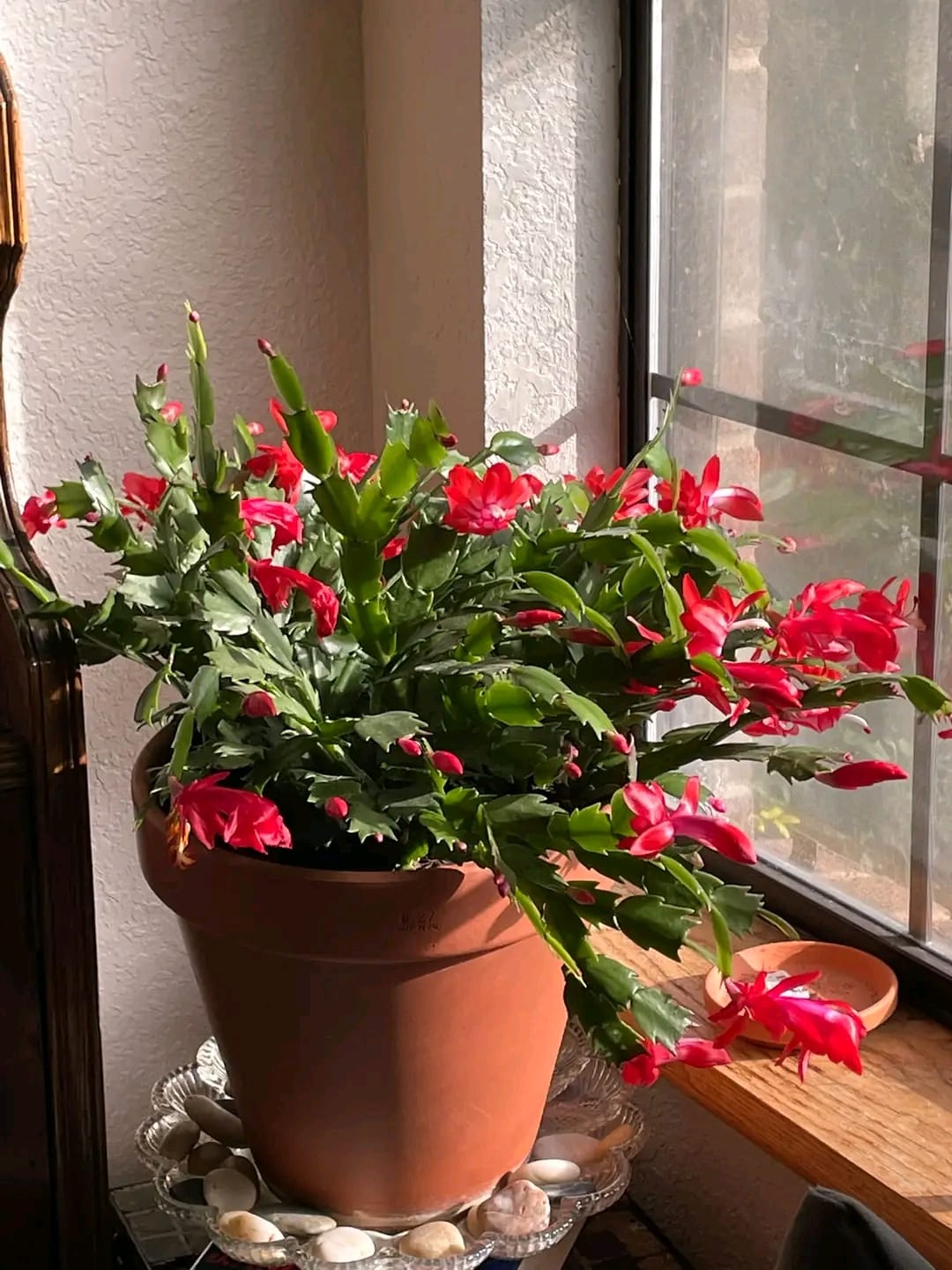
There are plants that simply survive indoors, and then there are heirloom specimens that burst into such a breathtaking display of color that they stop every visitor in their tracks. If you have ever admired a thriving holiday cactus—just like the stunning, vibrant red-blooming Christmas cactus sitting proudly in its terracotta pot by the window above—you know how magical it is when the stems are completely weighed down by brilliant blossoms and tight pink buds. For decades, master indoor gardeners have relied on a professional-grade apothecary secret to ensure massive, vibrant flowering cycles: slow-release pink NPK fertilizer granules. Ranging from pastel rose to vibrant magenta prills scattered across the topsoil, these tiny mineral powerhouses provide steady, micro-measured nutrition that coaxes a resting cactus into a prolific blooming powerhouse.
Understanding the Blooming Cycle: Why Holiday Cacti Need Structured Nutrition
Unlike tropical foliage plants that require steady, high-nitrogen feeds to push out green leaves, holiday cacti (Schlumbergera) are epiphyte-origin jungle cacti that bloom in response to shorter daylight hours and temperature shifts. However, producing dozens of heavy, jewel-toned flowers requires an enormous amount of metabolic energy.
When a holiday cactus fails to set buds or drops its flowers prematurely, it is almost always due to erratic nutrient availability. Liquid fertilizers create a boom-and-bust cycle, forcing a sudden rush of growth followed by starvation. That is why professional growers turn to slow-release pink NPK granules. As you water over time, these coated prills dissolve at a controlled micro-rate, feeding the roots a balanced diet of nitrogen, phosphorus, and potassium precisely when the plant transitions from stem growth into heavy bud production.
The Science Behind the Pink Granule Protocol
Each pink-coated slow-release granule serves a precise botanical function designed to maximize flowering and root health:
- Controlled-Release Phosphorus (The Bloom Engine): The high middle number in a specialized blooming NPK ratio (such as a balanced formula with boosted phosphorus) is locked inside the pink polymer coating. Phosphorus is directly responsible for developing robust floral buds and vibrant petal pigmentation, ensuring your holiday cactus produces deep reds, pinks, or whites instead of weak, pale blossoms.
- Balanced Potassium & Trace Minerals: Potassium strengthens the stem segments (cladodes) so they can easily support heavy clusters of flowers without snapping, while also regulating internal water pressure.
- Zero Root Burn: Unlike water-soluble chemical fertilizers that scorch delicate cactus roots if mixed too strong, slow-release granules release microscopic amounts of nutrients with every watering, ensuring absolute safety for indoor container plants.
Step-by-Step Guide to Applying Pink Granules for Maximum Blooms
If you want your holiday cactus to mimic the overflowing display of blooms shown in the sunlit window above, follow this professional feeding protocol:
- Inspect and Clean the Topsoil: Gently clear away any debris or fallen dry leaves from the surface of the potting mix around the base of your holiday cactus. Ensure the soil is slightly damp.
- Measure and Scatter the Pink Granules: Take 1 teaspoon (for a medium pot) to 1 tablespoon (for a large specimen) of slow-release pink NPK granules and scatter them evenly across the topsoil surface, keeping the prills a small distance away from the direct main stems.
- Work into the Upper Soil Layer: Using your fingers or a small gardening tool, lightly scratch the pink granules into the top half-inch of the potting mix so they stay anchored when you water.
- Water and Place in Ideal Light: Give the pot a thorough, deep watering to activate the slow-release coating. Position your cactus in a bright window with indirect sunlight and cool room temperatures (around 55°F to 68°F), mirroring the ideal conditions pictured above. As the granules feed the roots over the coming weeks, you will watch tight pink buds swell and burst into magnificent color!
Join Our Indoor Gardening Community
Did this slow-release pink granule feeding method help trigger an explosion of blooms on your holiday cactus? We would love for you to join our growing family of indoor gardeners:
- Follow our page for daily heirloom plant-care secrets, organic soil tips, and professional blooming guides.
- Like, save, and share this article with a fellow plant lover who wants their holiday cactus to bloom like crazy this season.
- Drop a comment below letting us know what color your holiday cactus blooms—we read and reply to every single message!