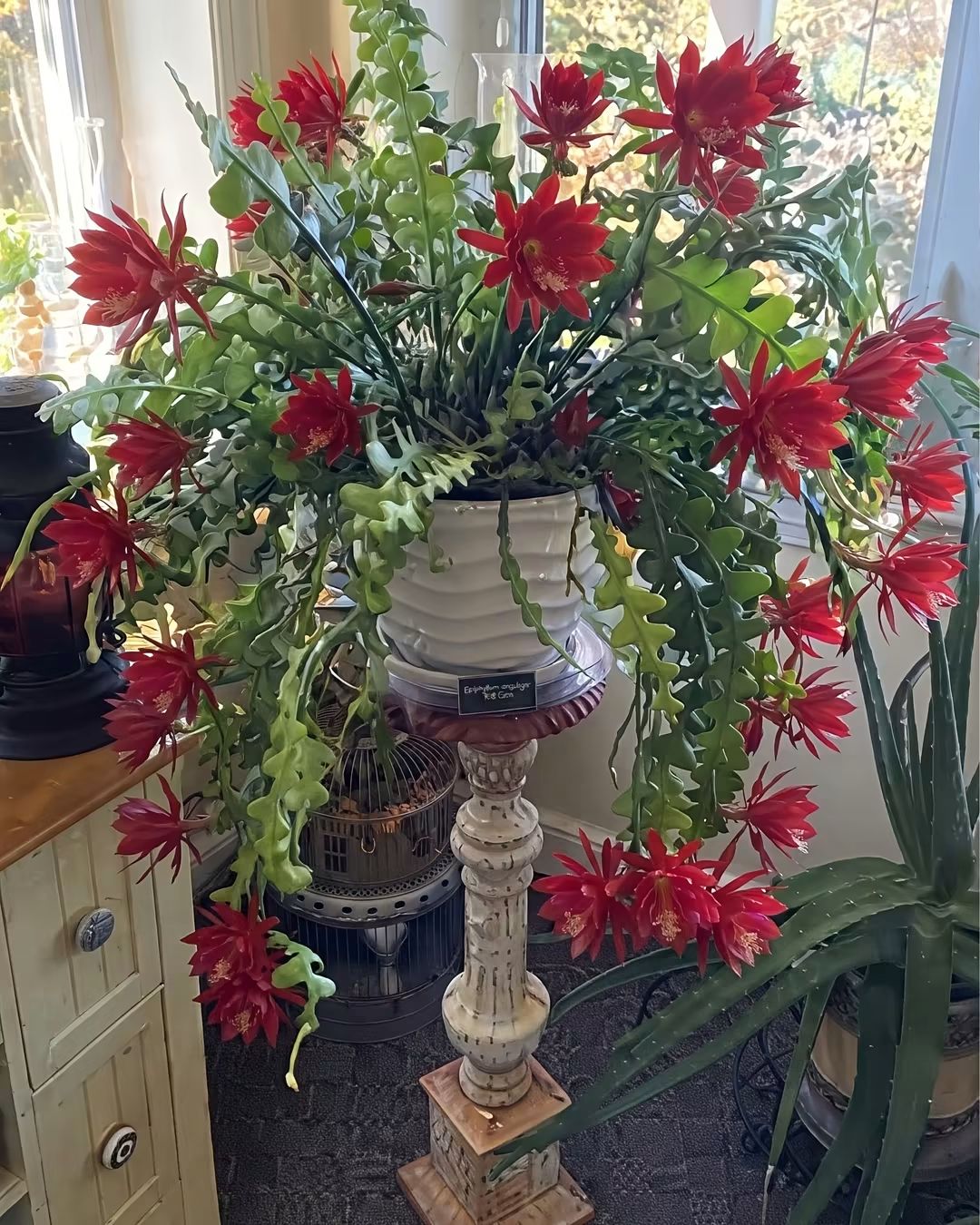
If you have ever admired a mature, cascading Fishbone Cactus (Disocactus anguliger, also known as the Zigzag Cactus) overflowing with dramatic, starry crimson blossoms—just like the breathtaking specimen perched on the decorative pedestal above—you know how rewarding these tropical beauties can be. While many indoor gardeners struggle to get their zigzag cactus to produce more than a single stray flower, the real key lies in mimicking its native rainforest canopy diet. By pairing a nutrient-dense brown liquid coffee compost tea with slow-release white fertilizer granules, you provide the exact organic enrichment, beneficial microbiology, and steady mineral support needed to trigger massive bud sets, intensify deep red flower pigments, and sustain lush, cascading stems year after year.
Understanding the Fishbone Cactus: Why Standard Fertilizers Fall Short
Unlike desert cacti that grow in sandy, mineral-heavy soil, the Fishbone Cactus is an epiphytic plant native to the humid, forested regions of Mexico. In the wild, it clings to the bark of tall trees, drawing moisture and nutrients from decaying leaves, moss, rainwater, and organic canopy debris rather than heavy garden soil.
Because its roots are adapted to airy, organic matter, feeding it harsh synthetic liquid fertilizers often leads to salt buildup, burned root tips, and sudden bud drop. To unlock truly spectacular blooming, your feeding routine needs to replicate the gentle, slow-breaking-down nutrition of a forest floor—which is exactly what the Brown Liquid Coffee Compost Protocol achieves.
Why the Brown Liquid Coffee Compost Protocol Transforms Fishbone Cacti
Combining a brewed organic tea with controlled-release mineral granules creates a two-stage feeding system that supports both immediate cellular energy and long-term structural strength:
- The Brown Liquid Coffee Compost Tea: Steeping finished organic compost alongside a measured amount of used, diluted coffee grounds creates a rich, dark brown liquid teeming with beneficial soil microbes, humic acids, and gentle, bio-available nutrients. The used coffee grounds contribute trace nitrogen, potassium, magnesium, and a mild, epiphyte-friendly acidity that helps unlock locked-up nutrients in the potting mix. Meanwhile, the compost tea introduces living microbiology that coats the root zone, improves nutrient absorption, and stimulates vigorous bud formation along the scalloped edges of the stems.
- Slow-Release White Granules: While the brown liquid provides an immediate organic and microbial boost, top-dressing the surface with balanced white slow-release granules ensures that your plant never runs out of fuel between feedings. With every regular watering, these granules release a micro-dosed stream of phosphorus and potassium—the two primary elements responsible for thickening flattened stems, strengthening flower stalks, and helping dozens of heavy blossoms open simultaneously without exhausting the plant.
- Epiphyte-Safe Synergy: Together, this dual approach feeds the plant cleanly without harsh chemical spikes, keeping the distinctive zigzag foliage plump, deep green, and resilient.
How to Brew Your Brown Liquid Coffee Compost Tea at Home
Making a safe, effective batch of coffee compost tea is simple, inexpensive, and takes very little effort:
- Gather Your Base Ingredients: You will need 1 cup of mature, finished organic compost (or earthworm castings), 2 tablespoons of used, cooled coffee grounds (never use fresh, unbrewed grounds, which are too acidic and high in caffeine), and 1 gallon of dechlorinated or rainwater.
- Steep the Mixture: Place the compost and used coffee grounds inside a breathable mesh bag, cheesecloth, or old cotton sock, and submerge it in your gallon of water.
- Brew and Aerate: Let the mixture steep for 24 to 48 hours in a shaded spot, stirring it vigorously a few times a day to keep oxygen circulating and encourage beneficial aerobic microbes to multiply.
- Dilute to the Right Color: Once brewed, remove the solids. If the liquid looks pitch black, dilute it with fresh water until it resembles weak iced tea or a rich, translucent amber-brown liquid. Overly concentrated tea can overwhelm container roots, so keeping it mild is essential.
Step-by-Step Care & Feeding Guide for Massive Blooms
To turn your Fishbone Cactus into a thriving, flower-covered centerpiece, follow this complete seasonal routine:
- Use an Airy Epiphytic Potting Mix: Ensure your plant is potted in a fast-draining blend made of standard potting soil mixed with orchid bark, perlite, and coco coir. Good drainage prevents waterlogged roots while allowing air to reach the root system.
- Top-Dress with Slow-Release White Granules: At the start of spring, scatter 1/2 to 1 teaspoon of slow-release white fertilizer granules evenly across the surface of the potting mix, keeping the granules slightly away from the base of the main stems. Reapply every three to four months during active growth.
- Apply the Monthly Brown Liquid Drench: Once a month throughout spring and summer, use your brewed brown liquid coffee compost tea in place of a regular watering. Pour it slowly over the potting mix until it runs freely out of the drainage holes, ensuring the entire root ball is evenly saturated. Stop feeding in late autumn and winter while the plant rests.
- Provide Bright, Indirect Sunlight: Position your cactus near an east- or west-facing window where it receives plenty of bright, filtered light. A few hours of gentle morning sun will supercharge photosynthesis and trigger abundant flower buds along the notches of the stems, whereas harsh afternoon sun can bleach or scorch the foliage.
- Master the Soak-and-Dry Watering Rhythm: During spring and summer, water thoroughly whenever the top two inches of the potting mix feel dry to the touch. In autumn, slightly reduce watering and expose the plant to cooler nighttime temperatures (around 50°F to 55°F / 10°C to 13°C) for a few weeks—this natural seasonal cue, combined with your summer mineral and compost tea buildup, triggers explosive flowering.
- Maintain Comfortable Humidity & Airflow: Because this is a tropical epiphyte, it appreciates moderate household humidity and gentle air circulation. Avoid placing it directly over heating vents or cold drafts, especially once flower buds begin to swell.
Troubleshooting Common Fishbone Cactus Issues
- Buds Dropping Before Opening: This usually happens due to sudden temperature swings, dry air, or moving the pot once buds have formed. Keep the plant in one consistent, bright spot while blooming and maintain even moisture.
- Limp or Wrinkled Stems: If the zigzag stems look thin or wrinkled, check the soil. If it is bone dry, give it a deep soak; if the soil is soggy, inspect the roots for rot and repot into fresher, chunkier bark mix.
- Lush Green Growth with No Flowers: A plant that grows long stems without blooming typically needs brighter indirect light and a cooler rest period in autumn to shift its energy from foliage growth to flower production.