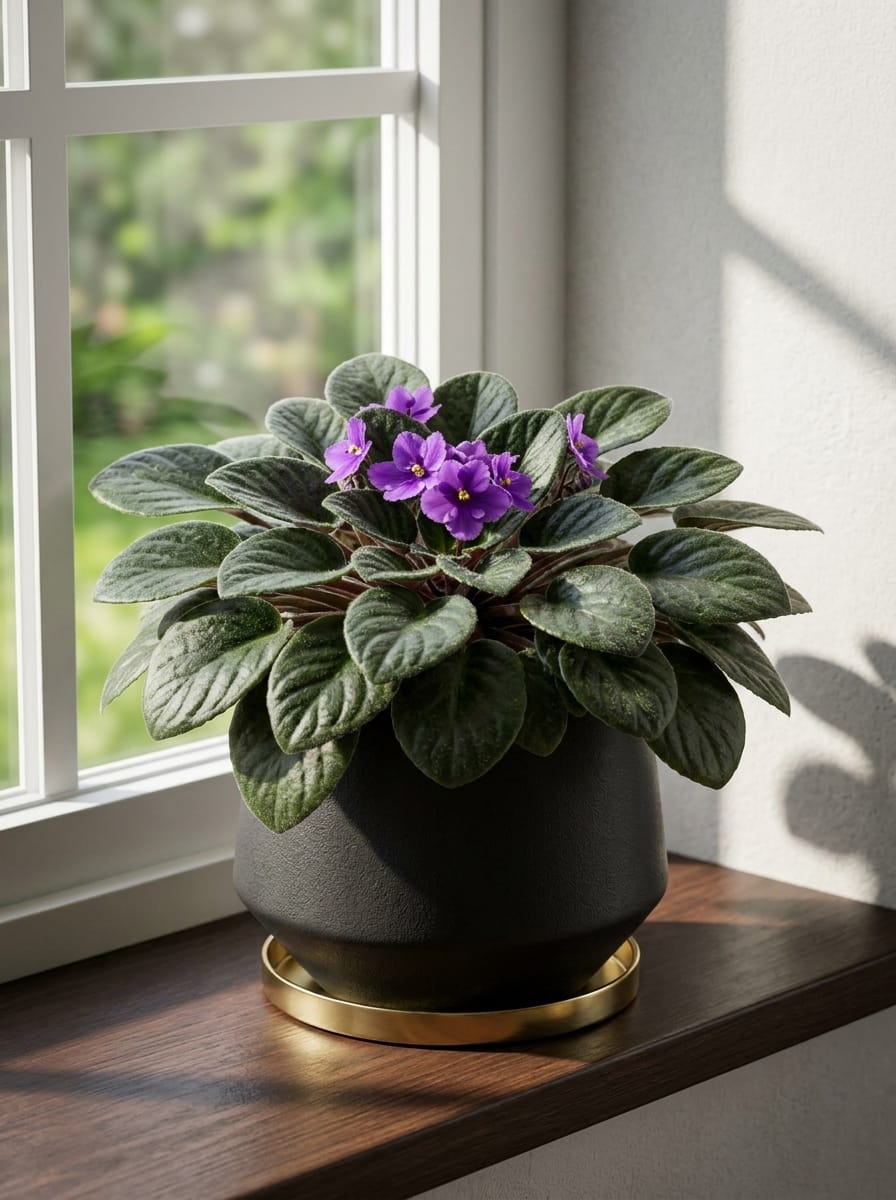
African Violet Care: How a Gentle Blue Liquid Fertilizer Can Help Your Plant Grow Healthier Leaves and Beautiful Purple Flowers 🌸💙
African violets are among the most beautiful flowering houseplants. Their soft, velvety green leaves and delicate purple flowers can brighten almost any room. However, keeping them healthy and encouraging continuous flowering requires the right balance of light, water, and nutrients.
If your African violet has plenty of green leaves but produces very few flowers, or its growth seems slow, it may need better growing conditions and a suitable fertilizer.
One interesting gardening technique involves using a diluted blue liquid fertilizer. But what exactly is this blue liquid, and how does it help your plant?
Let’s explore how to use it properly and how to keep your African violet looking beautiful throughout the year.
💙 What Is the Blue Liquid?
The blue liquid commonly used for flowering houseplants is often a water-soluble plant fertilizer.
Its blue color usually comes from a harmless colorant added by the manufacturer to make the fertilizer easier to recognize after mixing with water. The color itself does not provide nutrients or make plants grow faster.
Depending on the product, this fertilizer may contain important nutrients such as:
- Nitrogen (N): Supports healthy green leaves and overall growth.
- Phosphorus (P): Supports root development and flowering processes.
- Potassium (K): Helps maintain strong plant tissues and general plant health.
- Micronutrients: Such as iron, magnesium, and manganese, which support healthy growth.
For African violets, choose a fertilizer specifically formulated for African violets or flowering houseplants.
Important: The blue color alone does not identify the fertilizer. Always check the product label and use the recommended dilution.
🌸 Why African Violets Need Proper Fertilizing
African violets grow in relatively small pots, which means nutrients in their growing medium can become depleted over time.
A suitable fertilizer can help support:
- Healthy, vibrant green foliage.
- Consistent new leaf development.
- Strong root growth.
- Better overall plant vigor.
- Normal flower production when light and other conditions are suitable.
Remember that fertilizer is not a flowering miracle. If your plant does not receive enough light or has unhealthy roots, adding more fertilizer will not solve the problem.
🪴 How to Use Blue Liquid Fertilizer
Follow these simple steps to feed your African violet safely.
Step 1: Prepare the fertilizer
Choose a liquid African violet fertilizer and dilute it according to the manufacturer’s instructions. If you are unsure about the plant’s tolerance, begin with a weaker solution, such as one-quarter of the recommended strength.
Step 2: Prepare the water
Use room-temperature water. Avoid very cold water because African violets can be sensitive to sudden temperature changes.
Step 3: Apply carefully
Water the growing medium gently, avoiding the center crown and excessive wetting of the leaves.
You can also use bottom watering by placing the pot in a shallow container containing the diluted fertilizer solution. Allow the growing medium to absorb some moisture, then remove the pot and let excess water drain.
Step 4: Maintain a regular routine
Feed your African violet according to the fertilizer label and its growing conditions. Avoid applying concentrated fertilizer too frequently.
Step 5: Watch the plant
Observe the leaves and flowers over the following weeks. Healthy new growth is a better indicator of success than expecting flowers to appear immediately.
☀️ The Secret to Beautiful African Violet Flowers
Fertilizer is only one part of successful African violet care.
1. Give it bright, indirect light
Place your plant near a bright window where it receives plenty of filtered natural light. Avoid strong direct afternoon sunlight, which can damage its delicate leaves.
2. Water correctly
Keep the growing medium lightly moist but never constantly waterlogged. African violets dislike sitting in excess water.
3. Choose the right soil
Use a light, airy African violet potting mix that allows water to drain while retaining enough moisture for the roots.
4. Maintain comfortable temperatures
African violets generally grow well in comfortable indoor temperatures, approximately 65–75°F (18–24°C). Protect them from cold drafts and sudden temperature changes.
5. Remove old flowers
Gently remove faded flowers and damaged leaves to keep the plant tidy and allow it to direct its energy toward healthy growth.
⚠️ Common Mistakes to Avoid
- Never use undiluted concentrated fertilizer.
- Do not assume a darker blue solution is more effective.
- Avoid fertilizing dry, stressed, or unhealthy plants heavily.
- Do not allow water to remain trapped in the crown.
- Avoid placing the plant in harsh direct sunlight.
- Never combine several fertilizers without checking their compatibility.
Excess fertilizer can cause salt buildup, brown leaf edges, damaged roots, and poor growth.
🌿 How Long Does It Take to See Results?
Every African violet is different. With appropriate lighting, watering, and nutrition, you may notice healthier new growth over several weeks.
Flowering can take longer and depends on the plant’s maturity, variety, light exposure, and overall condition.
The goal is not to force your African violet to bloom overnight. It is to create the conditions that allow it to grow naturally and produce beautiful flowers.
💜 Final Thoughts
A healthy African violet does not need complicated treatments or expensive gardening tricks. It needs consistent care, suitable light, proper watering, and balanced nutrition.
A diluted blue liquid fertilizer can be a useful part of that routine when it is a suitable commercial plant fertilizer used according to its instructions.
Give your plant a little attention, avoid overwatering, and be patient. Those beautiful purple flowers can make all your efforts worthwhile!