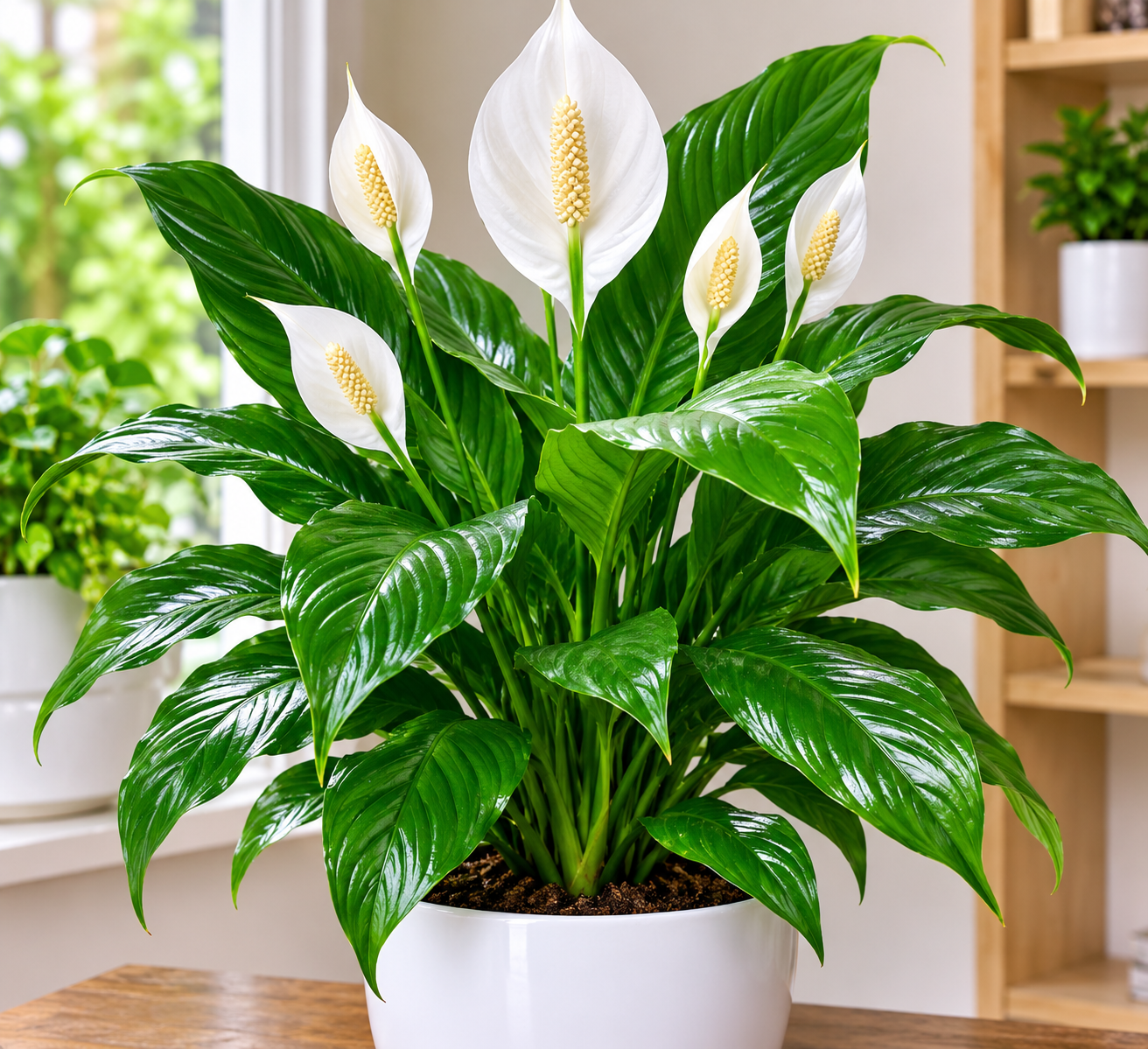
How to Propagate Peace Lilies and Grow Healthy, Beautiful Plants Using Natural Organic Care
The Peace Lily (Spathiphyllum) is one of the most elegant and popular indoor plants. Its beautiful deep-green leaves, graceful white flowers, and ability to thrive in indoor environments make it a wonderful addition to homes, offices, and shaded garden spaces.
Many plant lovers wonder how they can multiply their Peace Lily without purchasing another plant. The good news is that you can propagate a mature Peace Lily at home using a simple division technique. With proper watering, suitable soil, and gentle organic care, one mature plant can become several healthy new plants.
If you want to grow more Peace Lilies while keeping their leaves green, glossy, and healthy, here is a practical step-by-step guide.
1. Choose a Healthy, Mature Peace Lily
Start with a mature Peace Lily that has several groups of stems growing from its base.
Look for a plant with firm green leaves, healthy roots, and no signs of severe disease or pest damage.
Unlike some flowering plants, Peace Lilies are not usually propagated successfully from individual leaves or ordinary stem cuttings. The best method is dividing the root clump into smaller sections, making sure every section has its own roots and healthy leaves.
2. Remove the Plant from Its Pot
Water the plant lightly a few hours before dividing it if the soil is very dry.
Carefully remove the Peace Lily from its container. Hold the plant near its base and gently loosen the root ball.
Brush away some of the old soil to reveal the roots and identify the separate clusters of stems.
Be patient during this step because Peace Lily roots can be delicate.
3. Divide the Plant into Smaller Sections
Look for natural groups of stems growing together.
Using your fingers, gently separate the root clusters. If they are tightly connected, use a clean, sterilized knife to divide them carefully.
Each new section should have:
- Several healthy green leaves.
- A growing point or crown.
- A good amount of healthy roots.
Avoid creating divisions with leaves but no roots, because they may struggle to survive.
4. Prepare a Nutrient-Rich Organic Soil Mixture
Peace Lilies prefer a loose, moisture-retaining but well-draining growing medium.
A suitable homemade mixture can include:
- 40% quality potting soil.
- 30% coco coir.
- 20% perlite.
- 10% mature, well-decomposed compost.
Mix everything thoroughly.
This combination helps retain enough moisture while allowing excess water to drain away. The compost provides gentle organic nutrition, while perlite improves aeration around the roots.
5. Plant Your New Peace Lily Divisions
Choose clean pots with drainage holes.
Fill each container partially with the prepared soil mixture. Position the plant division in the center and spread its roots gently.
Add more soil around the roots without burying the crown too deeply.
Press the soil lightly to stabilize the plant, then water thoroughly until excess water drains from the bottom.
Never leave the pot sitting in standing water.
6. Can You Use Milk and Organic Fertilizer?
Some gardeners use diluted milk as a homemade plant treatment because it contains small quantities of nutrients, including calcium and proteins.
However, pouring milk directly into Peace Lily pots is not recommended. It can spoil, produce unpleasant odors, attract insects, and encourage unwanted microbial growth.
A safer natural approach is to use mature compost or a properly diluted liquid organic fertilizer designed for indoor plants.
After dividing your Peace Lily, allow it time to recover before applying fertilizer. Once you see healthy new growth, you can begin feeding it gently according to the fertilizer instructions.
7. Water Your Peace Lily Correctly
Peace Lilies love consistently slightly moist soil, but they do not like waterlogged roots.
Check the top inch of soil with your finger. If it feels dry, water the plant thoroughly.
Use room-temperature water whenever possible.
Yellowing leaves, persistently wet soil, and soft roots may indicate overwatering. Drooping leaves can indicate thirst, although other problems can cause similar symptoms.
The goal is to maintain balanced moisture rather than following a rigid daily watering schedule.
8. Give It the Right Amount of Light
Peace Lilies grow beautifully in bright, indirect light.
Place your plant near a window where it receives plenty of natural light without harsh direct afternoon sunlight.
Low-light conditions may keep the plant alive, but flowering can become less frequent.
Avoid placing it next to heaters, air conditioners, or cold drafts.
9. Encourage More Beautiful White Flowers
Once your divided Peace Lily becomes established, focus on maintaining healthy growing conditions.
Use a balanced fertilizer formulated for indoor flowering plants at the recommended dilution.
Remove yellow or damaged leaves using clean scissors.
Cut old flower stalks near the base once their white flowers turn green or brown and begin to fade.
Keep the leaves clean by gently wiping away dust with a damp, soft cloth.
Remember that Peace Lilies do not need excessive fertilizer to produce flowers. Too much feeding can damage their roots and cause leaf problems.
10. Common Peace Lily Growing Mistakes
Avoid these common mistakes:
- Trying to propagate Peace Lilies from individual leaves.
- Dividing the plant into sections without sufficient roots.
- Using heavy soil that holds too much water.
- Pouring milk directly into the pot.
- Applying strong fertilizer immediately after division.
- Exposing the leaves to intense direct sunlight.
- Allowing the roots to remain in standing water.
- Using pots without drainage holes.
Final Thoughts
Propagating Peace Lilies through division is an excellent way to create more beautiful indoor plants without spending money on new mature specimens.
With healthy roots, a well-aerated organic soil mixture, balanced watering, and bright indirect light, your new Peace Lily divisions can gradually establish themselves and develop lush green foliage.
Remember that successful gardening does not depend on adding many homemade ingredients to the soil. The most important factors are healthy roots, suitable growing conditions, and consistent care.
Start with one mature Peace Lily, divide it carefully, and enjoy watching several beautiful new plants grow in your home!
One healthy Peace Lily can become a whole collection of elegant green plants with beautiful white flowers! 🌿🤍