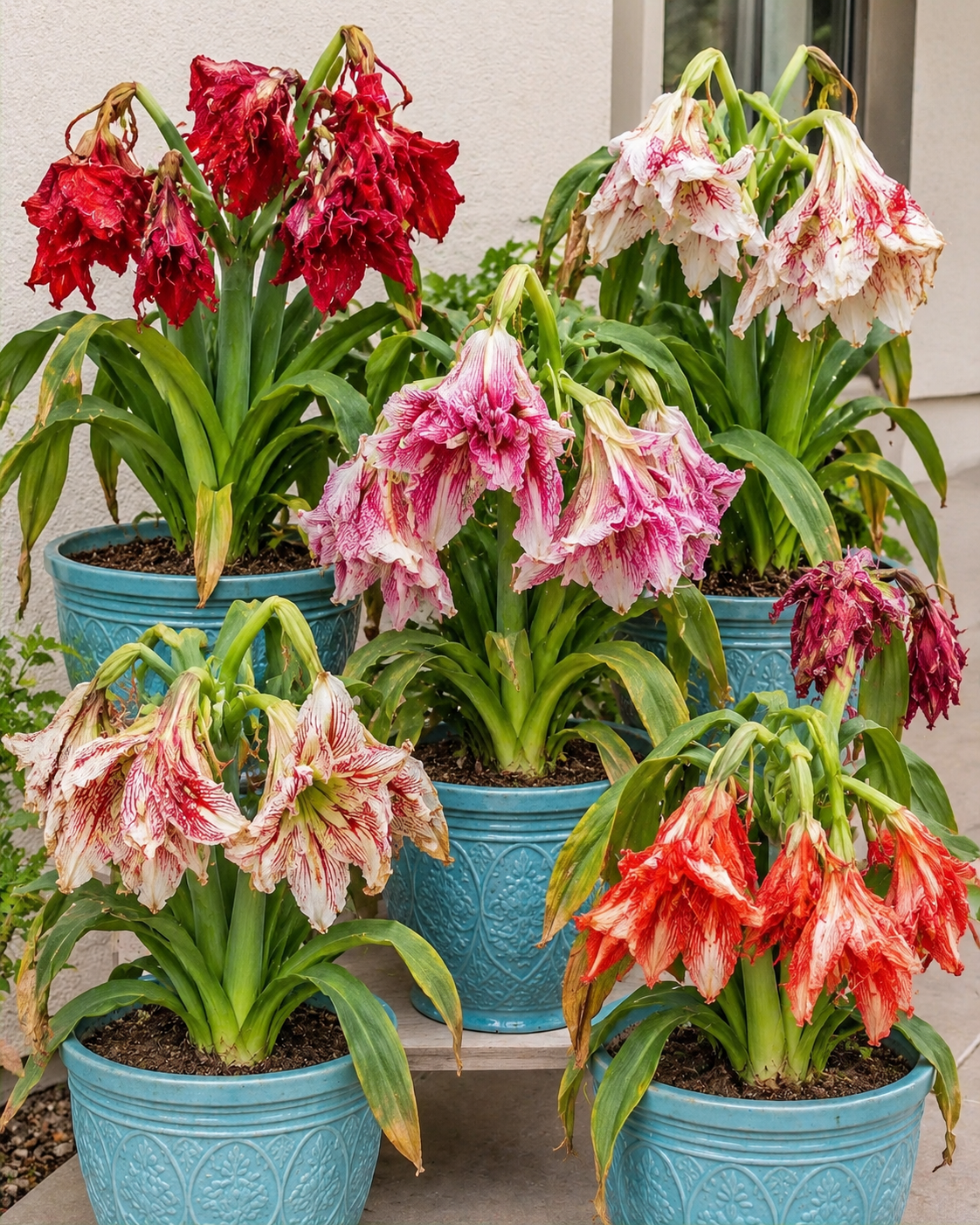
Amaryllis Care: Should You Sprinkle White Epsom Salt Granules Around Your Plants?
Amaryllis flowers are famous for their spectacular blooms, bold colors, and elegant trumpet-shaped petals. From deep red and bright orange to delicate pink and beautiful white varieties, these flowering plants can transform any home, patio, or garden into a colorful display.
But what happens when your Amaryllis starts looking tired? Drooping flowers, yellowing leaves, and slow growth can leave plant lovers wondering what their plants need. One gardening trick that often attracts attention is sprinkling white Epsom salt granules around the base of the plant.
Could Epsom salt really help your Amaryllis? Let’s explore what it contains, what it can do, and how to care for these beautiful flowering bulbs properly.
What Is Epsom Salt?
Epsom salt is magnesium sulfate, a mineral compound that provides two nutrients plants use:
- Magnesium: An essential element involved in chlorophyll production and photosynthesis.
- Sulfur: A nutrient plants need for several important growth processes.
Magnesium helps plants maintain healthy green foliage, while sulfur contributes to normal plant development. However, these nutrients are only beneficial when a plant actually needs them.
Epsom salt is not a complete fertilizer. It does not provide the full range of nutrients required for healthy Amaryllis growth, and adding more does not automatically produce more flowers.
Can Epsom Salt Help Amaryllis Plants?
It may help when a plant is suffering from a confirmed magnesium deficiency. In that situation, supplying magnesium can help correct the nutrient shortage.
However, Epsom salt is not a proven flowering booster for every Amaryllis plant. If the growing medium already contains enough magnesium, adding extra may offer no benefit and could contribute to an unhealthy nutrient balance.
Before using Epsom salt, consider the plant’s overall condition, watering routine, soil quality, and growing environment. A soil test or professional diagnosis is a better starting point than guessing.
How to Recognize Possible Magnesium Deficiency
Magnesium deficiency can sometimes appear as:
- Yellowing between the veins of older leaves.
- Green veins that remain visible against yellowing leaf tissue.
- Reduced vigor or slower growth.
- Brown or damaged areas in more advanced cases.
These symptoms are not exclusive to magnesium deficiency. Overwatering, underwatering, poor drainage, insufficient light, root damage, and other nutrient problems can produce similar signs.
For that reason, do not assume every yellow leaf means your Amaryllis needs Epsom salt.
How to Apply Epsom Salt Safely
If a soil test or reliable diagnosis confirms that your Amaryllis needs additional magnesium, use a suitable magnesium sulfate product according to its label or a professional recommendation.
Keep these precautions in mind:
- Confirm the need first: Do not apply Epsom salt simply because the plant looks weak.
- Follow the recommended amount: More product does not mean better results.
- Avoid piling granules against the bulb: Keep the bulb’s neck and growing tissue free from concentrated material.
- Use a suitable growing medium: Good drainage is essential for healthy Amaryllis roots.
- Monitor the plant: Watch for changes in leaf condition and overall growth.
Never apply a large, unmeasured handful of Epsom salt around a potted Amaryllis. Excess salts can interfere with water uptake and nutrient balance.
Why Is Your Amaryllis Drooping?
If your Amaryllis flowers or leaves are drooping, Epsom salt may not be the answer. First, identify the cause.
1. The Flowers May Simply Be Finishing Their Bloom Cycle
Amaryllis flowers are temporary. Individual blooms naturally fade after flowering, even when the bulb and plant are healthy. Remove faded flowers and allow the green foliage to continue growing.
2. The Plant May Be Getting Too Much Water
Amaryllis bulbs are vulnerable to rot when they remain in waterlogged soil. Use a container with drainage holes and allow excess water to escape.
3. The Plant May Need More Light
During active growth, Amaryllis generally benefits from a bright location with plenty of sunlight. Insufficient light can lead to weak, stretched foliage.
4. The Bulb May Be Under Stress
A damaged bulb, poor drainage, unsuitable temperatures, or root problems can affect the entire plant. Check the bulb and growing medium if the plant continues to decline.
7 Essential Amaryllis Care Tips for Beautiful Blooms
1. Choose a Suitable Pot
Use a sturdy container with drainage holes. Amaryllis bulbs generally perform well when slightly pot-bound, so an excessively large pot is unnecessary.
2. Use Well-Draining Potting Mix
Choose a quality potting mix that drains freely while retaining enough moisture for the roots. Avoid compacted soil that stays wet for long periods.
3. Provide Bright Light
Place actively growing Amaryllis in a bright location. A sunny window can support strong leaves and healthy growth. Rotate the pot occasionally to help the flower stalk grow upright.
4. Water Carefully
Water when the upper layer of the potting mix begins to dry. Keep the soil appropriately moist during active growth, but never leave the bulb sitting in standing water.
5. Feed During Active Growth
After flowering, continue caring for the green leaves. A balanced fertilizer formulated for flowering plants can support the bulb as it stores energy for future growth. Follow the label instructions and avoid overfeeding.
6. Keep the Leaves
Do not cut healthy green leaves immediately after flowering. They help the bulb produce and store energy for the next growing cycle. Remove foliage only when it has naturally yellowed and died back.
7. Allow a Rest Period When Appropriate
Many Amaryllis varieties can be encouraged to flower again by following a suitable rest period. The timing and conditions depend on the variety and growing method. Reduce watering and allow the plant to enter dormancy only when its growth cycle calls for it.
How to Encourage Amaryllis to Bloom Again
One of the most rewarding parts of growing Amaryllis is seeing the bulb produce flowers again.
After the flowers fade, remove the spent flower stalk while preserving healthy leaves. Keep the plant in a bright location, water appropriately, and provide balanced nutrition during active growth.
The leaves continue producing energy that the bulb needs for future flowering. When the plant reaches the appropriate stage of its cycle, a suitable rest period can help prepare it for another display.
Remember: healthy bulbs, good light, proper watering, and patience matter much more than adding an unneeded homemade treatment.
Common Epsom Salt Mistakes to Avoid
Even though Epsom salt supplies magnesium and sulfur, incorrect use can create problems.
Avoid these common mistakes:
- Applying it to every plant without checking nutrient needs.
- Using large quantities around the roots.
- Treating it as a replacement for balanced fertilizer.
- Expecting wilted flowers to become fresh again.
- Assuming it will force an Amaryllis bulb to produce more flower stalks.
- Repeating applications without monitoring the soil and plant.
The best gardening results come from understanding what a plant needs rather than relying on one treatment for every problem.
Frequently Asked Questions
Does Epsom salt make Amaryllis bloom more?
There is no reliable evidence that Epsom salt increases flowering in Amaryllis plants that already have sufficient magnesium. It is useful as a magnesium source when a deficiency is confirmed.
Can I sprinkle dry Epsom salt directly onto the soil?
Do not apply unmeasured amounts. For potted Amaryllis, use magnesium sulfate only when needed and follow an appropriate product recommendation.
Will Epsom salt turn yellow leaves green again?
If yellowing is caused by magnesium deficiency, correcting that deficiency may support healthier new growth. Severely damaged or dead leaf tissue generally will not turn green again.
Why are my Amaryllis flowers drooping?
Flowers naturally droop as they age. If the foliage is also declining, investigate watering, drainage, light, bulb condition, and possible nutrient problems.
What is the best fertilizer for Amaryllis?
A balanced fertilizer suitable for flowering bulbs or houseplants can support active growth when used according to its label. Healthy green leaves after flowering are especially important for replenishing the bulb.
Can I use Epsom salt on all my flowering plants?
No. Different plants and growing conditions have different nutrient requirements. Use it only when additional magnesium is needed.
Final Thoughts: Give Your Amaryllis the Care It Really Needs
Sprinkling white Epsom salt granules around an Amaryllis may look like a simple gardening trick, but it is important to understand what the plant actually needs before trying it.
Epsom salt can supply magnesium and sulfur, but it is not a miracle fertilizer or a guaranteed way to produce bigger flowers. If your Amaryllis is drooping, start by checking its watering, drainage, light, and bulb condition.
With the right care routine, healthy foliage, and a little patience, these beautiful flowering bulbs can continue adding spectacular color to your home and garden.
A beautiful Amaryllis display begins with healthy bulbs, strong roots, and informed plant care!