Epsom Salt for Peace Lilies: Can This White Tablet Help Your Plant Grow Healthier and Produce Beautiful Flowers?
Discover the Role of Epsom Salt in Indoor Plant Care
Peace lilies are among the most beautiful and popular indoor plants. Their elegant white flowers, glossy green leaves, and graceful appearance make them a wonderful addition to any home.
Every plant lover wants to see their peace lily looking healthy, producing fresh green leaves, developing strong roots, and rewarding them with beautiful white blooms.
One gardening ingredient that frequently attracts attention is Epsom salt. It is often used in gardening as a source of magnesium and sulfur, two essential nutrients involved in important plant functions.
But what happens when a white Epsom salt tablet is added to water or used as part of a plant-care routine? Can it help a peace lily produce healthier leaves? Does it encourage flowering? And what is the safest way to use it?
Let’s explore the science behind this popular gardening ingredient and understand how it fits into a proper peace lily care routine.
What Is Epsom Salt?
Epsom salt is a naturally occurring mineral compound known chemically as magnesium sulfate.
Unlike ordinary table salt, which is primarily sodium chloride, Epsom salt contains magnesium and sulfur.
These two elements are essential for plant development and participate in several important biological processes.
Magnesium is especially important because it is the central atom in chlorophyll, the green pigment that allows plants to capture light energy during photosynthesis.
Sulfur contributes to the formation of certain amino acids, proteins, and enzymes that plants need for normal growth.
Although both nutrients are important, Epsom salt is not a complete fertilizer. It does not provide all the essential nutrients required by indoor plants.
Why Does Magnesium Matter for Beautiful Green Leaves?
One of magnesium’s most important functions is its role in chlorophyll production.
Chlorophyll allows plants to absorb light and convert that energy into chemical energy through photosynthesis.
When a plant experiences a genuine magnesium deficiency, its older leaves may develop yellow areas between the veins while the veins remain relatively green.
This condition is known as interveinal chlorosis.
Correcting a confirmed magnesium deficiency can help restore normal plant functions and support healthy foliage.
However, yellow leaves do not always indicate magnesium deficiency.
Other possible causes include:
- Excessive watering.
- Poor drainage.
- Damaged roots.
- Insufficient light.
- Natural aging of older leaves.
- Other nutrient deficiencies.
Before adding Epsom salt, it is important to identify the actual cause of the problem.
How Can Epsom Salt Support Peace Lily Nutrition?
Magnesium and sulfur contribute to several essential plant processes.
Magnesium and Photosynthesis
Magnesium is required for chlorophyll and supports the plant’s ability to capture light energy.
Sulfur and Protein Formation
Sulfur is involved in the production of certain amino acids and proteins necessary for normal plant metabolism.
Supporting Normal Plant Development
When these nutrients are available in appropriate amounts, they help plants maintain their normal physiological functions.
However, adding extra magnesium to a plant that already receives sufficient nutrition does not necessarily produce bigger leaves, faster growth, or more flowers.
Balanced nutrition is always more important than adding individual nutrients without identifying a need.
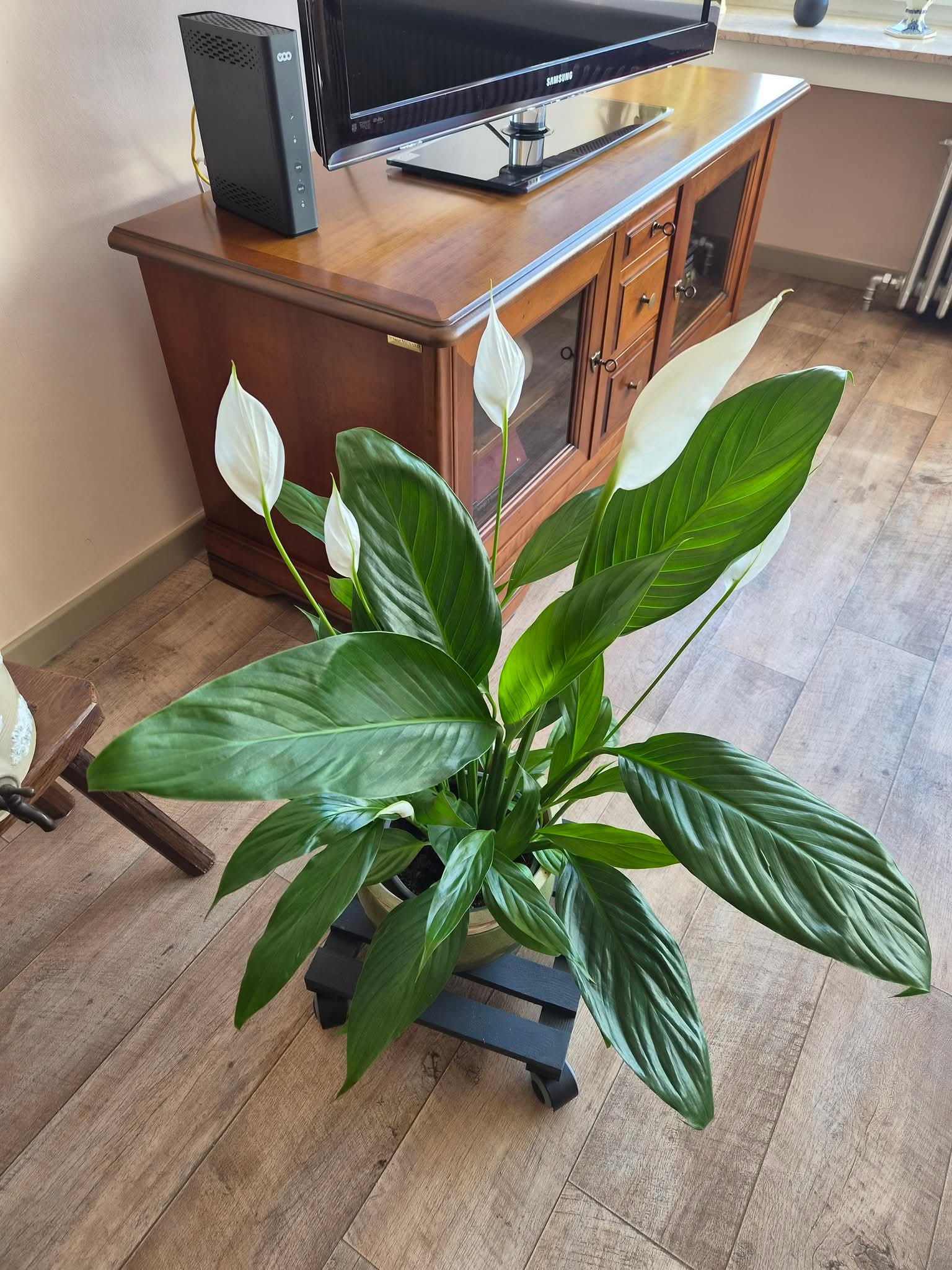
Understanding the Beautiful Peace Lily in the Picture
The plant shown in this photograph appears to be a Peace Lily, scientifically known as Spathiphyllum.
It is admired for its large, glossy green leaves and elegant white flower-like structures.
The white structures are actually called spathes. The tiny true flowers are located on the central spike, known as the spadix.
Peace lilies are tropical plants that naturally grow in warm, humid environments, often under the shade of larger vegetation.
This explains why they generally prefer bright, indirect light rather than intense direct sunlight.
They also appreciate consistently suitable moisture levels, but their roots should never remain waterlogged.
Can Epsom Salt Encourage New Leaves?
One of the most exciting moments for plant lovers is seeing a fresh green leaf slowly emerge from the center of a peace lily.
New leaves are signs of active growth, but producing them requires more than magnesium alone.
Plants need several essential nutrients, including nitrogen, phosphorus, potassium, calcium, magnesium, and sulfur.
Nitrogen is particularly important for the development of leaves because it contributes to chlorophyll, amino acids, and proteins.
Magnesium supports photosynthesis, while potassium helps regulate water movement and plant metabolism.
When all these nutrients are available in appropriate amounts, together with sufficient light and healthy roots, the plant has better conditions for producing new foliage.
Epsom salt cannot replace a balanced fertilizer, and it should not be considered a guaranteed new-leaf stimulant.
Does Epsom Salt Help Peace Lilies Produce More White Flowers?
The beautiful white blooms are one of the main reasons people love peace lilies.
However, Epsom salt is not a flowering stimulant.
Flowering depends on several factors, including:
- Plant maturity.
- Adequate indirect light.
- Healthy roots.
- Balanced nutrition.
- Appropriate watering.
- Suitable temperatures.
- Overall plant condition.
If a plant has a genuine magnesium deficiency, correcting it may help restore normal growth.
But applying extra magnesium to an already healthy peace lily will not necessarily increase the number of flowers.
A balanced indoor plant fertilizer is generally a better choice for supplying the complete range of nutrients needed for healthy development.
How to Use an Epsom Salt Tablet Safely
Before using any white tablet in your plant-care routine, make sure you know exactly what it contains.
Not every white tablet is pure Epsom salt. Some products may contain additional ingredients, binders, fragrances, or substances intended for human consumption.
Only use a product clearly identified as suitable magnesium sulfate for horticultural use.
If magnesium supplementation is genuinely needed, use a soluble product according to a reliable plant-specific recommendation.
Important precautions include:
- Do not place an unidentified tablet directly into the pot.
- Do not guess the dosage.
- Avoid concentrated solutions around delicate roots.
- Do not apply magnesium repeatedly without establishing that it is needed.
- Do not use Epsom salt as a replacement for complete plant fertilizer.
- Monitor the plant after any nutritional treatment.
Excess magnesium can interfere with the absorption of other important nutrients, particularly calcium and potassium.
For a healthy peace lily, unnecessary supplementation is best avoided.
The Best Way to Keep Your Peace Lily Healthy
Epsom salt is only a small part of plant nutrition. Everyday care has a much greater influence on the long-term health of your peace lily.
1. Provide Bright, Indirect Light
Place your plant in a bright location where it receives filtered sunlight.
Avoid strong direct sunlight because it can scorch the leaves.
2. Water According to Its Needs
Peace lilies enjoy consistently appropriate moisture.
Water when the upper portion of the growing medium begins to dry, and allow excess water to drain away.
Avoid leaving the roots sitting in standing water.
3. Choose a Suitable Potting Mix
Use a well-draining indoor plant mixture that retains some moisture while allowing air to reach the roots.
A pot with drainage holes is essential.
4. Maintain Suitable Humidity
Peace lilies generally appreciate moderate to higher humidity.
If indoor air becomes very dry, consider improving the surrounding humidity without keeping the leaves or soil constantly wet.
5. Feed with Balanced Fertilizer
During active growth, use a complete liquid houseplant fertilizer at the recommended concentration.
Avoid excessive feeding, as accumulated fertilizer salts can damage roots.
6. Clean the Leaves
Large peace lily leaves can collect dust.
Gently wipe them with a soft, damp cloth to remove dust and help maintain their attractive appearance.
7. Remove Faded Flowers and Damaged Leaves
Use clean scissors to remove completely faded flower stalks and dead leaves.
This helps maintain a neat appearance and allows you to monitor the plant’s health.
Common Mistakes When Using Epsom Salt on Indoor Plants
Many gardening enthusiasts believe that adding more nutrients always leads to faster and healthier growth.
Unfortunately, excessive supplementation can create nutritional imbalances.
Some common mistakes include:
- Adding magnesium without identifying a deficiency.
- Using an unknown white tablet.
- Applying excessive concentrations.
- Replacing balanced fertilizer with Epsom salt.
- Ignoring watering and drainage problems.
- Expecting immediate flowering after treatment.
- Applying several homemade treatments at the same time.
The secret to successful gardening is understanding what your plant needs rather than giving it every product available.
What Changes Should You Expect from Proper Peace Lily Care?
When a peace lily receives suitable growing conditions and balanced nutrition, you may gradually notice:
- Healthy, glossy green leaves.
- New leaves emerging from the center.
- Stronger and more established growth.
- Improved overall plant appearance.
- Beautiful white spathes when the plant is ready to flower.
Remember that every plant grows at its own pace.
Light, temperature, season, root condition, and plant maturity all influence growth and flowering.
Patience is an essential part of successful indoor gardening.
Final Thoughts: Beautiful Green Leaves Begin with Balanced Plant Care
Peace lilies are wonderful plants that can bring elegance and natural beauty into any indoor space.
Their large green leaves and delicate white flowers make them especially rewarding to grow.
Epsom salt provides magnesium and sulfur, two essential nutrients that support normal plant functions. When a genuine deficiency exists, appropriate supplementation may be useful.
However, it is not a complete fertilizer, a guaranteed flowering treatment, or a magic solution for producing new leaves.
The best way to maintain a beautiful peace lily is to provide suitable light, careful watering, healthy roots, good drainage, and balanced nutrition.
A healthy plant is the result of understanding its needs and responding with the right care at the right time.
Every new leaf and every beautiful white bloom is a reminder that patience and consistency are the true secrets of gardening success.
Frequently Asked Questions About Epsom Salt and Peace Lilies
Can I use Epsom salt on my peace lily?
Yes, it can be used as a magnesium supplement when a genuine deficiency has been identified. It should not be used routinely without a specific need.
Can Epsom salt make peace lily leaves greener?
It may help correct yellowing caused by magnesium deficiency, but it will not correct problems caused by poor watering, insufficient light, or damaged roots.
Does Epsom salt encourage new leaves?
Magnesium supports photosynthesis and normal plant metabolism, but extra magnesium does not guarantee new leaves.
Can Epsom salt make peace lilies produce more flowers?
There is no reliable guarantee that it increases flowering. Suitable light, balanced nutrition, plant maturity, and good growing conditions are more important.
Can I put a white Epsom salt tablet directly into the soil?
Only if the product is specifically formulated and labeled for that method of horticultural use. Otherwise, avoid placing unidentified tablets directly into the pot.
Is Epsom salt a complete fertilizer?
No. It provides magnesium and sulfur but does not contain the complete range of essential plant nutrients.
Share Your Love for Indoor Gardening!
Do you enjoy discovering new ways to care for your houseplants and keep their leaves healthy and beautiful?
Have you ever used Epsom salt as a magnesium supplement for your indoor plants?
We would love to hear about your experiences!
❤️ Like this article if you love peace lilies.
🌿 Follow our website for more indoor gardening advice, plant nutrition tips, and beautiful houseplant inspiration.
📢 Share this article with your friends, family, and fellow plant lovers.
💬 Leave a comment and tell us how you encourage healthy green leaves and beautiful white flowers.
Thank you for being part of our gardening community. Every visit, comment, share, and follow helps us spread useful plant-care knowledge and inspire more people to enjoy the beauty of nature.
Let’s grow together, one beautiful leaf and one lovely flower at a time!