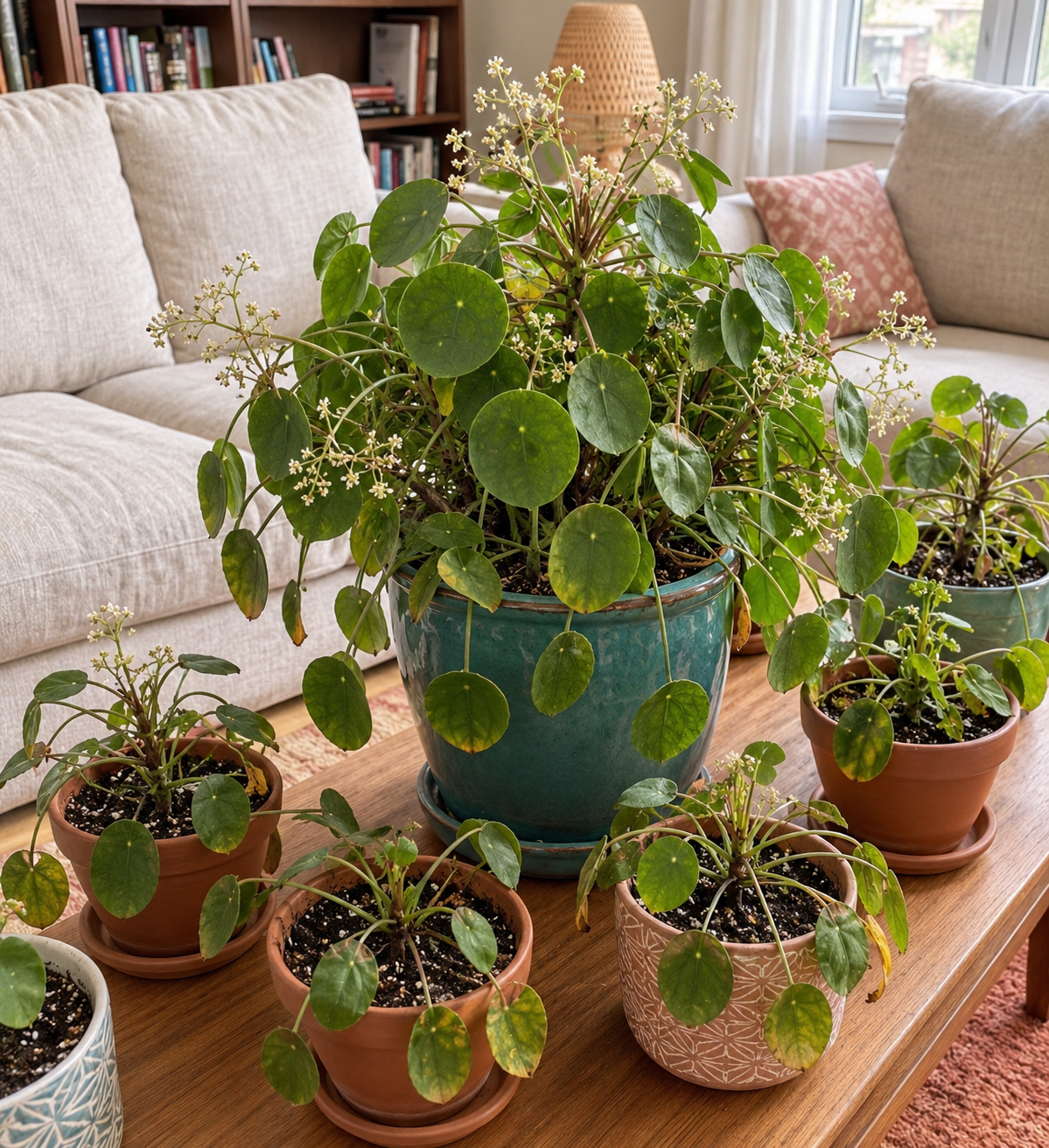
Can Coffee Grounds Help Your Pilea Money Plant Grow? A Complete Guide to Using Coffee Grounds Safely 🌿☕
Have you ever wondered whether something as simple as leftover coffee grounds could have a place in your plant-care routine? Many indoor gardeners are curious about using coffee grounds around their houseplants, especially beautiful plants like the Pilea, also known as the Chinese Money Plant.
Coffee grounds contain small amounts of organic matter and nutrients, which is why they are often discussed as a possible addition to garden soil. However, using them correctly is important. Too much coffee residue, especially when it is fresh or applied directly in thick layers, can cause problems rather than improve plant health.
If you love your Pilea and want to keep its round, green leaves looking beautiful, here is what you should know before trying this popular gardening idea.
🌱 1. Why Are Coffee Grounds Used in Gardening?
Used coffee grounds contain organic material and small amounts of nutrients, including nitrogen. When properly composted, they can contribute to the organic matter in garden soil.
Healthy soil is important because plant roots need a suitable balance of moisture, air, and nutrients. Adding finished compost to an appropriate potting mix can help support soil structure and long-term plant health.
But remember: coffee grounds are not a complete fertilizer. They do not provide every nutrient your Pilea needs, and they should never replace a balanced houseplant fertilizer.
☕ 2. Should You Pour Coffee Grounds Directly Into the Pot?
It is tempting to sprinkle leftover coffee grounds directly onto the soil, but this is not always a good idea.
A thick layer of coffee grounds can become compacted, retain excess moisture, and encourage mold growth. This can be especially troublesome in indoor pots where drainage and airflow are limited.
For that reason, avoid pouring large quantities of fresh coffee grounds around your Pilea. A safer approach is to add used coffee grounds to a compost pile, allow them to break down with other organic materials, and use the finished compost sparingly when suitable for your potting mix.
🪴 3. A Safer Way to Reuse Coffee Grounds
If you want to recycle your coffee grounds, follow these simple steps:
- Collect used coffee grounds after brewing plain coffee.
- Make sure they contain no sugar, milk, cream, or flavored additives.
- Spread them out and allow excess moisture to evaporate before composting.
- Mix them into a balanced compost pile with dry leaves and other suitable organic materials.
- Allow the compost to mature fully.
- Use only a small amount of finished compost when refreshing an appropriate potting mix.
Never place wet coffee grounds in a thick layer on top of the soil, and do not pack them around the plant’s stem.
🌿 4. What Does a Pilea Really Need?
Coffee grounds alone will not make a Pilea grow fuller or produce more leaves. Consistent care is much more important.
Light: Place your Pilea near a bright window where it receives plenty of indirect light. Avoid harsh afternoon sunlight that can scorch the leaves.
Watering: Check the soil before watering. Water when the upper portion of the potting mix has started to dry, and allow excess water to drain away.
Drainage: Choose a pot with drainage holes. Pilea roots do not appreciate sitting in constantly wet soil.
Soil: Use a light, well-draining indoor potting mix. A little perlite can help improve airflow and drainage.
Fertilizing: During active growth, use a balanced liquid houseplant fertilizer according to its label instructions. Avoid applying more fertilizer than recommended.
Cleaning: Gently wipe dusty leaves with a soft, damp cloth so the plant can make the most of available light.
🌸 5. Signs Your Pilea May Need Better Care
Pay attention to changes in your plant. Yellowing leaves, drooping stems, slow growth, or soft roots can indicate watering or root problems.
If the leaves begin turning yellow, check the soil moisture first. Constantly wet soil may indicate poor drainage or overwatering. If the plant looks stretched and weak, it may need brighter indirect light.
Do not automatically add coffee grounds whenever a plant looks unhealthy. First identify the cause of the problem.
💚 6. Keep Your Money Plant Healthy Naturally
The best plant-care routine is usually the simplest one: suitable light, careful watering, good drainage, healthy soil, and occasional balanced feeding.
Reusing coffee grounds through composting can be a useful way to reduce household waste, but it is not a miracle treatment. Your Pilea will benefit far more from consistent care than from any single kitchen ingredient.
A thriving Money Plant is built through patience and attention. Watch its leaves, check its soil, and make small adjustments when needed.
Have you ever tried adding coffee grounds to your garden compost? Share your experience with other plant lovers!